
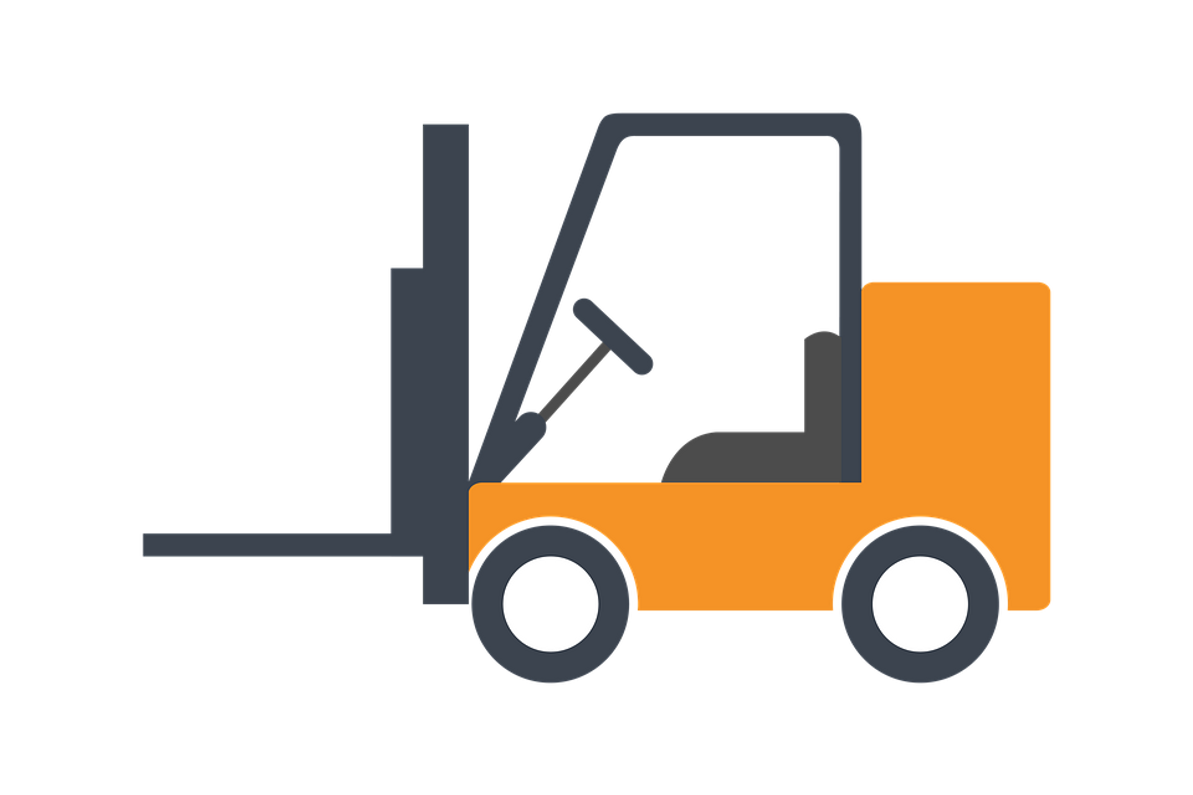
Forklift Counterweights: Everything You Need Know
A counterweight is an important part of many industrial forklifts. Depending on the loads with which they are used, they may require one or more counterweights. Forklifts are used to lift and transport heavy loads. Some of them are rated for 5,000 pounds, whereas others are rated for 10,000 pounds or more. When using a forklift to lift and transport heavy loads, you should consider the counterweight.
What Is a Forklift Counterweight?
A forklift counterweight is exactly what it sounds like: a weighted object that's designed to "counter" the load. There are many different types of forklifts Some of them use an electric motor, whereas others use an internal combustion engine. Regardless, nearly all forklifts have a pair of lifting forks on the front. To lift a load, you'll need to position the forks under the load, after which you can raise the forks while simultaneously lifting the load.
The load will be placed at the front of the forklift. When raised, of course, the load will essentially pull down the forklift from the front. Forklifts can typically accommodate some weight. Excessively heavy loads, though, may cause forklifts to fall forward.
The Importance of Forklift Counterweights
Forklift counterweights are important because they adjust the center of the gravity of forklifts while lifting and transporting heavy loads. Counterweights will move the forklift's center of gravity to the back. Therefore, forklifts can lift and transport heavier loads without tipping over.
Because they prevent forklifts from tipping over, counterweights can lower the risk of bodily injury. According to the U.S. Occupational Safety and Health Administration (OSHA), up to 62,000 workers are injured while operating a forklift each year. Many of these injuries involve the forklift tipping over. With counterweights, forklifts are less likely to tip over, so workers are less likely to be injured when operating them.
Types of Forklift Counterweights
Most forklift counterparts are made of metal. Steel, for instance, is commonly used to make forklift counterweights. Steel counterweights consist of plates that are added to the back of a forklift. When placed on the back of a forklift, they'll stabilize it so that the forklift doesn't tip over when lifting and transporting heavy loads.
There are also concrete forklift counterweights. Some of them consist entirely of concrete, whereas others consist of concrete and metal. Regardless, they are placed on the back of a forklift where they stabilize it.
Recent Posts
-

LOTO Explained: Lockout/Tagout Steps for Safer Maintenance
LOTO, short for lockout/tagout, is an energy-control process that prevents a machine from starting o …Oct 12th 2026 -

N95 Respirator Guide for Workplace Safety
Dust, mist, fumes, and other airborne particles can create serious exposure risks before a worker no …Oct 12th 2026 -
Cut Gloves: How to Choose the Right ANSI Level
A hand-protection program works best when it starts with the task, not a product label. A packaging …Oct 5th 2026