
Exercise Lowers Risk of Cancer, Says Researchers
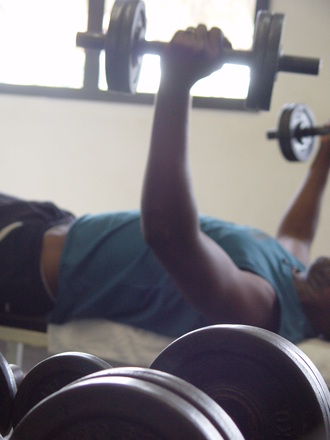
Need another reason to squeeze more exercise into your busy lifestyle? In addition to building muscle and burning calories, there's new evidence indicating that exercise can also help to reduce the risk of cancer.
Researchers found that people who exercised more experienced lower levels of cancer, particularly among 13 different types of cancer. According to the study, the greatest protection was offered for esophagus cancer, cutting participants risk by as much as 42%, followed by a 27% reduced risk of liver cancer, 26% for lung cancer, 20% for leukemia, and 10% for breast cancer. Overall, researchers linked a higher level of physical activity to an average 7% lower risk of developing all types of cancer, attesting to the benefits of staying active.
Of course, the benefits of exercise have been known for some time. Even the study's researchers confirmed that they were well aware of its positive impacts on health and wellness beforehand. However, this is one of the largest studies linking physical activity to lower rates of cancer. Researchers from the National Cancer Institute embarked on a study to determine exactly how physical activity impacted cancer rates by scouring through data from 12 studies covering both the U.S. and European regions, paying close attention to 26 different types of cancer.
If you struggle to exercise due to time constraints, there are ways to overcome this hurdle. Taking the stairs instead of the elevator, for instance, is a simple way to squeeze more exercise into your busy life. Waking up earlier, even if it's just 30 minutes earlier, can also make a difference in your ability to exercise.
On a side note, the study also revealed that people had a higher risk of developing skin cancer like melanoma if they lived in areas of the United States that receives above-normal levels of ultraviolet (UV) radiation. People who live in these areas, for instance, had a 27% higher risk of developing skin cancer when compared to people who live in areas with low-to-normal levels of UV radiation. This reaffirms the importance of wearing a high-SPF sunscreen lotion when staying outdoors for longer than 30 minutes at a time.
Researchers were quick to note, however, that other factors may have affected the results, such as diet and nutrition.
This study was published in the JAMA Internal Medicine.
Recent Posts
-

Safety Harness for facility and field teams
A safety harness is one part of a fall-protection decision, not a stand-alone answer to every work-a …Oct 22nd 2026 -
Ear Protection: Plugs, Muffs, and Communication
Choosing ear protection for a workplace is not just a matter of picking the product with the highest …Oct 21st 2026 -

Workplace Planning with Bump Cap vs Hard Hat
When weighing bump cap vs hard hat, start with the hazard, not the appearance, comfort, or price of …Oct 21st 2026