
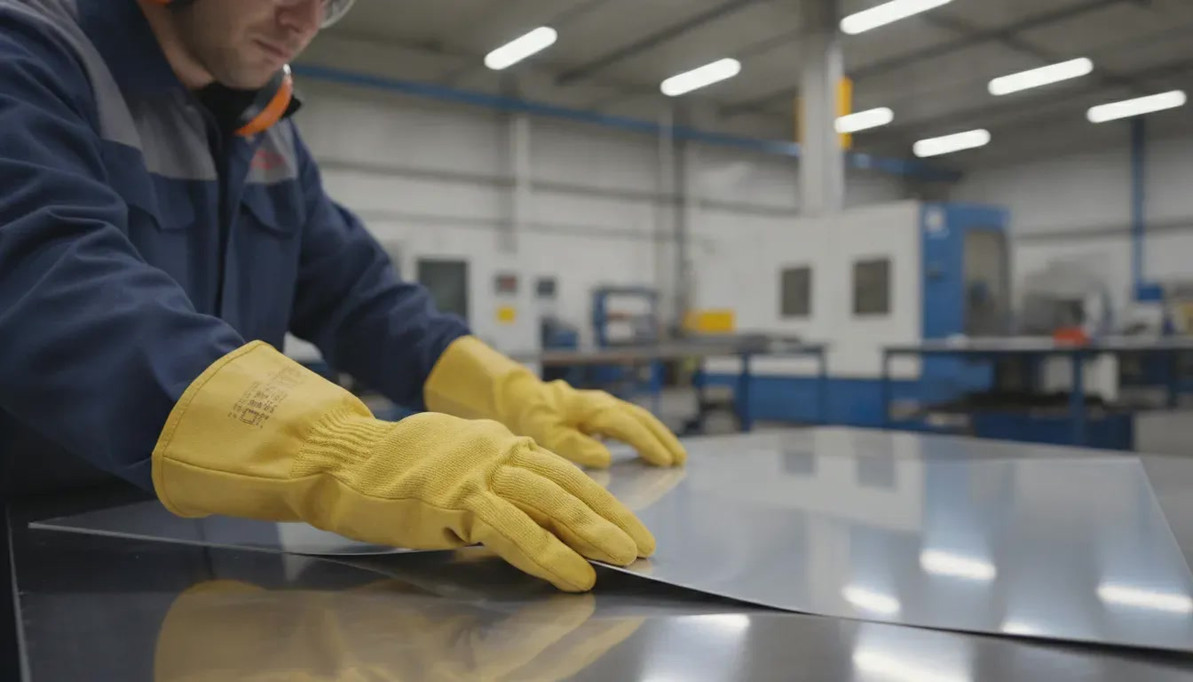
Kevlar Gloves. Cut, Heat, and Task-Specific Selection
Choosing hand protection by material name alone can leave a serious gap in your safety program. Start with the task: identify whether workers face cuts, punctures, chemicals, heat, or several hazards at once. Then compare the glove's documented performance with the exposure, duration, and required dexterity.
Browse 100% Kevlar gloves for dexterity
Kevlar gloves can help reduce cut exposure during tasks involving sharp edges or materials, but they are not universal protection. OSHA advises employers to select hand protection based on the specific hazard and task. Cut resistance does not automatically mean protection from punctures, chemicals, flames, or extreme temperatures. Always verify the exact product rating and manufacturer documentation before ordering or issuing gloves.
That hazard-first approach matters across fabrication, maintenance, food processing, and industrial handling. First, it helps to understand what the Kevlar fiber contributes, where its protection ends, and why the finished glove's construction matters just as much as its liner.
What Are Kevlar Gloves and What Protection Do They Provide?
Kevlar gloves are commonly made with Kevlar or another para-aramid fiber, a high-performance material used extensively in gloves designed for cut protection. The fiber is valued for helping reduce the risk of lacerations during tasks involving sharp edges, sheet material, glass, or similar hazards. That description is narrower than saying the glove protects against every danger a worker may encounter.
Cut resistance addresses a specific type of contact. It does not automatically establish protection against punctures, chemicals, flames, thermal burns, impact, or harmful temperature extremes. OSHA identifies these as separate hazards and advises employers to select hand protection based on the task, conditions, duration of use, and hazards identified. Performance claims should be supported by the applicable standard tests and the exact product documentation, not by the fiber name alone. OSHA hazard-assessment guidance is a useful starting point for that review.
How does para-aramid fiber help with cut hazards?
Para-aramid fibers can form a protective knit, shell, liner, or blend within a glove. The resulting construction may be lightweight and flexible, but the final performance depends on the complete product design, including gauge, coatings, fit, and testing. A thin glove may support tactile work, while a different construction may provide more coverage or durability. There is often a tradeoff among protection, comfort, dexterity, and tactile sensitivity, so the right choice depends on how workers handle materials and tools.
What protection should Kevlar gloves not be assumed to provide?
Do not treat a cut-resistant rating as a universal safety claim. OSHA states that no glove protects against every potential hand hazard. Review the product label and manufacturer documentation for the specific cut, puncture, chemical, heat, or other performance information required by the job. If the work involves more than sharp edges, the hazard assessment should identify whether additional or different hand protection is needed.
How Should You Match Kevlar Gloves to the Work Hazard?
Start with the task, not the glove material. OSHA recommends evaluating the task, conditions, duration, exposure pattern, and physical stresses before selecting hand protection. The assessment should address more than cutting, including puncture, chemical, thermal, impact, and compression hazards. OSHA 1910.138 requires appropriate protection for identified hazards, while OSHA also cautions that PPE should work with guards and other controls rather than replace them.
| Primary need. | What to evaluate. | Selection question. |
|---|---|---|
| Cut | Sharp edges, blades, sheet material, glass, and the direction and force of contact. | Does the exact glove carry a documented cut-performance result appropriate for this task? |
| Heat | Contact heat, radiant heat, molten material, sparks, and exposure duration. | Is thermal or flame protection specifically documented, rather than assumed from cut resistance? |
| Puncture | Nails, wire, needles, shards, points, and the force or angle of penetration. | Does the product documentation address puncture performance for the anticipated hazard? |
| Chemical | Specific chemical, concentration, temperature, contact time, splash, and permeation risk. | Has compatibility been verified for the named substance? Kevlar fiber alone is not chemical protection. |
| Grip | Wet, oily, dry, dusty, or textured surfaces and the need for controlled handling. | Does the palm coating and surface design support the actual material and environment? |
| Dexterity | Small parts, tools, fasteners, controls, repetition, fit, and required tactile feedback. | Will the construction and fit let the worker handle the task without removing the glove? |
A cut-resistant Kevlar glove may be a reasonable choice for sharp-material handling, but its fiber, coating, gauge, and product-specific documentation determine what it can do. For example, Safety Company listings describe Kevlar-lined options with nitrile or natural-rubber palms for grip, and other products with documented cut information for sharp materials. Those examples do not establish a rating for every Kevlar glove.
Before ordering, request the manufacturer documentation for each anticipated hazard and verify the applicable test standard. Do not infer heat, puncture, chemical, flame, or food-contact suitability from a cut claim. OSHA notes that no glove protects against every potential hand hazard, so document the assessment. Select for the highest credible exposure, and confirm the glove remains practical for the full duration of the work.
Which Kevlar Glove Construction Supports Dexterity and Grip?
Glove construction determines how easily a worker can handle parts, tools, and sharp materials throughout a shift. A thinner knit may improve tactile feel, while a liner or palm coating can add structure and grip. The right balance depends on the task, exposure duration, and physical stress identified in the hazard assessment.
How does gauge affect fit and dexterity?
Gauge describes the fineness of the knit. A higher-gauge glove can support a thinner, closer fit, but gauge alone does not establish cut performance or overall durability. For example, the Honeywell Perfect Fit listing describes a lightweight 100% Kevlar knit intended for dexterous industrial work. By contrast, the MCR Safety Cut Pro listing identifies a 7-gauge DuPont Kevlar shell with ANSI A3 cut-resistance information for sharp-material handling. Those ratings belong to the named products, not to every glove made with Kevlar.
For precise assembly or frequent tool handling, check whether the glove follows the hand without excess material at the fingertips. If the job involves heavier handling, a more substantial shell or liner may be appropriate, even if it reduces tactile sensitivity. Research on para-aramid glove design recognizes that protection can involve tradeoffs with comfort, dexterity, and tactile sensitivity.
When do liners and coatings improve grip?
A liner can add cut-resistant structure, while a palm coating can improve contact with the workpiece. The Showa Atlas KV350 is described as a Kevlar-lined glove with a nitrile palm for grip in fabrication, glass, and oily-material applications. See the product details for Kevlar gloves with nitrile grip when oily handling is part of the task.
For wet or dry handling, the Showa Atlas KV300 listing specifies a natural-rubber palm coating and ANSI A3 cut rating. A reversible knit can extend usability when both sides are designed for the same task, but confirm the manufacturer's instructions before reversing or reusing a glove. Select by the complete product specification, including fit, coating, environment, and named performance rating, rather than by fiber name alone.
Compare cut-resistant glove options by task and protection need
Where Do Kevlar Gloves Fit in Industrial and Food-Processing Work?
Kevlar gloves can be useful when a job combines sharp edges with frequent handling, but the right construction depends on the work area and exposure. OSHA recommends evaluating the task, conditions, duration, and identified hazards before selecting hand protection, rather than choosing a glove by fiber name alone.
Fabrication and maintenance
Fabrication teams may handle sheet metal, glass, or other edged materials where cut resistance is a central concern. A coated palm can add grip when parts are oily or slippery. For example, the Showa Atlas KV350 is described as a Kevlar-lined glove with a nitrile palm for fabrication, glass, oily materials, cut resistance, and grip. Maintenance teams should still assess whether the job also involves puncture, chemicals, heat, impact, or moving equipment. A cut-resistant glove does not automatically address those hazards.
Food processing and preparation
Food-processing work requires a separate verification step. The FDA considers food-service gloves to be food-contact surfaces that may contribute indirect food additives to handled food. Therefore, cut protection does not prove that a glove is suitable for food contact. Confirm the exact glove model's food-contact documentation, intended use, materials, cleaning requirements, and facility procedures before authorizing it on a production line. Do not rely on a general Kevlar description or a cut rating as approval.
Handling sharp materials
For recurring sharp-material handling, compare the product's documented rating, fit, coating, and dexterity against the actual task. Safety Company's MCR Safety Cut Pro listing describes a 7-gauge DuPont Kevlar shell with ANSI A3 cut-resistance information for sharp-material handling. That is a product-specific example, not a universal rating for all Kevlar gloves. Teams can also review Kevlar gloves with nitrile grip when handling requires added traction, then verify the current manufacturer documentation before ordering.
How Should Teams Launder, Inspect, and Replace Kevlar Gloves?
A care program should protect the glove's intended performance without treating a laundering count as a guaranteed service life. The DuPont guide reports no significant impact on cut resistance after 10 cleaning cycles for gloves made of 100% DuPont Kevlar. But normal wear may mean a typical glove undergoes fewer than 10 cycles. Blends, liners, coatings, and finished products require the specific supplier's instructions.
- Confirm the construction and care instructions. Verify whether the product is made from 100% DuPont Kevlar or includes other fibers, coatings, or components. The DuPont guide advises consulting the protective-apparel supplier about special cleaning requirements before starting a program. Do not apply its guidance automatically to every pair of kevlar gloves.
- Use an approved cleaning method. Follow the product documentation for water temperature, detergent, drying, and frequency. Never use chlorine bleach or chlorine-generating chemicals with Kevlar. Strong acids, bases, and certain oxidizers, including sodium hypochlorite, can rapidly degrade the fiber.
- Check the glove after every cleaning and work shift. Look for holes, cuts, pulled or broken yarns, thinning, excessive stretching, seam damage, and separation of a coating or liner. Also check for shrinkage, weight loss, or changes in fit and strength, which the DuPont guide identifies as possible effects of laundering or dry cleaning.
- Remove damaged gloves from service immediately. Replace a glove when its protective surface, shell, seam, fit, or grip no longer matches the task requirements, or when contamination cannot be acceptably removed. Do not extend use based only on the number of washes or on appearance.
- Document the care and replacement process. Keep the product instructions, inspection criteria, cleaning method, and replacement decisions in the workplace PPE program. Reassess the glove if the task, exposure, or cleaning process changes.
For mixed-material or coated designs, the product supplier's documentation controls. A written inspection rule helps supervisors make consistent replacement decisions while preserving the hazard assessment that determined the glove was appropriate in the first place.
What Are the Limitations of Kevlar Gloves?
Kevlar gloves are best understood as task-specific cut protection, not universal hand protection. Para-aramid fibers are widely used in gloves for cut protection, but no glove protects against every potential hand hazard. OSHA recommends evaluating the task, conditions, duration, and identified hazards before selecting hand protection, rather than choosing a material by name alone. OSHA hazard-assessment guidance also emphasizes that PPE should support, not replace, guards and other engineering controls.
Cut resistance does not cover every hazard
A cut-resistant rating addresses a defined test method and hazard type. It does not automatically establish protection from punctures, impacts, crushing, or sharp points. A blade edge and a nail, needle, or other pointed object load a glove differently, so puncture performance must be verified separately when that exposure exists.
Chemical protection is a separate decision as well. OSHA notes that commonly available glove materials provide only limited protection against many chemicals. A Kevlar glove should not be treated as chemical-proof without product-specific chemical compatibility data, permeation information, and instructions for the substance and exposure conditions.
Heat, flame, and bite hazards require separate evaluation
Kevlar fibers do not make every glove heat-proof or flame-proof. Thermal burns, harmful temperature extremes, and flame exposure require the appropriate tested performance claims for the actual task. Check the manufacturer documentation instead of inferring protection from the fiber content.
The same caution applies to animal or human bites. Do not make a bite-proof assumption from a cut-resistant construction. If bite exposure is possible, involve the safety professional responsible for the hazard assessment and select equipment with documented performance for that specific risk. Cut resistance also involves tradeoffs with comfort, dexterity, and tactile sensitivity, so the most protective option on paper may not be suitable for every task or wear duration. Clemson research describes this protection-versus-dexterity tradeoff.
How Can a Buyer Verify the Right Kevlar Gloves Before Ordering?
Use a documented selection process rather than choosing by fiber name alone. OSHA recommends evaluating the task, conditions, duration, exposure, and potential hazards before purchasing hand protection. That assessment should answer these questions:
- What is the primary hazard? Identify cutting, puncture, heat, chemicals, impact, or a combination. Do not treat a cut-resistance claim as proof of puncture, chemical, flame, or thermal protection.
- What exact performance documentation is available? Request the product data sheet and manufacturer documentation for the relevant test standards. Confirm the specific cut or other rating for the exact style, coating, and size being ordered. OSHA recommends requesting this documentation before purchase.
- Will the glove contact food? For food handling or processing, verify the exact product's food-contact suitability and supporting documentation. Do not infer approval from the presence of Kevlar or from a cut rating. FDA considers food-service gloves to be food-contact surfaces.
- Does the size support safe control? Compare the manufacturer's sizing chart with employee hand measurements. A glove that is too loose can interfere with handling, while one that is too tight can reduce comfort and useful wear time.
- Can workers perform the task in it? Test dexterity, tactile sensitivity, grip, and range of motion with the tools and materials employees actually use. Protection and dexterity can involve a tradeoff, so a short supervised trial can reveal fit or coating problems before a larger order.
- Does the construction match the material? A nitrile or rubber palm may support grip on oily or wet materials, while an uncoated knit may better suit dry handling and tactile work. For example, the Kevlar gloves with nitrile grip are described for fabrication, glass, and oily-material applications.
- How will the gloves be cared for and replaced? Follow the product's laundering instructions, especially for blends and coatings. Establish inspection points for holes, thinning, contamination, stretched cuffs, and damaged coatings. Replace gloves when damage or loss of fit could reduce protection, even if the fiber itself appears intact.
Keep the approved product documentation with the purchasing record. That makes future reorders easier and helps the safety team verify that a substitute has equivalent, task-specific performance.
Review cut-resistant glove options before your next PPE order
Frequently Asked Questions About Kevlar Gloves
What are Kevlar gloves used for?
They are commonly selected for tasks involving cut hazards, such as handling sharp materials, fabrication, glass work, maintenance, and some food-processing activities. The correct construction depends on the full hazard profile, including grip, puncture, heat, chemical exposure, and required dexterity. OSHA recommends matching hand protection to the task, conditions, duration, and identified hazards. Review OSHA's selection requirements.
Are Kevlar gloves heat-resistant?
Do not assume that a Kevlar or para-aramid glove is suitable for every heat exposure. Heat performance is product-specific and may depend on the glove's construction, coating, contact temperature, exposure duration, and other conditions. Check the exact manufacturer's documentation for the applicable thermal rating before assigning the glove to hot-work tasks.
Are Kevlar gloves bite-proof or puncture-proof?
No. A cut-resistant rating does not automatically establish protection against bites, punctures, needles, chemicals, or thermal burns. OSHA identifies these as separate hazards and advises employers to evaluate performance against the specific anticipated hazard. Use the glove's documented ratings and your hazard assessment rather than treating the fiber name as a complete protection claim.
Can Kevlar gloves be washed and reused?
Some 100% DuPont Kevlar gloves may retain cut resistance after repeated cleaning, but laundering can still cause shrinkage, weight loss, yarn-strength changes, or color changes. The DuPont guide also says chlorine bleach and chlorine-generating chemicals should not be used with Kevlar. Follow the exact product instructions, inspect gloves after cleaning, and replace them when damaged or when their fit or protective performance is compromised.
How should a buyer verify a glove before ordering?
Document the hazards, exposure duration, grip and dexterity needs, required size, and cleaning conditions first. Then request manufacturer documentation for the relevant test standards and ratings. Confirm that coatings and liners fit the task, and check any food-contact claim against the exact product documentation. A small trial can help verify fit and handling before a team-wide purchase.
Ready to Choose Kevlar Gloves for the Task?
The right glove depends on the cutting, handling, grip, and workplace conditions your team faces. Review product specifications and documentation before selecting protection for a specific job. To compare options for industrial, fabrication, food-processing, and maintenance work, browse Kevlar and cut-resistant gloves by task and protection needs.
Recent Posts
-

Chemical Storage Cabinets for industrial work: use and compliance
Chemical storage cabinets help workplaces control access to hazardous materials and keep storage con …Oct 23rd 2026 -

How to Properly Wear a Safety Harness
Knowing how to properly wear a safety harness is only one part of protecting workers at height. The …Oct 23rd 2026 -

Safety Harness for facility and field teams
A safety harness is one part of a fall-protection decision, not a stand-alone answer to every work-a …Oct 22nd 2026