
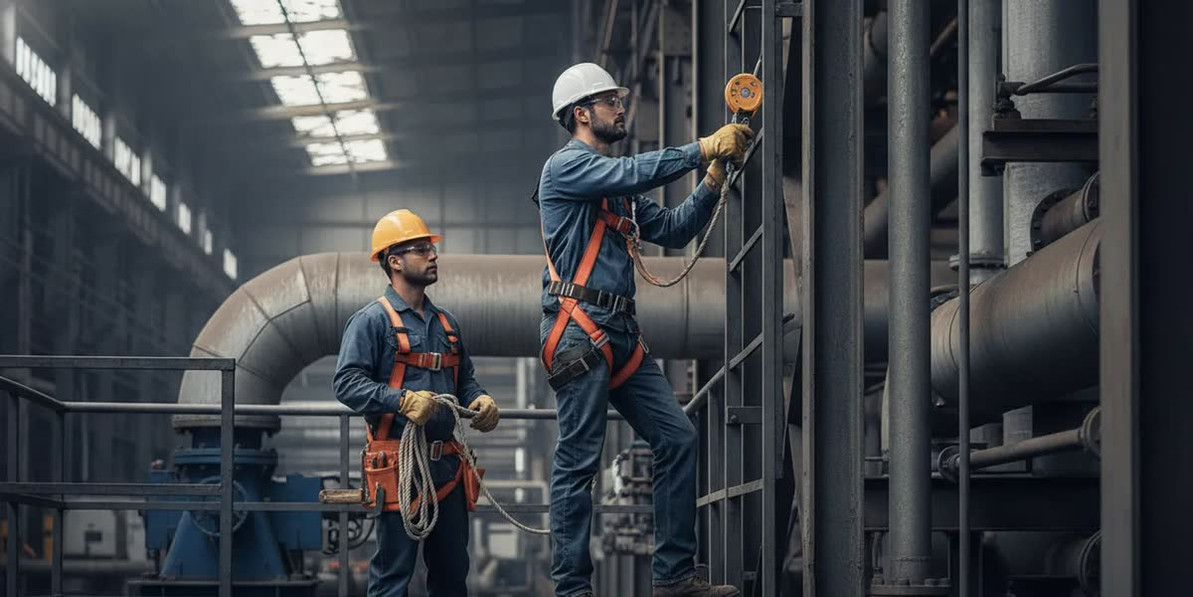
Safety Harness for facility and field teams
A safety harness is one part of a fall-protection decision, not a stand-alone answer to every work-at-height hazard. For facility and field teams, the right choice starts with the task, the potential fall, the connection system, and the person who will wear it. A careful buyer evaluates the full setup before ordering so the equipment supports the employer’s fall-protection plan and applicable OSHA and ANSI requirements.
Review a full-body harness option
What decision does a safety harness help you make?
A full-body harness is worn by a worker and connects to compatible fall-protection equipment. In a personal fall-arrest system, it is the body-worn component that connects the worker to a connector and an anchorage or lifeline system. The harness does not by itself stop a fall. The whole system has to be selected, installed, used, and maintained as a compatible system for the work conditions.
Start by defining the protection method required for the task. Depending on the hazard assessment and work plan, a team may need to prevent a worker from reaching an edge, position a worker for a task, or arrest a fall if one occurs. These functions are not interchangeable. For example, a restraint arrangement is intended to keep the worker from reaching a fall hazard, while a fall-arrest arrangement is intended to stop a fall after it begins. Determine which approach is appropriate with the employer’s safety personnel and the equipment instructions before choosing a harness or connector.
Also identify who will use the equipment and how often. A harness assigned to one trained worker may be handled differently from a shared unit used by a rotating maintenance crew. Work at a roof edge, in a lift, on a structure, or around an opening can involve different access routes, anchorage options, movement needs, and rescue considerations. Write down these conditions first; they are the basis for comparing products.
Translate the work plan into a short equipment brief instead of beginning with a model number. Include the work location, task duration, access and exit route, expected movement, likely connection points, users, and any site-specific restrictions. A buyer can then compare products against a defined use rather than assuming that a familiar feature or broad product label makes a harness suitable. If the work changes from a fixed platform to travel along a roof, revisit the brief before reusing the same setup.
Which hazards and work conditions should you assess?
Walk through the task rather than buying from a product name alone. Record where the worker will stand, how the worker will reach the work area, what movement the task requires, and what fall hazards are nearby. Consider both the normal work position and the route in and out. A system that appears suitable at the work point may not be appropriate during access, repositioning, or transition between anchor points.
- Fall exposure: Identify edges, openings, platforms, ladders, roofs, and other locations where a fall could occur. Note whether the goal is to prevent access to the hazard or arrest a fall.
- Anchorage and route: Determine where the system can be connected and whether the worker must move horizontally or vertically. Anchorage must be suitable for the planned system and securely rigged; do not assume a convenient structure is an approved anchor.
- Clearance and obstructions: Review the distance available below the work area, along with equipment, surfaces, and other obstructions that could be struck in a fall. Follow the system manufacturer’s instructions and the employer’s calculations for the specific setup.
- Environment: Consider exposure to sharp edges, heat, chemicals, moisture, dirt, or other conditions that could affect the harness or connected equipment. Verify suitability in product instructions.
- Rescue: Plan how a worker will be assisted promptly if a fall is arrested. Equipment selection does not replace a site-specific rescue plan, trained responders, and a workable means of access.
- Other PPE and tools: Check whether the harness must be worn with a tool belt, protective clothing, respiratory equipment, or other required gear. Confirm that the combination does not interfere with fit or connections.
When the task changes, reassess the setup. A new work location, different anchorage, added tool, or changed access route can affect how the system functions. Buyers should provide these details to the person responsible for fall-protection planning, not expect a harness label to answer every site question.
Think through a representative job from start to finish. For a maintenance worker accessing a rooftop unit, the review should include the route from the ladder or hatch, the position needed to reach the equipment, the worker’s path around the roof, and how the worker returns. If that path would allow the worker to reach an exposed edge, consider whether the planned method controls access or instead relies on arresting a fall. For a technician working from an elevated platform, identify the platform’s designated connection provisions and determine whether the assigned system allows the task without creating a new entanglement or clearance concern.
Also identify foreseeable changes: another worker joining the task, a temporary obstruction, a weather change, or equipment moved into the work zone. The purchase cannot anticipate every event, but the safety plan should define when work pauses and who reassesses the equipment arrangement. That gives supervisors a practical trigger for review instead of relying on informal judgment at the edge.
How do you compare harness design and fit?
Choose a harness built and labeled for the intended application, then verify that it fits the actual users. A harness that is the wrong size or adjusted poorly can be uncomfortable, restrict movement, or be worn incorrectly. Consider the range of workers who will use the equipment and whether a size range or separate sizes are needed. Do not assume a single adjustable model will fit every worker equally well.
Inspect the product information for the harness configuration, adjustment points, attachment elements, and any stated application limits. The attachment point must match the system design and the manufacturer’s instructions. A worker should not move a connector to a different point or use an attachment element for a purpose not described by the manufacturer. Ask the supplier or manufacturer for clarification if the label, instructions, or intended use is unclear.
Before work, users should put on the harness according to its instructions and check that straps lie flat, buckles are engaged, and adjustment is secure. The harness should be snug enough to remain correctly positioned without preventing safe movement or breathing. Users need training to identify the proper orientation and connection points on their own model. Have each user demonstrate donning and adjustment before the equipment enters service.
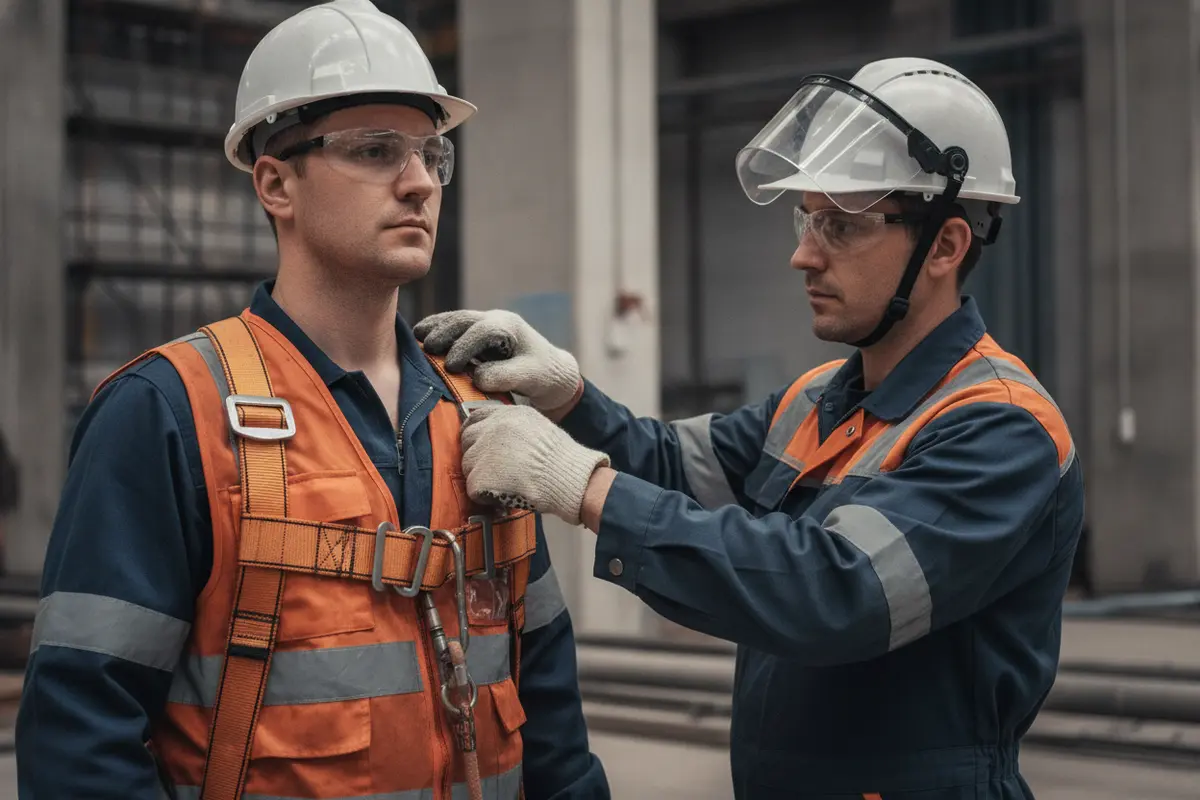
Fit should be checked with the clothing and other equipment worn for the task. Winter layers, rainwear, tool belts, and other PPE can change how straps sit or how the worker moves. If a worker cannot achieve the instructed fit, stop and select an appropriate alternative rather than improvising an adjustment. A harness should not be modified, repaired, or adapted unless the manufacturer permits it.
Include fit review in procurement for shared equipment. A size range printed on a product page does not demonstrate that the harness will fit every person on a crew or over every seasonal clothing combination. Have representative users try the model under the conditions in which it will be worn, following the instructions. Check whether the worker can reach required controls and perform expected movements while the straps remain correctly positioned. If workers rotate between jobs, record which sizes and configurations are available so the crew is not pushed toward an unsuitable substitute when the preferred unit is in use.
Fit is not a one-time checkbox. Users should check adjustment before each use and after changing layers or adding other PPE. A supervisor can use a short demonstration: the wearer puts on the harness, points out the correct connection point for the planned setup, and confirms that buckles and straps are secure. Any uncertainty should be resolved before the worker goes aloft, not after movement is constrained or a connection is needed.
How should you verify compatibility across the system?
List every component in the planned setup: harness, connector, lifeline or lanyard, anchorage connector, and anchorage. Confirm that each component is permitted for the intended application and compatible with the others. Check the manufacturer’s instructions, labels, and system limitations. A matching brand name alone does not prove that components work together, and a product listing should not substitute for a site-specific system review.
For example, a connector’s length and configuration affect where a worker can move and the space required below the work area. A leading-edge task, overhead connection, and restraint application may call for different equipment. The employer’s qualified personnel should confirm that the complete arrangement is appropriate. The Miller cross-arm anchorage strap and 3M rope lifeline assemblies are examples of separate system components; neither should be selected without confirming the planned connection and instructions.
Make the comparison explicit before purchasing:
| Buyer check | What to confirm | Why it matters |
|---|---|---|
| Work method | Restraint, positioning, or fall arrest as defined by the work plan | Different functions call for different system configurations. |
| Harness and user | Application, size range, adjustment, attachment elements, and instructions | The harness must be suitable for the task and fit its wearer. |
| Connector and lifeline | Length, configuration, intended use, and compatibility with the harness and anchor | Components influence movement, connection, and system performance. |
| Anchorage | Approved location and setup for the complete system | A convenient structural member is not automatically an appropriate anchorage. |
| Use and support | Training, inspection process, rescue plan, storage, and replacement criteria | Equipment must be managed through its service life, not just purchased. |
Review a full-body harness for your equipment plan
For a fall-arrest arrangement, address anchorage and restraint-line considerations in the context of the full system. The U.S. Navy’s Fall Protection Guide discusses full-body harnesses, restraint lines, and anchorage considerations. The Mine Safety and Health Administration’s Personal Fall Arrest Equipment Task Training Guide addresses harness and lifeline use in task training. Use these resources as context, while following the current requirements that apply to your workplace and the instructions for the specific equipment. For tasks with a specific electrical hazard, buyers may also review a product such as the FallTech arc-flash lanyard against its stated application and the complete system; that specialized item is not a general-purpose choice.
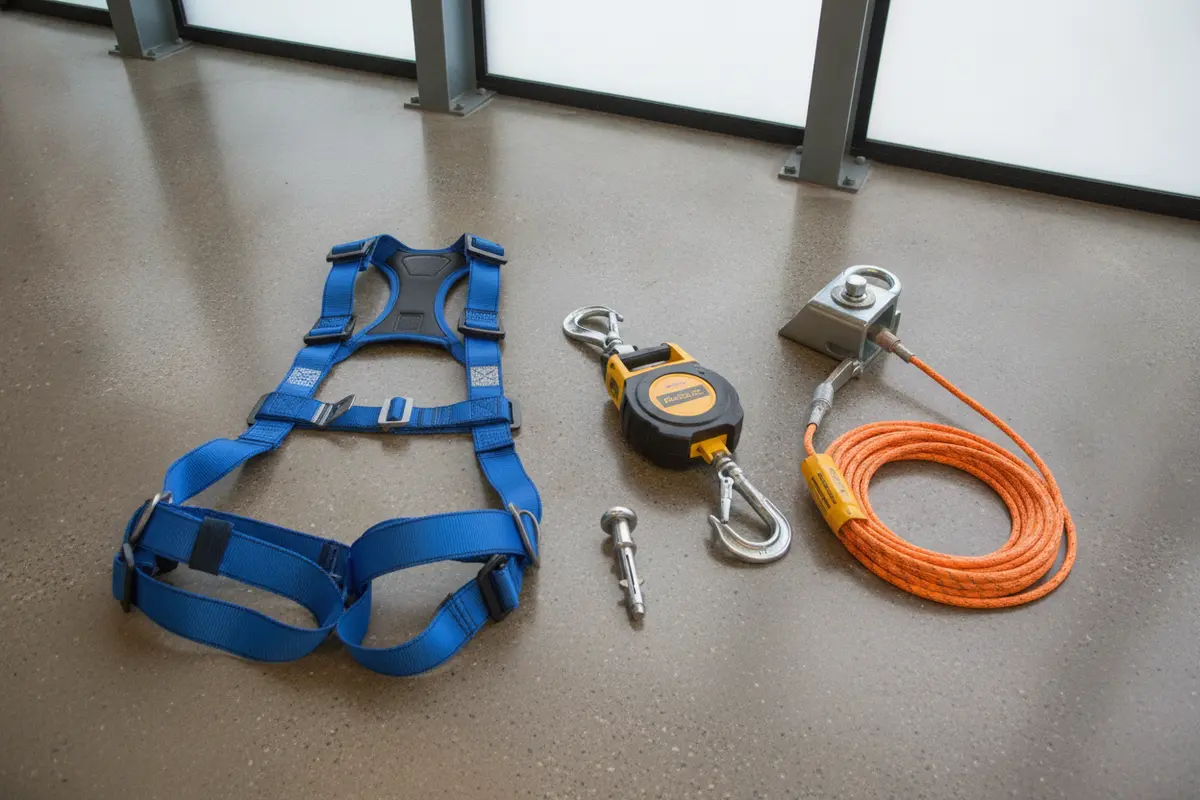
Compatibility review should include the physical path of the connection as well as component labels. Trace the connection from the worker’s harness attachment point through the connector and anchorage connector to the anchorage. Check the equipment instructions for permitted combinations and restrictions. Consider whether the worker’s movement could cause a line to contact an edge, wrap around an obstruction, or create a snag point. Those are system-planning questions for the employer’s safety personnel; choosing components independently and joining them at the job site can leave important limitations unreviewed.
It can help to keep a simple equipment schedule for each recurring task. List the approved harness configuration, connector type, anchorage location or approved anchorage method, and any clearance or movement limits supplied by the responsible planner. A schedule is not a substitute for instructions or inspection, and it should not be applied to a different location without review. It gives purchasers, supervisors, and workers a shared reference so a replacement part does not silently alter the system.
What OSHA and ANSI checks belong in the buying process?
Compliance review begins with the work hazard and the employer’s responsibilities, not with a product description. Identify the OSHA requirements that apply to the industry, task, and work location. Then check that the selected equipment’s markings and documentation support the planned use and any applicable standard. Where ANSI conformity is part of the purchasing specification, verify the exact standard and product documentation rather than relying on a general claim in a listing.
Keep a record of the decision: hazard assessment, selected protection method, equipment model and instructions, training, inspection procedure, and rescue planning. Ask the manufacturer or supplier for current documentation when details are missing. A distributor can help identify product information and options, but the employer remains responsible for determining what equipment and procedures are suitable for its workplace.
Do not treat certification, a standards marking, or an OSHA reference as a guarantee that a system will be safe in every configuration. The connection, anchorage, fall clearance, user fit, and task conditions all matter. If the planned system or its limitations are unclear, pause the purchase and consult the person qualified to evaluate fall protection at the site.
Make the compliance check concrete by assigning a reviewer and collecting the documents before issuing a purchase request. Compare the exact product model and configuration in the documentation with the item being considered; similar product names can conceal different configurations. Confirm that the intended use is covered, that any required labels remain legible, and that written instructions will be available to users. If the buyer cannot verify a requirement from the available records, treat it as an open question for the employer’s safety professional or manufacturer rather than filling the gap with an assumption.
Keep jurisdiction and work type in view. A site may have federal, state-plan, industry-specific, or employer requirements that affect the selection and procedures. Do not rely on an old checklist or a generic online description to resolve a current compliance question. Document the applicable references and review them when the task, regulations, equipment, or worksite changes.
How should teams inspect, use, and maintain a harness?
Set an inspection routine before issuing equipment. Users should inspect equipment before each use in accordance with manufacturer instructions and workplace procedures. The inspection should include the harness webbing, stitching, labels, buckles, adjustment hardware, and attachment elements, as well as connected components. Look for damage, wear, contamination, unauthorized changes, missing information, or any condition the instructions identify as a reason to remove equipment from service.
If a harness or component has been involved in a fall or is otherwise damaged, remove it from service and follow the manufacturer’s and employer’s procedures. Do not return it to use simply because damage is not obvious. Keep equipment clean and dry as directed, store it away from conditions that may damage it, and retain instructions so users can refer to the model-specific requirements.
Training needs to cover more than putting on the harness. Workers should understand the selected system’s purpose and limitations, how to connect correctly, how to recognize hazards during access and movement, and what to do if equipment fails inspection or a fall occurs. Supervisors should confirm that workers know whom to contact and that the rescue plan can be carried out for the site and task.
A practical inspection process has clear ownership. Before the job, the worker checks the equipment and reports concerns; the supervisor knows how questionable items are tagged or segregated so another person does not issue them by mistake. For shared equipment, keep a way to identify the unit and retain the applicable instructions. A checklist can prompt attention to webbing, stitching, hardware, labels, and connected equipment, but it should follow the manufacturer’s criteria rather than replace them.
After a shift, store the harness as instructed and avoid leaving it where heat, chemicals, moisture, sharp tools, or vehicle traffic could damage it. Do not use an improvised cleaning method or write on, cut, or modify parts unless the manufacturer permits it. When equipment is removed from service, record the reason and follow the designated evaluation or disposal procedure. These steps prevent uncertain gear from quietly returning to the shared stock.
Rescue planning belongs alongside training and equipment issue. Identify who will respond, how they will reach the worker, what equipment or access method is needed, and how the response works at the actual site. Confirm the plan with the people expected to carry it out. A rescue procedure that exists only in a document but cannot be executed with available personnel and access is not a complete operational plan.
What should a buyer confirm before placing an order?
Use a short purchasing checklist to close gaps between the hazard assessment and the equipment request:
- Describe the work task, work location, access route, and fall hazards.
- Confirm the intended protection method with the person responsible for fall-protection planning.
- Identify the users and required fit range, clothing, and other PPE.
- List every component, connection point, anchorage, and movement requirement in the system.
- Verify product instructions, labels, applicable OSHA requirements, and any specified ANSI documentation.
- Plan training, pre-use inspections, storage, removal-from-service steps, and rescue.
- Confirm quantity and replacement needs for assigned or shared equipment without assuming that one model fits every task.
When comparing products, ask specific questions: Is this harness intended for the protection method and work conditions we documented? What components are required to complete the setup? Which size and adjustment range fit our users? What do the instructions require for inspection and care? What information should be reviewed by our safety professional before use? Answers to these questions are more useful than choosing by appearance or by one feature in isolation.
For example, a facility with recurring rooftop maintenance might document the common access points and tasks, then ask its safety reviewer to define what the approved equipment setup must support. A construction site with changing work zones may need a separate review process each time the anchorage or route changes. In both cases, procurement should avoid ordering a substitute simply because it looks similar to the listed model. Confirm the exact configuration and instructions, and make sure the replacement preserves the approved use.
Before submitting the requisition, check the number of users, whether equipment is assigned or shared, and whether additional sizes or components are needed for the planned jobs. Build in a process for receiving and recording the instructions and model details. If a requested item is unavailable, route substitutions back through the same compatibility and compliance review; the purchase deadline should not turn an unchecked alternative into an approved system.
Compare a compatible fall-protection component
Frequently asked questions
Is a safety harness enough to protect a worker from a fall?
No. A harness is only the body-worn component. The worker needs a properly selected and compatible system, an appropriate anchorage, training, and a work plan that addresses the hazard and rescue.
Can one harness be used for every work-at-height task?
Not necessarily. The task, protection method, user fit, connector, anchorage, environment, and equipment instructions determine suitability. Review each planned application rather than assuming that a single model works for every location.
When should a harness be removed from service?
Follow the manufacturer’s instructions and workplace procedure. Remove equipment from service when inspection identifies damage or another disqualifying condition, when information is missing or unclear, or after an event that requires removal under the instructions. Do not repair or return it to service without authorization.
Who should approve the complete fall-protection setup?
The employer should involve the person qualified to assess the hazards and the proposed system for that workplace. Product instructions and supplier information are important inputs, but they do not replace a site-specific evaluation or the employer’s compliance responsibilities.
A sound safety harness purchase follows a documented hazard review, a fit and compatibility check, and a plan for training, inspection, and rescue. Resolve those points before equipment is issued so the chosen system matches the work people are expected to perform.
Recent Posts
-

Safety Harness for facility and field teams
A safety harness is one part of a fall-protection decision, not a stand-alone answer to every work-a …Oct 22nd 2026 -
Ear Protection: Plugs, Muffs, and Communication
Choosing ear protection for a workplace is not just a matter of picking the product with the highest …Oct 21st 2026 -

Workplace Planning with Bump Cap vs Hard Hat
When weighing bump cap vs hard hat, start with the hazard, not the appearance, comfort, or price of …Oct 21st 2026