
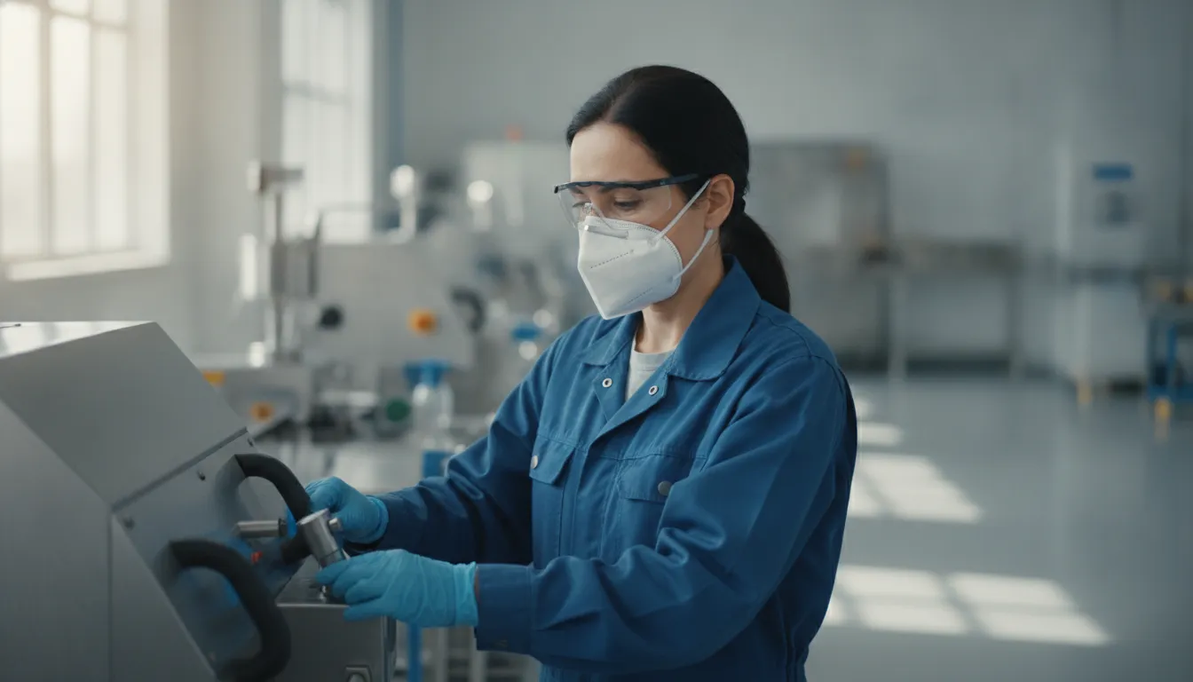
N95 Respirator Guide for Workplace Safety
Dust, mist, fumes, and other airborne particles can create serious exposure risks before a worker notices a problem. Choosing respiratory protection starts with identifying the hazard, then confirming that the equipment, fit, and workplace program match the job.
An n95 respirator is a NIOSH-approved filtering facepiece designed to filter at least 95% of airborne particles that are not oil-based. It does not protect against gases or vapors, and it must seal properly against the face to work as intended. Check the NIOSH marking, protection level, and TC approval number, then verify the approval through the NIOSH Certified Equipment List.
Browse disposable N95 respirators
Those details matter when buyers compare disposable respirators with other protection options. Start by understanding what the N95 designation means, what its approval markings confirm, and where its protection ends.
What Is an N95 Respirator and What Does N95 Mean?
An N95 respirator is a type of filtering facepiece respirator (FFR), commonly used to reduce exposure to airborne particles in workplace environments. Unlike a loose face covering, it is designed to filter particles from the air the wearer inhales and to form a seal against the face. FFRs are often called disposable respirators because the entire unit is discarded when it becomes unsuitable for further use.
What does the N95 classification indicate?
The "N" identifies a filter that is not resistant to oil. The "95" indicates a minimum filtration efficiency of 95 percent for airborne particles under the NIOSH classification system. This classification applies to particle filtration, not to gases or vapors. An N95 is therefore intended for appropriate particulate hazards such as dust, mist, and fumes, based on the employer's hazard assessment and respiratory protection program.
The classification does not mean that every N95 respirator fits every worker or every task. Protection depends on selecting an appropriate, approved model, achieving a proper face seal, and following workplace requirements. An N95 also is not a substitute for evaluating oxygen levels or atmospheric hazards that require a different type of respiratory protection.
How can buyers verify NIOSH approval?
A NIOSH-approved filtering facepiece respirator should be marked with "NIOSH" and its protection level. Such as "N95." It should also carry a testing and certification approval number, commonly called a TC approval number. Do not assume that a product is approved because its packaging uses the term N95. Review the markings on the respirator and verify the approval number through the NIOSH Certified Equipment List.
For a broader comparison of disposable, reusable, and cartridge-based options, use the workplace respirator selection guide. It can help safety managers connect the hazard assessment to the right respirator category before procurement. A product's approval marking is an important starting point, but it does not replace medical evaluation. Fit testing, training, or the written respiratory protection program required for workplace use.
What Can an N95 Respirator Protect Against, and What Are Its Limits?
An N95 respirator is designed for particulate hazards. Its filter removes particles from the air you breathe, including dust, mist, and fumes. The N95 classification means the filter is tested to provide at least 95% filtration of airborne particles under specified conditions. That does not mean the respirator is a universal barrier against every airborne hazard. The hazard assessment must come first, before anyone selects a filter, cartridge, or facepiece.
Which hazards can an N95 respirator address?
A properly selected, NIOSH-approved N95 may be appropriate for certain non-oil-based particulate exposures, such as dust generated during cutting, sanding, grinding, or other work that produces airborne particles. The respirator still has to fit the individual worker, remain in usable condition, and be used within a compliant respiratory protection program. A filter rating alone does not establish that a particular model is suitable for every task or concentration.
N95 filters are not resistant to oil. If the hazard includes oil-based particles, the letter classification matters. NIOSH uses separate N, R, and P series designations, with P-series filters providing strong resistance to oil. The correct choice depends on the substance, exposure conditions, work duration, and the employer's assessment. For a broader framework, review this workplace respirator selection guide.
What can an N95 not protect against?
Filtering facepiece respirators do not protect against gases or vapors. They also are not designed to supply oxygen or make an oxygen-deficient atmosphere safe. Examples may include solvent vapors, carbon monoxide, unknown chemical releases, or an environment where oxygen levels cannot support safe breathing. Those conditions require a different control strategy and potentially a respirator with the appropriate cartridge, canister, supplied-air source, or self-contained breathing apparatus. Do not enter an unknown or oxygen-deficient atmosphere based on an N95 selection alone.
OSHA's respiratory protection standard addresses workplaces including general industry and construction. It requires employers to provide a respirator when one is necessary to protect an employee's health and to manage its use through a respiratory protection program. That program should evaluate the hazard, prioritize engineering and work-practice controls, select suitable equipment, and address fit testing and training. See OSHA's respiratory protection standard and the CDC's filtering facepiece respirator guidance before approving an N95 for a task.
How Do Fit Testing and User Seal Checks Work?
A tight-fitting N95 respirator only works as intended when it seals against the wearer's face. Formal fit testing and the user seal check address that requirement at different points. Fit testing validates a specific respirator configuration before workplace use. The seal check is a quick check the worker performs every time the respirator is put on.
-
1. Select the exact respirator configuration
Start with the hazard assessment and the employer's respiratory protection program. The fit test applies to the specific make, model, style, and size selected for the worker. A pass on one N95 respirator does not automatically validate a different model or size. Facial hair that crosses the sealing area can prevent the required contact with the face. So the worker may need a different approved configuration or a change in grooming. The CDC and NIOSH fit-testing guidance distinguishes tight-fitting respirators from loose-fitting designs, which do not require fit testing because they do not form a tight seal.
-
2. Complete the formal fit test before use
OSHA requires a worker to pass a fit test before using a tight-fitting respirator at work. The test confirms that the selected configuration fits the individual and can maintain a tight seal during the required exercises. A qualitative fit test uses an accepted test agent and relies on the wearer's response to whether the agent is detected. A quantitative fit test uses an instrument to measure leakage and produces a numerical fit assessment. The protocol, equipment, and documentation must follow the employer's compliant program. OSHA-accepted protocols provide instructions for qualitative testing. NIOSH specifically does not endorse or recommend the irritant smoke fit test. So program administrators should not treat an informal smoke demonstration as a substitute for an accepted fit test. A smoke fit test kit is only an example of a supply category, not a complete respiratory protection program or proof of compliance.
-
3. Perform a user seal check each time you don the respirator
After putting on the N95 respirator, follow the manufacturer's instructions for checking the seal. Cover the respirator as directed, then use the applicable positive- or negative-pressure check. If air leaks around the nose, cheeks, or chin, adjust the straps and nosepiece and repeat the check. If the seal still cannot be achieved, leave the contaminated area and use a configuration that fits. The seal check does not replace the formal fit test. It confirms that the respirator was positioned correctly on that occasion, while fit testing establishes whether that specific model and size can fit the worker.
-
4. Keep ownership with the employer's program
The employer is responsible for managing the workplace respiratory protection program, including selecting appropriate protection, arranging required fit testing, and maintaining the records and procedures workers follow. OSHA's respiratory protection standard applies across settings including general industry and construction, and requires a respirator when it is necessary to protect an employee's health. Supervisors should make sure workers understand the difference between the documented fit test and the seal check performed at each donning. Reassess the fit when the respirator model or size changes, or when the worker's face or condition changes in a way that could affect the seal.
How Should Workers Put On, Inspect, and Replace an N95?
Correct use starts before the respirator reaches the face. Workers should follow the employer's written respiratory protection program, the manufacturer's instructions, and the training provided for the specific model. An N95 respirator must form a seal against the face to work properly, so donning and inspection are part of the protection process, not optional finishing steps. See the CDC and NIOSH guidance on N95 use for the core handling recommendations.
How should a worker inspect and don an N95?
Use clean, dry hands. Before each use, examine the respirator for damage, such as torn material, broken straps, distorted edges, or a nosepiece that cannot be adjusted as intended. Do not use a damaged respirator. Confirm that the model is the one approved and assigned for the task, then position it over the nose and mouth according to the manufacturer's instructions. Secure the straps without crossing or twisting them, and shape the nose area as directed.
After putting it on, perform the model-specific user seal check. Breathe in and out as instructed and check for air leaking around the edges. A seal check is not the same as a formal fit test. OSHA requires a worker to pass a fit test before using a tight-fitting respirator at work, and that test evaluates the specific make, model, style, and size. The seal check is the worker's check each time the respirator is donned. Facial hair or anything that crosses the sealing surface can interfere with the fit. If the seal cannot be achieved, leave the contaminated area and notify the responsible safety professional.
How should workers remove and care for an N95?
Avoid touching the front of the respirator during removal. Handle it by the straps, following the sequence taught by the employer. After removal, wash hands with soap and water, or use hand sanitizer containing at least 60% alcohol when soap is unavailable. Store a respirator only as allowed by the manufacturer's instructions and the employer's written program. Do not wash an N95. Do not place it in an oven or microwave for sterilization. Those actions can damage the materials and do not substitute for an approved workplace procedure.
When should an N95 be replaced?
There is no universal replacement interval that applies to every N95 or workplace. Replace it when it is damaged, contaminated, difficult to breathe through, unable to maintain a seal, or otherwise unsuitable for use. The employer's written program and the manufacturer's instructions may establish additional replacement requirements. Treat the entire filtering facepiece as disposable when it becomes unsuitable for further use; do not improvise a cleaning or reuse method. Document recurring replacement issues and review the hazard assessment, storage conditions, and supply plan with the program administrator.
Review respirator fit-testing supplies
How Does an N95 Compare With Other Respirators?
The right respirator depends on the hazard assessment, airborne concentration, required face coverage, fit, and the employer's written respiratory protection program. An N95 is one option for particulate hazards, not a universal substitute for a different respirator class. OSHA's respiratory protection standard requires employers to select protection based on workplace conditions and to administer the required program: review the OSHA requirements before making a procurement decision.
| Respirator type | What distinguishes it | When selection may differ from an N95 |
|---|---|---|
| N95 filtering facepiece | Filters at least 95% of airborne particles and is not resistant to oil. The entire filtering facepiece is discarded when it becomes unsuitable for further use. | Appropriate only when the assessed hazard is compatible with a non-oil particulate filtering facepiece and the wearer can achieve the required seal. |
| P95 or P100 filtering facepiece | P-class filters are strongly resistant to oil. P95 filters at least 95% of airborne particles, while P100 filters at least 99.97%. | May be considered when oil resistance or a higher filtration classification is needed. See this P100 respirator comparison as a product example, not as a substitute for hazard assessment. |
| Reusable elastomeric respirator | Uses a reusable facepiece with replaceable filters or cartridges rather than disposing of the entire facepiece after use. | May better fit a workplace's reuse, cleaning, maintenance, or cartridge-change procedures. The correct filter or cartridge must match the identified hazard. |
| Full-face respirator | Covers the eyes as well as the nose and mouth, while using an approved air-purifying element selected for the hazard. | May be needed when eye protection or greater facial coverage is part of the hazard-control strategy. It still requires appropriate fit and program oversight. |
| Supplied-air respirator | Delivers breathing air from an external source instead of relying only on ambient-air filtration. | May be evaluated for conditions where air-purifying respirators are not suitable. Selection requires a qualified program decision, not a simple upgrade from an N95. |
Remember that N95, P95, and P100 classifications describe particulate filtration and oil resistance. Filtering facepiece respirators do not protect against gases or vapors, and an N95 does not provide oxygen for an oxygen-deficient atmosphere. Confirm the NIOSH approval, protection level, facepiece or cartridge configuration, and workplace fit requirements before issuing equipment. A formal fit test is required before a worker uses a tight-fitting respirator at work, and the user must perform a seal check each time it is donned.
For a broader decision framework, use this workplace respirator selection guide alongside your written program and hazard assessment.
See a NIOSH-marked N95 product example
Frequently Asked Questions
Is an N95 respirator the same as an N95 mask?
In workplace guidance, the term respirator refers to a device designed to filter particles from the wearer's inhaled air and form a seal against the face. Some people use mask as a general term, but a workplace N95 should be NIOSH approved and marked with NIOSH, the protection level, and a TC approval number. You can verify the approval through the NIOSH Certified Equipment List.
Does an N95 respirator require fit testing?
Yes. OSHA requires a worker to pass a fit test before using a tight-fitting respirator at work. The test confirms that the specific make, model, style, and size fits the individual. Workers must also perform a user seal check each time they put it on. A seal check is not a substitute for the formal fit test. See the CDC fit-testing guidance for the distinction.
Can an N95 respirator protect against smoke, gases, or vapors?
An N95 is intended for particulate hazards such as dust, mist, and fumes. It does not protect against gases or vapors, and it is not suitable for oxygen-deficient atmospheres. N95 filters are also not resistant to oil, so the hazard assessment must determine whether another filter class or respirator type is needed. Follow your workplace respiratory protection program before selecting equipment.
When should an N95 respirator be replaced?
Replace it when it is damaged, contaminated, difficult to breathe through, no longer fits, or when the employer program or manufacturer instructions require replacement. There is no universal replacement interval for every workplace. Inspect it before each use, keep it clean and dry, and do not wash it or place it in an oven or microwave for sterilization.
Ready to Choose the Right Respiratory Protection?
Matching an N95 respirator to the workplace hazard, fit requirements, and written respiratory protection program helps your team make a more informed selection. SafetyCompany can help you review respiratory protection options without treating every hazard the same. Call SafetyCompany at 1-800-310-7233 to talk through the equipment that fits your workplace needs.
Recent Posts
-

N95 Respirator Guide for Workplace Safety
Dust, mist, fumes, and other airborne particles can create serious exposure risks before a worker no …Oct 12th 2026 -
Cut Gloves: How to Choose the Right ANSI Level
A hand-protection program works best when it starts with the task, not a product label. A packaging …Oct 5th 2026 -
Kevlar Gloves. Cut, Heat, and Task-Specific Selection
Choosing hand protection by material name alone can leave a serious gap in your safety program. Star …Oct 2nd 2026