
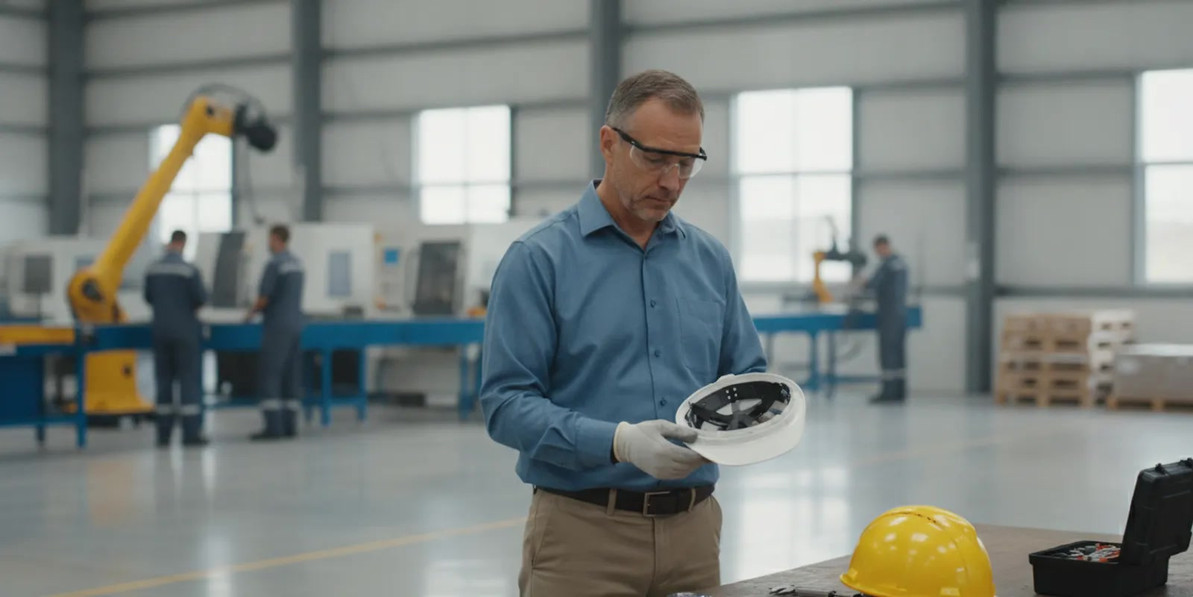
Workplace Planning with Bump Cap vs Hard Hat
When weighing bump cap vs hard hat, start with the hazard, not the appearance, comfort, or price of the headwear. A bump cap may suit some low-risk settings where workers could strike their heads on stationary objects. It is not a substitute for a hard hat when the job requires protection from impact hazards. A hazard assessment and the equipment manufacturer's instructions should guide the decision.
Review hard hat options for your worksite
What does bump cap vs hard hat mean for workplace protection?
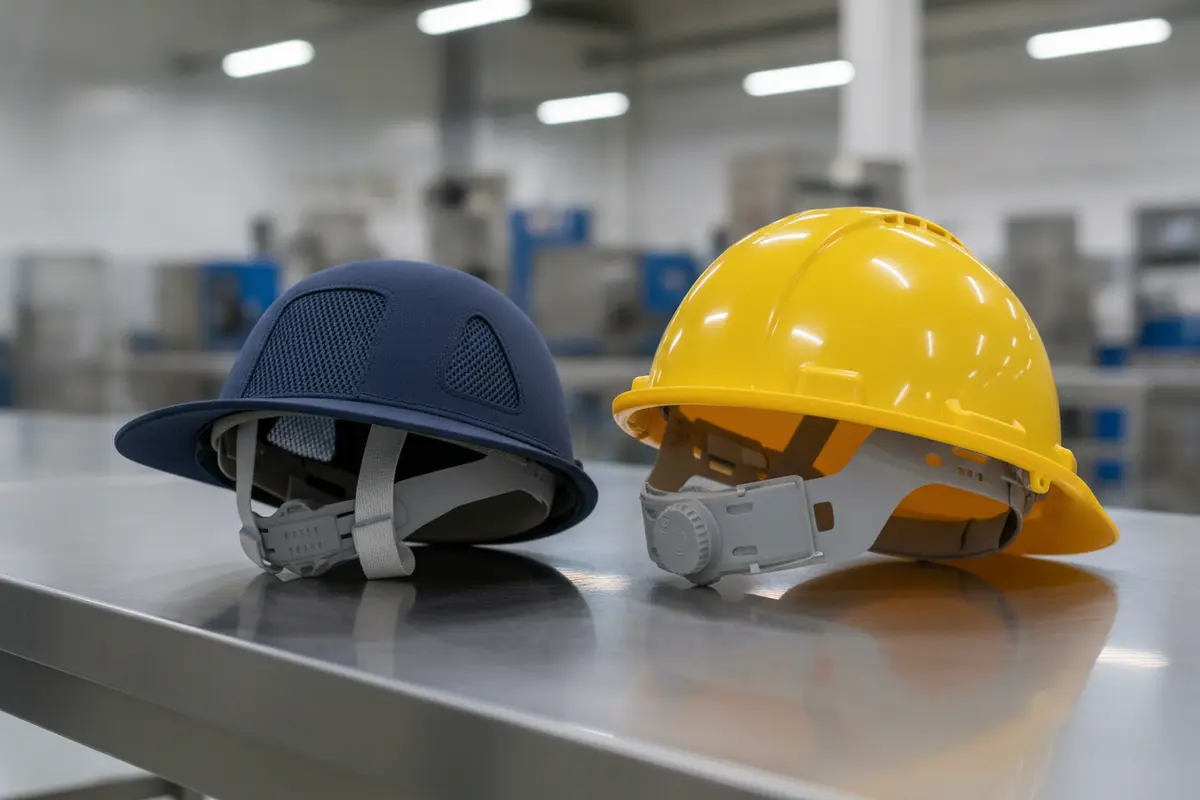
A bump cap is lightweight headwear with a protective insert or shell. It is generally intended to help reduce minor bumps against fixed objects, such as a low beam or a protruding shelf edge. It does not provide the same level or type of protection as a hard hat. It should not be selected for work where a worker could be struck by a falling or flying object, or where another hazard assessment or applicable rule calls for a hard hat.
A hard hat is designed as head protection for workplace impact hazards. Its shell and suspension system are part of a protective assembly; the assembly's performance depends on using the right components in the way the manufacturer specifies. Depending on the product, workplace, and applicable requirements, a hard hat may be needed for overhead hazards, construction tasks, maintenance work, or other settings where head impact is foreseeable. Do not assume that every hard hat addresses every hazard: check the product markings and documentation for its intended use and limitations.
The distinction is not simply "light duty" versus "heavy duty." The key question is whether the headwear is suitable for the hazards identified in the work area. A bump cap can still be the wrong choice for a task that feels routine, and a hard hat does not make an unsafe task safe by itself. Employers should assess the full work process, control hazards where possible, and select protective equipment for the remaining risks.
| Decision factor | Bump cap | Hard hat |
|---|---|---|
| Typical role | May help with minor bumps against stationary objects in appropriate low-risk settings. | Head protection for hazards specified by the product and workplace assessment. |
| Falling or flying object exposure | Do not treat as a substitute for a hard hat. | Evaluate a model intended for the identified hazard and follow its instructions. |
| Workplace requirement | Use only where the hazard assessment and site rules permit it. | Use when the assessment, applicable requirements, or site rules call for it. |
| Fit and compatibility | Check fit, retention, and compatibility with other PPE. | Check shell, suspension, fit, accessories, and compatibility as a complete system. |
| Inspection | Follow manufacturer inspection and replacement guidance. | Inspect and maintain the shell and suspension according to manufacturer instructions. |
How should your bump cap vs hard hat choice follow the hazard assessment?
Begin with the actual tasks and conditions, not a job title or a general impression of how hazardous a department feels. Walk the work area and consider what could contact a worker's head during normal work, setup, cleaning, maintenance, and foreseeable interruptions. Include temporary work such as equipment repair, deliveries, overhead work, and contractor activity.
- Overhead work: Ask whether tools, materials, or other objects could fall or be dislodged above workers. If that exposure exists, a bump cap is not a substitute for a hard hat.
- Moving equipment and materials: Consider loads being lifted, stored, moved, or handled at height, and whether a worker could enter an area where objects may fall or swing.
- Fixed obstructions: Note low ceilings, beams, pipes, open cabinet doors, and equipment edges. These are the kinds of stationary contact hazards for which a bump cap may be considered, but only if other hazards do not require a hard hat.
- Electrical exposure: Identify electrical tasks and determine whether the selected head protection is appropriate for that exposure. Do not infer electrical suitability from a product's appearance; confirm the specific product's markings and documentation.
- Work at height: Consider head protection together with fall protection and site procedures. Headwear does not prevent a fall. For example, a worker using a properly selected self-retracting lanyard still needs a task-specific assessment of head-impact risks.
- Multiple overlapping risks: Evaluate whether workers move between areas with different rules. A low-risk workstation may be beside a production or construction zone where hard hats are required.
Document the hazards, who may be exposed, and where the exposure occurs. Consider how likely contact is, how severe an injury could be, and whether changes to equipment layout, work methods, or access can eliminate or reduce the hazard. Then decide what PPE is needed for the remaining exposure. OSHA's PPE publication describes employers' responsibility to protect employees from workplace hazards that can cause injury. Use the applicable requirements and your site's hazard assessment when setting a head-protection policy (OSHA, Personal Protective Equipment).
When can a bump cap be appropriate?
A bump cap may be an option when the identified concern is occasional contact with fixed objects. The work area must not present hazards that call for a hard hat. Examples to assess might include a worker moving through a low-clearance service area or reaching around fixed equipment. These examples are not blanket approvals. Each site must consider its own conditions, procedures, applicable requirements, and the specific cap's intended use.
Some workplaces use bump caps in designated areas where hard hats are not required. The Pennsylvania Department of Transportation's safety handbook states that bump caps are optional where hard hats are not required. It also says a bump cap must not be substituted for a hard hat (PennDOT Safety Policy Handbook). The USDA Food Safety and Inspection Service likewise states that a bump cap is not a hard hat. It may not be substituted for a hard hat in the cited program directive (FSIS workplace safety directive). This is an agency guidance example, not a replacement for checking the rules that apply to your workplace.
Before approving a bump cap, answer these questions:
- Is the hazard limited to contact with stationary objects, or could an object fall, fly, swing, or otherwise strike the worker?
- Does a regulation, customer requirement, site policy, or task-specific procedure call for a hard hat?
- Will the worker stay in the assessed low-risk area, or routinely cross into a zone with different head-protection rules?
- Does the selected bump cap fit securely and remain compatible with the worker's other required PPE?
- Are supervisors and workers clear that the cap is not an alternative to a hard hat when one is required?
If any answer is uncertain, pause the purchase decision and review the task with the person responsible for workplace safety. Do not resolve uncertainty by choosing the lighter option or by treating a bump cap as a comfort upgrade to a hard hat.
When is a hard hat the safer selection?
A hard hat is the appropriate direction when the hazard assessment or site rules identify a risk of head impact that the bump cap is not designed to address. This can include exposure to falling or flying objects, work around overhead operations, or tasks governed by a hard-hat requirement. The correct model depends on the hazard and the product's intended use. Check manufacturer documentation and markings rather than relying on a generic description such as "industrial" or "construction."
Do not assume all hard hats have identical performance. Confirm the product's type, class, and other relevant markings against the job's needs and current applicable requirements. If electrical exposure is part of the task, verify that the particular model is suitable; a hard hat is not automatically appropriate for every electrical environment. When a task combines hazards, evaluate all of them rather than selecting for only the most visible risk.
Head protection is also one part of a broader PPE system. A worker may need eye, face, hearing, respiratory, or fall protection at the same time. Check that accessories are permitted by the hard hat manufacturer and do not interfere with the fit or function of the equipment. For example, assess eye protection alongside the headwear; safety glasses should be chosen for the task and worn as required. Where noise exposure is also present, consider compatible hearing protection and verify how it fits with the selected headgear.
How should buyers check fit, compatibility, and condition?
Comfort matters because equipment that workers cannot wear correctly may be removed, adjusted improperly, or rejected. But comfort is a selection factor only after the equipment is suitable for the hazard. Ask workers to try approved options under realistic conditions, including the other PPE they must wear. A cap or hard hat that seems comfortable by itself may fit differently with eyewear, hearing protection, a respirator, or a face shield.
- Check the fit range: Confirm that the product can be adjusted for the intended wearer and stays stable during normal movement. Follow the manufacturer's instructions for adjustment.
- Check retention: Consider whether the task or work environment calls for a retention feature, and use only approved components and configurations.
- Check accessory compatibility: Verify that any earmuffs, face shields, lamps, or other attachments are approved for the specific headwear. Avoid improvised modifications.
- Check visibility and movement: Ensure the equipment does not obstruct vision, interfere with communication, or make routine work unsafe.
- Check condition: Inspect the shell, suspension, insert, straps, and attachment points as relevant. Follow manufacturer criteria for damage, cleaning, storage, and replacement.
- Check sizing and availability: Ensure each worker can receive an appropriate fit and replacement components are available for the selected model.
For hard hats, the shell and suspension work as a system. Use only compatible replacement parts and accessories identified by the manufacturer. Do not drill, cut, paint, modify, or add unapproved materials to equipment. Inspect before use and remove damaged or questionable equipment from service according to the manufacturer's instructions and site procedures. A product's exterior may look intact even when its condition or history makes it unsuitable; keep inspection and replacement decisions tied to the manufacturer's criteria.
For bump caps, verify that the protective insert is present, positioned correctly, and not damaged or altered. Confirm that the cap is intended for the work setting and that its limitations are understood. A cap that is worn out, loose, or modified should not be treated as adequate just because it is lightweight and easy to replace.
What should a workplace buyer compare before ordering?
Once the hazard review establishes what type of protection is needed, compare products against the work conditions and purchasing requirements. Do not start with a catalog filter and assume the top result is suitable. Capture the selection rationale so that supervisors, purchasing staff, and workers can understand why the chosen equipment is approved.
| Buyer check | What to verify | Why it matters |
|---|---|---|
| Hazard match | Intended use, product markings, instructions, and site hazard assessment. | Prevents choosing equipment based on appearance or category name alone. |
| Workplace rules | Applicable requirements, customer rules, and site-specific procedures. | Requirements may vary by task, area, and employer policy. |
| Fit and compatibility | Fit on each worker and compatibility with other PPE and accessories. | Supports consistent wear and avoids conflicts between equipment. |
| Inspection and replacement | Manufacturer care instructions, inspection criteria, and replacement parts. | Helps buyers plan for maintenance and remove unsuitable equipment from service. |
| Worker use | Training, storage, cleaning, and how workers report damage or a changed hazard. | Equipment only helps when workers understand its limits and use it properly. |
| Procurement continuity | Approved models, available sizes, compatible components, and reorder process. | Reduces unplanned substitutions that may not meet the original selection criteria. |
Use a short approval record for each job or work area. Include the hazard reviewed, the approved headwear type and model, any required accessories, who approved the selection, and the date of review. Keep manufacturer instructions and product documentation accessible. If the task changes, a new machine is installed, overhead work begins. Or workers move into a different zone, revisit the assessment instead of relying on an old purchasing decision.
When comparing models, avoid statements such as "all bump caps are the same" or "any hard hat will do." Product design. Intended use, fit range, markings, and compatible accessories can differ. SafetyCompany.com distributes products from multiple safety brands; buyers should review each product's specifications and documentation for the exact model being considered. Start with the broader personal protective equipment selection only after documenting what the work requires.
Compare a hard hat option against your documented needs
How can teams make the decision consistent across work areas?
Different work areas can need different policies, but variation should be deliberate. Map the zones where head protection is required and identify the transitions between them. Mark access points, communicate expectations to employees and contractors, and make sure visitors know what to wear before entering. If bump caps are approved in one area, explain where that approval stops and what triggers a switch to hard hats.
Train supervisors to recognize changes that require a reassessment: a new overhead process. Stored materials above a work station, a maintenance job that puts someone under equipment, or a temporary contractor activity. Workers should have a simple way to report changed conditions and damaged equipment. Procurement teams should avoid substituting a different style or model without confirming it meets the same documented needs.
Consistency also depends on practical access to approved equipment. Keep the correct sizes and compatible accessories available where they are needed, and make replacements easy to request. If tasks call for multiple kinds of PPE, check how the items work together rather than approving each item in isolation. A broader product range, such as PPE and workplace safety equipment, can support comparison, but the hazard assessment, not assortment, sets the requirements.
Call to discuss head protection product questions
Frequently asked questions
Can a bump cap replace a hard hat?
No. A bump cap must not be used as a substitute when a hard hat is required. The hazard assessment may identify exposure that the cap is not designed to address. Confirm workplace rules and the product's stated limitations.
Are bump caps suitable for construction work?
There is no single answer for every construction task or site. Review the hazards, applicable requirements, and site rules. Where those call for hard hats, a bump cap is not an acceptable replacement. Do not approve a bump cap based only on comfort or a worker's usual task.
Does a hard hat protect against every head hazard?
No. Protection depends on the specific product, its intended use, condition, fit, and the hazard. Check the markings and manufacturer documentation, and assess other risks such as electrical exposure, falling objects, or incompatible accessories separately.
Can workers wear hearing protection or a face shield with a hard hat?
Sometimes, if the specific combination is compatible and approved by the manufacturers. Check instructions for both products and confirm the combination does not compromise fit or function. Do not modify headwear or attach unapproved accessories.
How often should bump caps and hard hats be replaced?
Follow the manufacturer's inspection, care, and replacement criteria for the specific product. Remove equipment from service when it is damaged or fails an inspection, and reassess it after a significant event or when its condition is uncertain. Do not rely on a generic replacement interval in place of product instructions.
Review hard hats for your workplace assessment.
The sound choice is the one that matches the documented hazards, site requirements, and workers' actual tasks, not simply the lightest or most familiar option. When the risk or requirement is unclear, pause and get the assessment reviewed before issuing headwear.
Recent Posts
-

Workplace Planning with Bump Cap vs Hard Hat
When weighing bump cap vs hard hat, start with the hazard, not the appearance, comfort, or price of …Oct 21st 2026 -
Ear Protection: Plugs, Muffs, and Communication
Choosing ear protection for a workplace is not just a matter of picking the product with the highest …Oct 21st 2026 -
LOTO Explained: Lockout/Tagout Steps for Safer Maintenance
LOTO, short for lockout/tagout, is an energy-control process that prevents a machine from starting o …Oct 12th 2026