
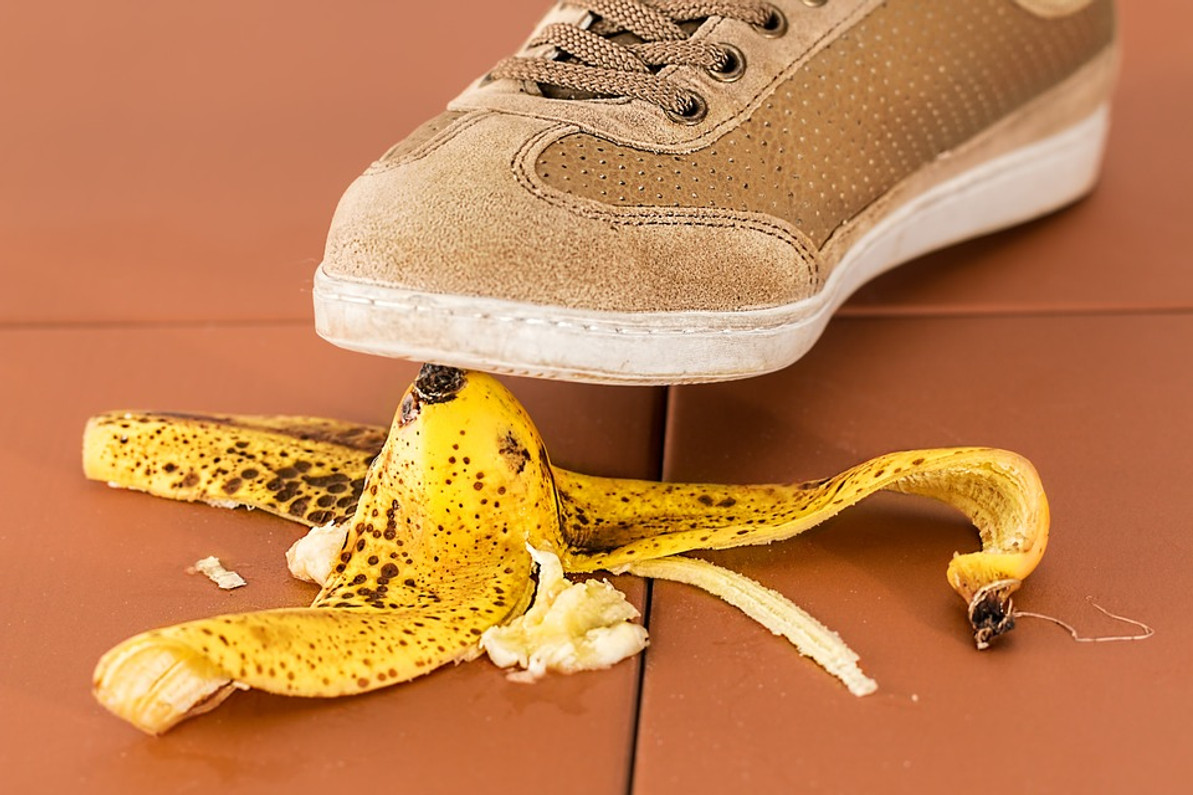
6 Ways to Lower the Risk of Slip-and-Fall Accidents at Work
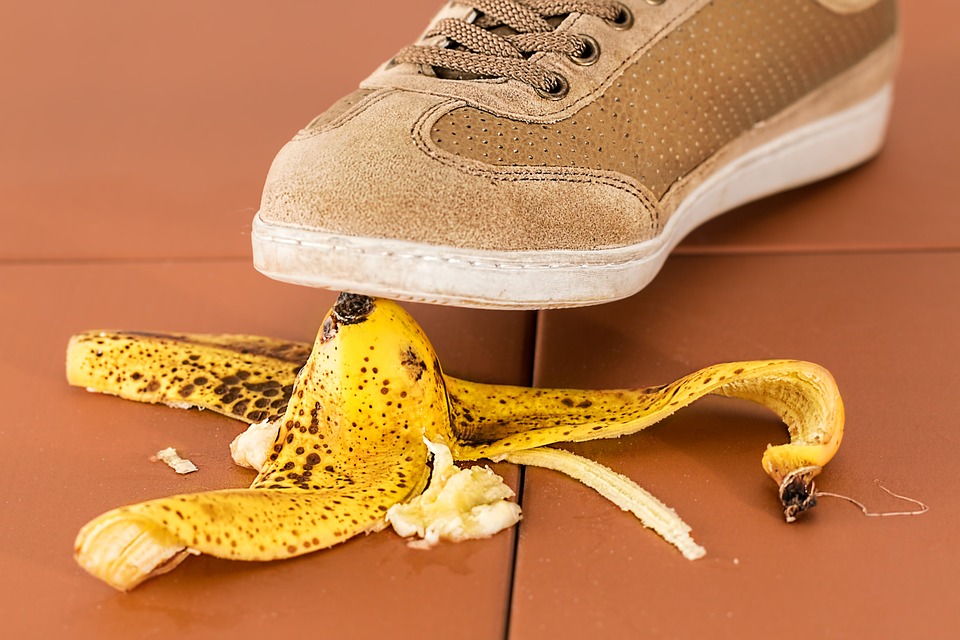
Did you know that slip-and-fall accidents are the leading cause of work-related injury? According to the Bureau of Labor Statistics (BLS), they even account for roughly 5 percent of all work fatalities among women and 11 percent among men. As an employer, it's your responsibility to protect workers from injury -- and that includes slip-and-fall accidents. Here are six easy ways to reduce the risk of slip-and-fall accidents in your workplace.
#1) Illuminate Your Workspace
Slip-and-fall accidents are more likely to occur in dim, dark environments than well-lit environments. If workers can't see, they may trip and fall, resulting in injury. Therefore, it's important that you illuminate your workspace. Use high-powered lighting throughout your workspace to illuminate the environment and protect workers from slip-and-fall accidents.
#2) Require Non-Slip Footwear
Depending on your business's operations, you should consider adopting a new policy that requires workers to wear non-slip footwear. Restaurants, for example, often require servers to wear non-slip footwear because their floors are often covered in liquids and oil. Adopting a similar policy with your business may prove useful in protecting workers from slip-and-fall injuries.
#3) Keep Floors Dry
The golden rule of preventing slip-and-fall accidents in the workplace is to keep floors dry. Whether it's a restaurant, retail store, manufacturing facility or any other workplace, floors should be clean and dry. This means that when liquids are spilled, workers should immediately dry them up. Otherwise, it creates a brief window of time during which a worker may slip and fall.
#4) Use Signs
And when a spill occurs in your workplace, use signs to notify other workers and customers that the floors are wet. A yellow stand-up sign should be placed in the center of the spill. If the spill is large, you may need to use two or more signs.
#5) Use Mats
Another helpful tip to reduce the risk of slip-and-fall accidents is to use mats. If the floors are particularly slippery in a specific area of your workplace, place a fabric rug over it. This provides workers with greater traction, thereby reducing the risk of an accident.
#6) Encourage Reporting
Finally, encourage workers to report slip-and-fall hazards -- spilled liquids, slippery floor, or uneven floor, etc. -- as well as slip-and-fall accidents themselves. With more information about the state of your workplace, you can make the appropriate changes to create a safer environment.
Recent Posts
-

Workplace Planning with Bump Cap vs Hard Hat
When weighing bump cap vs hard hat, start with the hazard, not the appearance, comfort, or price of …Oct 21st 2026 -
Ear Protection: Plugs, Muffs, and Communication
Choosing ear protection for a workplace is not just a matter of picking the product with the highest …Oct 21st 2026 -
LOTO Explained: Lockout/Tagout Steps for Safer Maintenance
LOTO, short for lockout/tagout, is an energy-control process that prevents a machine from starting o …Oct 12th 2026