
How to Choose Safety Shoes for Workplace Hazard Control
The right pair of safety shoes starts with the hazard, not the product label. A toe cap alone may not address punctures, slippery floors, electrical exposure, or impacts to the top of the foot. Employers should identify the dangers in each work area, then match footwear features and documented performance to those risks.
Browse foot protection PPE for your workplace
Choose safety shoes by matching a documented workplace hazard assessment to the protection required. That may include impact or compression resistance, slip resistance, puncture resistance, electrical hazard protection, metatarsal protection, or a combination of features. OSHA addresses protective footwear where foot-injury hazards exist, while ASTM F2413 provides performance and testing criteria for covered protective footwear.
Review the work surface, materials, equipment, and tasks employees encounter throughout a shift. Then confirm the applicable markings, manufacturer documentation, fit, and care requirements before approving a style for your team.
What should you check before choosing safety shoes?
Start with the workplace hazard assessment, not the shoe style or brand. Protective footwear depends on the injuries employees could face during actual tasks and in the areas where they work. Review the process, tools, equipment, walking surfaces, materials, and exposure conditions. Document the hazards that remain after other controls are applied.
Which foot hazards are present?
Look for falling or rolling objects, objects that could pierce the sole, electrical hazards, and slip risks. Also consider whether the top of the foot could be struck or whether employees need additional coverage around the ankle. Receiving, production, maintenance, construction, food-service, and warehouse areas can require different footwear decisions.
OSHA 1910.136 requires employers to ensure that affected employees use protective footwear where there is a danger of foot injury from falling or rolling objects, piercing objects, or electrical hazards. The standard is part of OSHA Subpart I PPE requirements, so footwear selection does not replace a broader hazard assessment or other necessary controls. Review the OSHA protective footwear standard when documenting the decision.
How does ASTM F2413 support the selection?
ASTM F2413 defines minimum design, performance, testing, and classification requirements for protective footwear. It can help a buying team compare documented performance with the hazards identified in the workplace. Use the ASTM F2413 specification as a reference, then confirm the exact designations and limitations for the product under review.
ASTM F2413 is not a blanket approval for every workplace condition. A shoe may meet one performance criterion while remaining unsuitable for another exposure. The full selection still depends on the work environment, product documentation, employee fit, and the hazards that remain after other controls.
How do toe protection options match workplace hazards?
Steel toe and composite toe describe how a safety toe is constructed. Neither material is a universal answer for every job. The more useful question is whether the complete shoe provides the tested impact or compression performance required by the hazard assessment while remaining suitable for the employee and task.
| Selection question | What to verify | Why it matters |
|---|---|---|
| Could objects fall or roll onto the toes? | Documented protective-toe performance and correct sizing | The toe area must address the identified impact or compression exposure. |
| Could objects pierce the sole? | Documented puncture resistance for the footwear construction | Toe protection does not automatically protect the bottom of the foot. |
| Could the top of the foot be struck? | Whether metatarsal protection is required and documented | A safety toe does not cover every part of the foot. |
| Will employees work around electricity? | Electrical hazard or static-related designation and limitations | These designations serve different purposes and must match the conditions. |
Do not select footwear because a label sounds comprehensive. Confirm what the marking covers, which test or classification applies, and whether the product is intended for the conditions in your facility. Fit also matters because a toe cap or metatarsal guard must stay positioned correctly to function as intended.
Some workers may prefer composite materials because of weight or temperature considerations, while other jobs may call for a different construction. Those preferences should be evaluated after the required protection is defined. Avoid presenting one toe material as automatically safer without product-specific evidence.
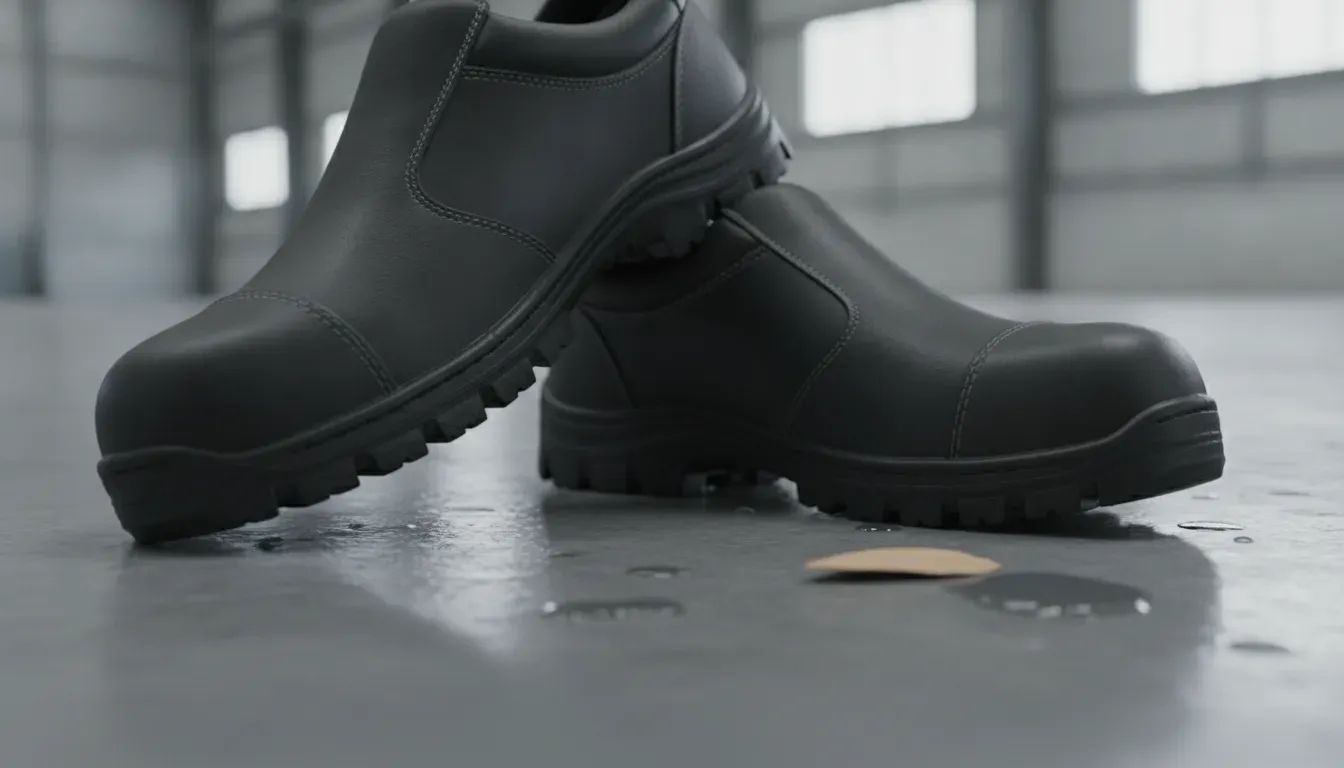
Which safety shoes work best on wet, oily, or sharp surfaces?
Start with the surface hazards identified in the assessment, then select safety shoes with features that address those risks together. A shoe that grips well on a wet floor may still leave a worker vulnerable to a nail, metal shard, or other object penetrating the sole. Puncture resistance does not automatically provide traction.
How should teams address wet and oily floors?
On surfaces exposed to water, cooking oils, lubricants, or grease, prioritize footwear identified as slip-resistant. Review the outsole design and the conditions for which its traction performance is documented. Slip-resistant footwear can support safer movement, but it does not replace spill response, floor maintenance, lighting, housekeeping, or deliberate walking practices.
Food-service and industrial teams should also consider how quickly the outsole wears under daily use. Tread that has become smooth may no longer provide the same traction. Set an inspection routine, report spills promptly, and replace footwear when wear or damage compromises its protective condition.
For wet work areas, compare the selection against options such as PVC work boots when the job requires more coverage or water resistance than a low-cut shoe can provide.
How should teams address puncture hazards?
Where workers may step on nails, scrap metal, broken material, or other piercing objects, look for documented puncture resistance in the footwear bottom. ASTM F2413 includes puncture resistance among its protective footwear performance criteria. This feature is separate from toe protection, so the presence of a protective toe does not answer the puncture question.
Walk the actual work route when assessing this risk. Consider storage areas, temporary construction surfaces, maintenance zones, loading areas, and places where debris can accumulate. The footwear decision should reflect the conditions employees encounter, not only the intended task description.
How do fit, comfort, and work environment affect protection?
A protective feature only helps when the footwear fits correctly and stays on the worker's feet throughout the task. Poor fit can create pressure points, instability, early fatigue, and a tendency to avoid wearing the required footwear. Review sizing guidance, toe-room requirements, closure systems, and the socks or insoles used with the shoe.
What should employees test during a fitting?
Employees should walk, climb, kneel, operate equipment, and perform the movements required by the job while wearing the footwear. Check that the heel remains secure, toes are not compressed, and the shoe does not rub when the foot flexes. A fit test should include the work sock and any approved insole, because those can change the available space.
Match the construction to the setting. A controlled indoor area may support a low-cut style, while outdoor work, uneven ground, debris, rain, or ankle exposure may call for boots. In hot or wet settings, consider how the upper, lining, and care routine affect continued use. Comfort is not separate from compliance; workers are more likely to use required footwear correctly when it works with the task.
Keep a clear distinction between comfort preferences and required protection. A lightweight style cannot replace a feature the hazard assessment requires, and a familiar brand cannot substitute for current documentation.
When should you choose work boots or overshoes instead?
Low-cut safety shoes can be practical when the work area is controlled and the main exposure is limited to hazards at the toe or sole. They may be a poor fit when the job also calls for more coverage around the ankle, protection from changing weather, additional stability on uneven ground, or resistance to wet conditions.
When are work boots the better option?
Consider work boots when the job combines surface hazards with outdoor exposure, loose debris, uneven ground, changing weather, or a need for more coverage. Confirm that the boot still addresses the required toe, slip, puncture, electrical, or metatarsal features. More material does not automatically mean more protection, so document the reason for selecting the boot construction.
Teams can review industrial safety boots as one category when the work environment requires more coverage than a low-cut shoe. A boot may also be appropriate when employees move between indoor and outdoor areas during the same shift.
When do overshoes make sense?
Overshoes can be useful when workers need a removable layer for a specific environment, such as a wet area, contamination-control transition, or temporary exposure. Confirm that the overshoe is compatible with the underlying footwear and does not create a trip hazard, interfere with equipment operation, or obscure the protective markings that must remain visible.
Overshoes should not be treated as a universal substitute for purpose-built safety shoes or boots. Confirm the product's intended use, limitations, cleaning instructions, and compatibility with the required controls. If the exposure is routine and central to the job, a dedicated footwear solution may be easier to manage and inspect.
How can employers verify safety shoe claims before purchase?
Procurement teams should treat every safety feature as a performance claim that needs documentation. Product names, icons, and broad marketing language do not establish that a style is suitable for a particular hazard. Create a short approval record that connects the workplace exposure to the required feature and the manufacturer's supporting information.
What should you look for on the label?
Record the markings and designations that apply to the selected protection. Depending on the hazard assessment, the review may include protective-toe performance, puncture resistance, electrical hazard protection, static-related properties, metatarsal protection, or other documented criteria. Do not assume that one marking covers a different risk.
Which documentation should procurement request?
Request the manufacturer's current product information, applicable standard or test details, sizing guidance, care instructions, and limitations. Compare the documentation with the conditions employees actually face. If a feature is important to the decision but the documentation does not explain it, pause the purchase and seek clarification rather than filling the gap with a marketing assumption.
How should the control remain current?
Keep an approved-style list by work area or job function. Train employees on what the footwear addresses, how to use and care for it, and what it does not replace. Inspect for worn soles, damaged uppers, separation, punctures, and deterioration. Revisit the selection when equipment, materials, processes, floor conditions, or job duties change.
Safety Company's specialty boots category can be part of that review when a work area requires a footwear type outside the team's standard low-cut or industrial-boot choice. Product documentation should still control the final approval.
Compare documented foot protection features for each work area
What is the practical safety shoes checklist for a buying team?
A buying team can make footwear selection more consistent by treating it as a documented PPE decision. Use this sequence with the EHS lead, supervisors, procurement, and the employees who will wear the shoes.
- Identify the hazards first. Walk through each affected area and record falling or rolling objects, puncture risks, slippery surfaces, electrical exposure, metatarsal exposure, weather, debris, and uneven ground.
- Map each hazard to a required feature. Separate toe protection from puncture resistance, traction, electrical hazard protection, static-related properties, and additional coverage. Do not let one feature stand in for another.
- Verify the standard and documentation. Review relevant OSHA requirements, applicable ASTM criteria, product markings, manufacturer information, and limitations before approval.
- Test fit and task suitability. Have employees perform representative movements in the footwear, with normal socks and approved accessories. Check stability, toe room, heel security, and compatibility with equipment.
- Train users on features and limits. Explain what the footwear addresses, what it does not replace, how to care for it, and when to report damage or changing conditions.
- Inspect, replace, and review. Set a routine for checking soles, uppers, toe areas, closures, and other protective components. Revisit the approval when the work or environment changes.
This checklist helps teams choose footwear based on actual exposure rather than a generic label. It also creates a record that can be updated when the workplace, product, or applicable documentation changes.
Review industrial safety footwear options for your team
Frequently Asked Questions
How do I choose the right safety shoes for my job?
Start with the documented workplace hazard assessment. Match the footwear to risks such as falling objects, punctures, wet or oily floors, electrical exposure, and required toe or metatarsal protection. Then verify product markings, fit, work-environment compatibility, and manufacturer documentation before purchase. OSHA explains when protective footwear is required.
What is the difference between steel toe and composite toe safety shoes?
Steel and composite describe the toe-cap material, not a universal ranking of protection. Evaluate the complete shoe's documented impact or compression performance, fit, work conditions, and other required features. Temperature, weight, and task considerations may influence the choice after the hazard assessment defines the required protection.
Do safety shoes protect against electric shock?
Some footwear is designed and labeled for electrical hazard protection, while static-dissipative footwear addresses static buildup and serves a different purpose. Electrical safety footwear has limitations and is only one part of an electrical safety program. Confirm the product documentation and conditions of use before relying on it. ASTM F2413 identifies electrical and static-related criteria.
Are slip-resistant safety shoes mandatory for kitchen staff?
Requirements depend on the employer's hazard assessment and applicable workplace rules, so a generic shoe label does not answer the compliance question. Slip-resistant footwear can improve traction on wet, oily, or greasy floors, but it does not replace floor maintenance or safe walking practices. CDC and NIOSH provide food-service guidance.
How often should I replace my safety shoes?
Replace them when the outsole, upper, toe area, closure, or other protective component is worn, damaged, or no longer meets the documented need. There is no single schedule for every worker. Inspect footwear regularly and consider usage, exposure, and manufacturer guidance. Worn slip-resistant outsoles may lose traction over time.
Ready to choose footwear for your workplace hazards?
A documented hazard assessment gives your team a clearer basis for comparing toe protection, traction, puncture resistance, fit, and other footwear needs. Review the available options against your work areas and product documentation before making a purchase.
Review Safety Company's foot protection collection
If you need help matching footwear to documented hazards, contact the Safety Company team for product-selection guidance.
Recent Posts
-
Cut Gloves: How to Choose the Right ANSI Level
A hand-protection program works best when it starts with the task, not a product label. A packaging …Oct 5th 2026 -
Kevlar Gloves. Cut, Heat, and Task-Specific Selection
Choosing hand protection by material name alone can leave a serious gap in your safety program. Star …Oct 2nd 2026 -
Face Shield for Grinding: Selection and Safety Guide
Grinding can send fragments, sparks, dust, and other debris toward a worker's face in an instant. Th …Sep 30th 2026