
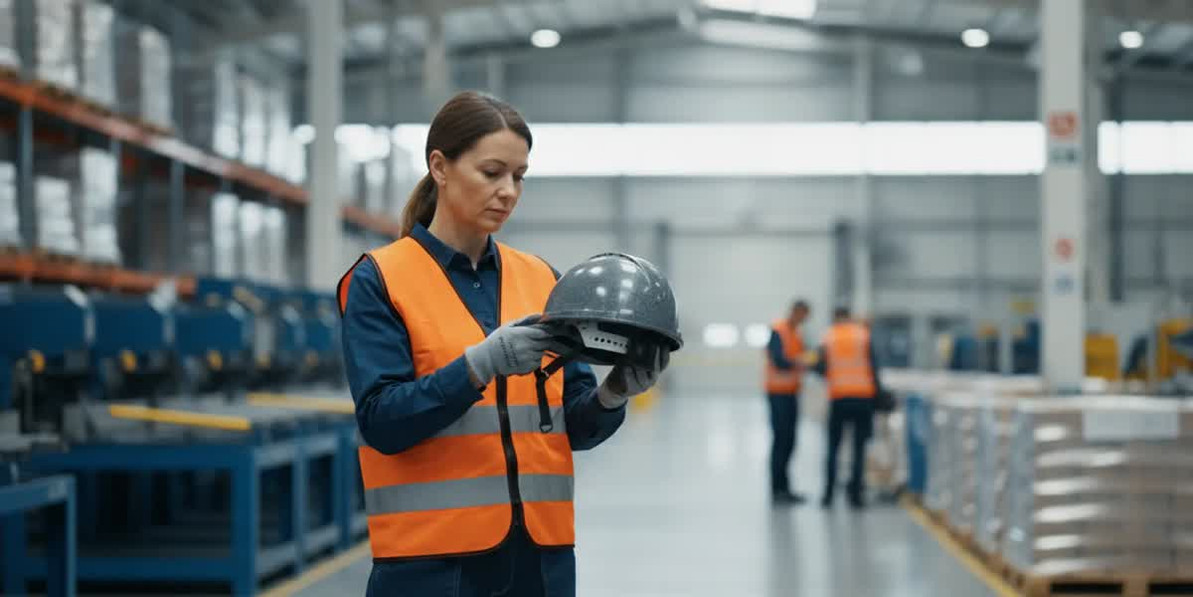
The workplace question: Carbon Fiber Hard Hat
A carbon fiber hard hat may stand out for its shell material, but material alone cannot tell a safety manager whether a helmet suits a job. The decision starts with the hazards, the helmet’s documented compliance and electrical classification, and the fit and care requirements. Use this guide to evaluate a carbon fiber hard hat as one option in a compliant head-protection program—not as a shortcut around a hazard assessment.
Call to discuss workplace safety equipment needs
What should a carbon fiber hard hat decision answer?
Start by defining what the helmet must do on the job. A material name is not a complete performance specification. The product label, manufacturer documentation, applicable standard markings, and the employer’s hazard assessment together provide the information a buyer needs to review.
For each work area, identify the credible head hazards and the conditions that could affect protection. Consider falling or flying objects, overhead work, fixed-object impacts, electrical exposure, temperature, moisture, contamination, and how the helmet will be worn with other equipment. These are prompts for assessment, not a substitute for evaluating the actual task and applicable rules.
Then turn the assessment into a written requirement: what type of helmet is acceptable, what performance markings are required, what accessories are needed, and who verifies fit and condition. Ask whether the specific model—not just a general product family—is documented for the intended use. A helmet that looks robust or has an advanced-sounding material description still needs suitable markings and instructions.
In the United States, employers should check the applicable workplace requirements and recognized head-protection standards for their situation. OSHA is a starting point for workplace safety information, but a buyer should confirm the specific regulation and product documentation that apply to the job rather than relying on a homepage or a material description alone. Consult OSHA workplace safety resources as part of that review.
What does the shell material tell you—and what does it not?
Carbon fiber describes a material used in a helmet shell. It does not, by itself, establish the helmet’s type, electrical class, impact performance, approved accessories, or suitability for a particular worksite. Two helmets with different shell materials can carry relevant safety markings; two products using a similar material can still differ in design, documentation, and intended use.
That distinction matters in procurement. A product title, sales description, finish, or perceived toughness should not replace inspection of the model’s label and technical information. Confirm that the exact configuration under consideration has legible markings and instructions. If a seller’s listing does not make the required information clear, request manufacturer documentation before approving the item.
Do not infer electrical protection from carbon fiber, a nonmetallic appearance, or a marketing phrase. Electrical exposure calls for an assessment of the task and confirmation that the specific helmet is marked and documented for the required class. A shell’s visible material is not a reliable way to establish that protection. If the documentation is unclear, pause the selection and have the responsible safety professional resolve it.
Likewise, material alone does not tell you how a helmet will perform after aging, damage, chemical exposure, or an unauthorized modification. Follow the manufacturer’s instructions for service life, cleaning, storage, inspection, and replacement. Put those instructions into the site’s process so that employees do not have to guess based on appearance.
How should buyers compare helmet markings and hazards?
Use the markings on the exact helmet to compare candidate products against the written job requirements. Buyers commonly need to establish whether the helmet’s design type and electrical classification meet the assessed hazards. In ANSI/ISEA Z89.1-based product descriptions, Type I and Type II distinguish impact-protection design, while electrical classes describe different levels or absence of electrical protection. Verify the exact meaning and applicability against the current standard and manufacturer documentation; do not choose a type or class from a generic summary alone.
Map the hazard to a documented requirement before comparing materials or price. If overhead hazards are present, identify the form of impact protection the task requires. If electrical hazards are present, verify the appropriate electrical class and any limitations. If both kinds of hazards exist, check that the selected model’s documentation addresses the combination and the way the helmet will be used.
| Decision point | What the buyer should verify | What not to assume |
|---|---|---|
| Work hazard | Documented head-protection need based on tasks, location, and exposure | That one helmet is suitable for every area |
| Design type | Marking and documentation for the required impact-protection design | That shell material determines type |
| Electrical exposure | Exact electrical-class marking and product instructions for intended use | That a nonmetallic-looking shell is electrically protective |
| Accessories | Manufacturer-approved combinations and any limits or conditions | That accessories from different systems are interchangeable |
| Fit and maintenance | Adjustment range, inspection process, cleaning, storage, and replacement guidance | That a visually sound helmet is automatically serviceable |
This comparison keeps the decision tied to protection requirements. It also makes it easier to explain why a particular model was selected during procurement review, onboarding, or an audit. Keep the evidence with the product record: model information, the documentation reviewed, the designated use, and the person responsible for approval.
How do fit and compatibility affect the choice?
A helmet must fit the wearer and remain in the intended position during work. Check the manufacturer’s sizing and adjustment directions, the range of suspension adjustment, and whether the model can be issued across the size range on the team. A procurement sample should be tried by representative users before a large order, especially when workers wear different hairstyles, head coverings, or job-specific equipment.
Review compatibility as a system. Employees may need eye, face, hearing, respiratory, or communication equipment at the same time. A hard hat and an accessory should only be combined when the helmet manufacturer’s instructions or the applicable product documentation support that combination. Adding an unapproved attachment, drilling the shell, or making an improvised alteration can affect the product and may invalidate its intended use.
Consider the actual work sequence. A worker who switches between tasks may need a face shield or hearing protection, while another may need a different set of equipment. Confirm that the selected helmet can be used with the needed accessories as documented, and define when an alternative setup is required. For example, a team assessing face protection can compare its separate equipment needs with options such as face shields; that product link is not a statement of compatibility with any particular helmet.
Eye protection should also be selected for the hazard and used as required by the task. A safety manager may review equipment such as safety eyewear separately, then confirm how it is worn with the chosen head protection. Do not assume that a helmet’s shape guarantees a seal, coverage, or compatibility with another item.
What should a buyer ask about the work environment?
Translate general hazard categories into the conditions at the site. Ask where workers will be positioned, what could strike or contact the head, how often the work changes, and whether the helmet may be exposed to conditions addressed in its instructions. Include maintenance, storage, cleaning chemicals, heat sources, and transportation in the review when they are relevant.
For electrical work, involve the responsible electrical-safety professional. Identify the exposure and the required head protection before comparing product claims. Verify the exact model’s class marking and documented limitations. Do not use the material name as an electrical rating, and do not make a substitute selection when the required evidence is missing.
For work at height, head protection is only one part of the control plan. The team must separately assess fall hazards and select the required fall-protection equipment and procedures. A helmet does not prevent a fall, and a fall-protection product does not establish a helmet’s suitability. If the work involves roofing, review the full task-specific system; a roofer’s fall-protection kit is an example of a separate equipment category to assess, not a recommendation for a specific job or a substitute for a qualified evaluation.
For jobs with more than one hazard, document which requirements are simultaneous and which depend on the task. A maintenance worker might move from a general area to a controlled task with different exposures. Use clear work instructions and issue rules so the worker knows when to change equipment or seek direction. Avoid vague requirements such as “wear the carbon fiber model” when the safety need is actually defined by a specific hazard and marking.
How can a team evaluate product documentation?
Ask for documentation for the exact model and configuration being purchased. Check the product label, user instructions, standard and class markings, accessory guidance, inspection criteria, and any stated limitations. Confirm that the documentation is consistent across the product page, packaging, and supplied materials. Record the source and date of the review so that a later buyer can verify the decision.
Make a short evidence checklist before requesting quotations:
- Exact manufacturer, model, size, and configuration being evaluated.
- Required standard markings and proof that the model meets the site’s written requirements.
- Design type and electrical class, when relevant to the hazard assessment.
- Manufacturer-supported accessories and the conditions for using them.
- Fit and adjustment directions, inspection criteria, care, storage, and replacement guidance.
- Any limits that affect the task, environment, or use with other PPE.
- Instructions for addressing a damaged, suspect, or improperly modified helmet.
If a product description uses broad language such as “industrial,” “premium,” or “electrical safe,” ask what documentation supports the precise claim and the intended use. Do not transform a vague listing into an employer requirement. Keep unanswered questions open until the safety lead or other qualified reviewer confirms the facts.
For teams with electrical hazards, review the rest of the PPE ensemble as a coordinated but separately verified set. For example, a buyer might examine an arc-flash PPE kit as its own product category while confirming that every component is suitable for the task. The presence of one electrical-safety product does not establish that a hard hat, accessory, or complete ensemble is appropriate.
How should employers inspect, issue, and replace helmets?
Set an inspection routine based on the manufacturer’s directions and workplace policy. At issue, confirm the helmet is the approved model, fits the wearer, has the expected suspension, and carries the required markings. Train users to check the shell and suspension before use and to report damage, missing parts, changes, or concerns promptly.
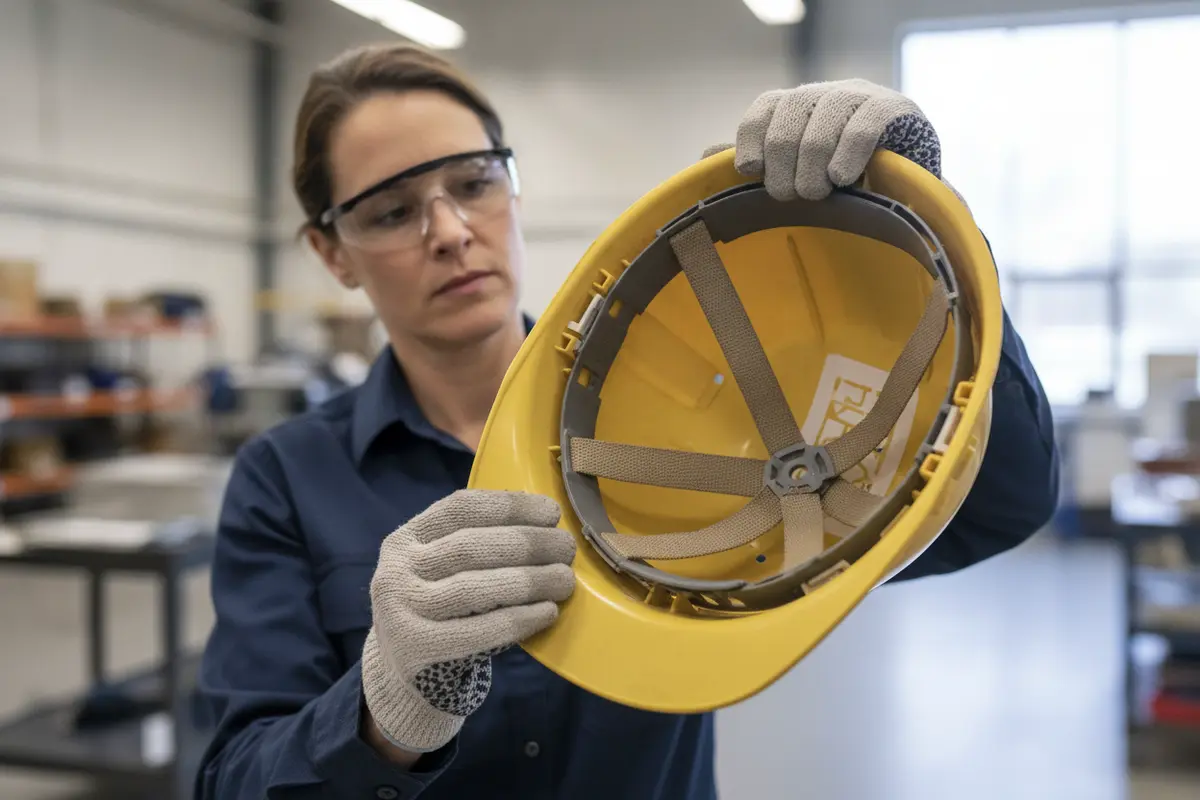
Inspection should cover the parts specified by the manufacturer, including the shell, suspension, adjustment components, and attachment points where applicable. Establish a process for taking a suspect helmet out of service rather than leaving the worker to decide whether a defect is serious. A damaged or modified product should be handled under the maker’s instructions and the employer’s procedure.
Keep cleaning and storage directions available where helmets are issued or maintained. Do not use solvents, paints, stickers, or other treatments unless the manufacturer says they are acceptable. A site may set a more frequent check or a stricter removal rule, but it should not extend service life beyond manufacturer guidance. Record issuance and replacement when that supports the safety program.
Make replacement straightforward. Tell employees who to notify, where to obtain an approved replacement, and whether the replacement must be checked before returning to work. If the task or site changes, revisit the hazard assessment and verify the helmet still matches the new requirement. A model selected for one area should not be presumed suitable for a different exposure.
How can a buyer compare options without letting price lead?
Compare only products that meet the documented safety requirement. Once compliance, hazard suitability, fit, and compatibility are established, compare availability, user acceptance, accessory needs, inspection effort, and total procurement considerations. A lower purchase cost cannot compensate for missing documentation or a mismatch with the job.
Use a staged review. First screen for the required markings and documentation. Next, check fit and equipment compatibility with the people who will use the helmet. Then review maintenance and issue procedures. Finally, compare eligible options on commercial terms. This avoids spending time evaluating a candidate that cannot satisfy the required protection criteria.
Plan a small pilot when the buyer needs feedback on fit or workflow. Have representative workers wear the approved configuration under normal conditions, gather feedback on adjustment and use with other PPE, and resolve any conflicts before broad issue. A pilot is for fit and implementation feedback; it cannot replace technical review or establish certification.
Use feedback to identify practical barriers, not to relax the safety requirement. Ask workers whether they can adjust the suspension correctly, keep the helmet positioned during normal movement, and use required equipment without pressure points or interference. If an accessory shifts, obstructs a task, or cannot be worn as directed, stop and have the safety lead review the configuration. Do not let an improvised workaround become the informal standard.
Include shift supervisors in the rollout. They need to know which models and configurations are approved, how workers obtain replacements, and what to do when a helmet is damaged or missing. A brief written issue guide can show the model, intended work area, required accessories, inspection steps, and contact for questions. Keep the guide consistent with the manufacturer’s instructions and the site hazard assessment.
Review the process after a near miss, a change in work methods, or a product update. A new model may look similar to the one previously approved but have different instructions or compatible accessories. Compare the exact model and documentation before substituting it. Procurement records should make clear whether a later item is an approved equivalent or needs a new technical review.
For broader workplace procurement, SafetyCompany.com is a specialized online distributor of industrial safety equipment and PPE from multiple brands. Buyers can also review other task-related categories, such as work gloves, while treating each item’s selection and compliance as a separate decision. No related product should be taken as proof that a particular head-protection setup is suitable.
Call SafetyCompany.com about safety equipment for your team
What should the purchasing and rollout checklist include?
A simple sequence helps keep the decision consistent from first inquiry through everyday use:
- Define the task. List work areas, head hazards, electrical exposures, and conditions that could affect helmet use.
- Write the requirement. Identify the applicable performance markings, design type, electrical class, fit needs, and accessory requirements based on the assessment.
- Verify the candidate. Review labels and manufacturer documentation for the exact model and configuration. Resolve gaps before approving a purchase.
- Check the full setup. Confirm that needed eye, face, hearing, and other PPE can be worn as instructed, without unauthorized alteration.
- Test fit and workflow. Have representative workers try the approved setup and report practical issues before broad issue.
- Train and document. Explain correct adjustment, inspection, storage, care, removal from service, and how to obtain a replacement.
- Review after changes. Reassess when tasks, hazards, equipment, or manufacturer instructions change.
Assign an owner for each stage. Procurement can collect product details and quotations, while the safety professional confirms the hazard-based requirements. Supervisors can manage issue and daily checks, and workers can report problems. Clear responsibility makes it less likely that a purchase decision is reduced to a material description or a single catalog line.
Keep a record of why the model was accepted, what configuration was approved, and what training was provided. Include the product documentation and any conditions on use. If a later order changes the model or accessory package, compare it with the approved record instead of assuming it is equivalent.
Discuss your head-protection purchasing questions
Frequently Asked Questions
Is a carbon fiber hard hat automatically safer than another hard hat?
No. The shell material alone does not establish protection or suitability. Compare the exact model’s markings and documentation with the hazards and requirements for the job.
Does carbon fiber mean a hard hat is electrically rated?
No. Do not infer an electrical class from the material or appearance. Verify the specific model’s marking and manufacturer documentation against the electrical hazard assessment.
Can I add a face shield or other accessory to any hard hat?
No. Use only combinations supported by the helmet and accessory manufacturers’ instructions. Confirm compatibility for the exact models and configuration, and do not drill, cut, or make unapproved changes.
When should a carbon fiber hard hat be replaced?
Follow the manufacturer’s inspection, service-life, and replacement instructions, along with the employer’s procedure. Remove a damaged or suspect helmet from service and have the responsible person determine the next step; do not rely on appearance alone.
What should a buyer do if product information does not state the required class?
Do not guess. Ask for documentation for the exact model and have the safety professional confirm whether it meets the written requirement before purchase or use.
How can a team make the decision?
Choose a carbon fiber hard hat only when its exact model, markings, documentation, fit, and supported configuration match the hazards and requirements at the worksite. Treat the material as one product characteristic, verify the evidence, and give workers a clear process for inspection and replacement. That approach keeps head protection grounded in the job rather than in a shell description.
Recent Posts
-

The workplace question: Carbon Fiber Hard Hat
A carbon fiber hard hat may stand out for its shell material, but material alone cannot tell a safet …Nov 4th 2026 -

Confined Space Rescue: Equipment and Planning for Employers
Confined space rescue is not a plan to improvise after a worker is in danger. Employers should asses …Nov 3rd 2026 -

Choosing the Best Cut Resistant Work Gloves for an Industrial Team
Choosing the best cut resistant work gloves for an industrial team starts with the task, not the pro …Nov 2nd 2026