

General Purpose Work Gloves: Buyer’s Guide
Choosing general purpose work gloves is not simply a matter of picking a familiar material or ordering the same style for every employee. US workplace safety buyers need to connect each glove decision to the task, the hazards, the required dexterity, and any applicable OSHA or ANSI requirements. A glove that works well for one routine handling job may be unsuitable for a different exposure or tool.
What decision should a work glove assessment answer?
Start with the work, not a product label. âGeneral purposeâ describes a broad use category, not a guarantee that a glove protects against every hazard. The selection should answer a practical question: which glove, if any, supports this specific task while preserving the hand movement workers need?
For a safety manager, the decision has several parts:
- What hazards can contact the hand during the task?
- How much grip, touch sensitivity, and finger control are needed?
- How long is the glove worn, and what are the conditions of use?
- What markings, manufacturer instructions, or applicable standards must be checked?
- How will the team issue, inspect, clean or replace the gloves?
Do not let the term âgeneral purposeâ replace a hazard assessment. The glove is one control in the work system. It does not remove the hazard, correct an unsafe process, or make an incompatible tool safe.
How should buyers identify the task and hazards?
Observe the job as it is performed. Include normal work, setup, cleanup, material transfer, and foreseeable interruptions. Ask workers what they handle, where they lose grip, when they remove gloves, and which movements are difficult. A task description based only on a job title can miss important differences between workstations.
Map contact and exposure
Record the materials handled and the way contact occurs. Consider rough or sharp edges, abrasion, heat, cold, moisture, oils, cleaning agents, and contamination. Identify whether the task involves powered or rotating equipment, where a glove may create an entanglement risk. Chemical hazards require a separate, substance-specific review; do not assume an ordinary handling glove is chemical protective.
For each exposure, note the frequency, duration, and likely contact area. A brief occasional handling task may create different demands from continuous handling over a full shift. Include the condition of materials: clean, oily, wet, dusty, or damaged surfaces can change grip and wear.
Describe the hand movements
List the actions workers perform: lifting, carrying, sorting, assembling, grasping, pushing, or using hand tools. Note whether the worker must feel small parts, operate controls, or maintain a precise grip. Dexterity is not a comfort extra. If a glove makes the task harder, workers may remove it or handle items less securely.
Link the glove assessment to the teamâs wider safety equipment review so procurement, supervision, and worker feedback use the same task description.
How do compliance and product documentation fit?
Employers should determine the hazards and select appropriate hand protection under the requirements that apply to their operation. OSHAâs hand protection standard explains the employerâs duty to select and require appropriate protection when employee hands are exposed to hazards such as skin absorption of harmful substances, severe cuts or lacerations, severe abrasions, punctures, chemical burns, thermal burns, or harmful temperature extremes. Review the standard directly at OSHA 29 CFR 1910.138.
That reference does not mean every glove type has one universal rating, nor does it replace a site-specific assessment. Check the productâs manufacturer information for its intended applications, limitations, sizing, care, and any applicable performance markings. Where standards or specifications are relevant to the task, verify what the documentation actually establishes rather than inferring protection from a product name or appearance.
For a hazard that calls for specialized protection, use the applicable selection process and product category, not an ordinary general-purpose glove as a substitute. Keep the rationale and documentation with the task or PPE record so a later buyer can understand why the glove was selected.
Which glove characteristics matter in routine handling?
Once the task requirements are clear, compare glove options on features that affect actual use. No single characteristic should decide the purchase alone.
| Decision factor | What to check | Why it matters |
|---|---|---|
| Hazard coverage | Materials, contact type, exposure duration, and product documentation | Confirms the option addresses the identified task rather than a vague use label |
| Fit and sizing | Size range, finger length, palm fit, and movement during work | Supports control and reduces distraction from loose or restrictive fit |
| Grip | Performance on the actual dry, wet, oily, or dusty surfaces | Grip can change with materials and conditions |
| Dexterity | Ability to handle parts, tools, and controls reliably | Excess bulk may interfere with precise work |
| Wear and care | Expected wear points, cleaning directions, and replacement criteria | Helps supervisors manage consistent issue and replacement |
| Procurement | Available sizes, consistent product identification, and replenishment | Supports continuity across workers and shifts |
Fit and sizing
Use the manufacturerâs sizing guidance and test fit with the motions required by the task. Check that the glove does not bunch at the fingers, pull tight across the palm, or restrict safe hand movement. Ask workers to perform representative motions while wearing it. Fit can vary across a team, so do not assume that issuing one size or model meets everyoneâs needs.
Grip and surface conditions
Evaluate grip where the work happens. A glove that feels secure on a dry sample may behave differently on wet or oily materials. If safe to do so, have workers assess representative materials under controlled conditions. Do not intentionally expose workers to hazardous substances or create a slip risk during a trial.
Dexterity and task control
Have workers handle the relevant parts, operate controls, and use tools as they normally would. Observe whether the glove affects precision or encourages repeated removal. The goal is not the thinnest glove in every case. It is a suitable balance between task needs and the protection determined by the hazard assessment.
How can a team compare candidates fairly?
Make a short list of approved candidates based on the task requirements and documentation. Use a consistent trial plan. Include workers who do the job, supervisors who understand the process, and the safety or purchasing contact responsible for the decision.
- Set minimum requirements. Write down the hazards, task movements, exposure conditions, and any compliance or product-documentation checks before comparing models.
- Confirm correct sizing. Provide representative sizes and record fit feedback rather than relying on a single tester.
- Test in routine conditions. Assess ordinary handling, grip, dexterity, and comfort during a limited supervised trial.
- Record issues. Note snags, tearing, reduced control, frequent removal, or other signs that the choice does not work as intended.
- Review the evidence. Compare worker feedback with the hazard assessment and manufacturer information. Do not select on preference alone.
- Document the choice. Record the task, approved option, limitations, and review date in the teamâs PPE process.
For example, a warehouse team moving clean cartons may prioritize a secure grasp and flexibility, while a maintenance task involving sharp or chemically contaminated parts needs a different hazard review. These are not claims that one construction or material automatically suits either task. The buyer must confirm exposures and product documentation for the actual work.
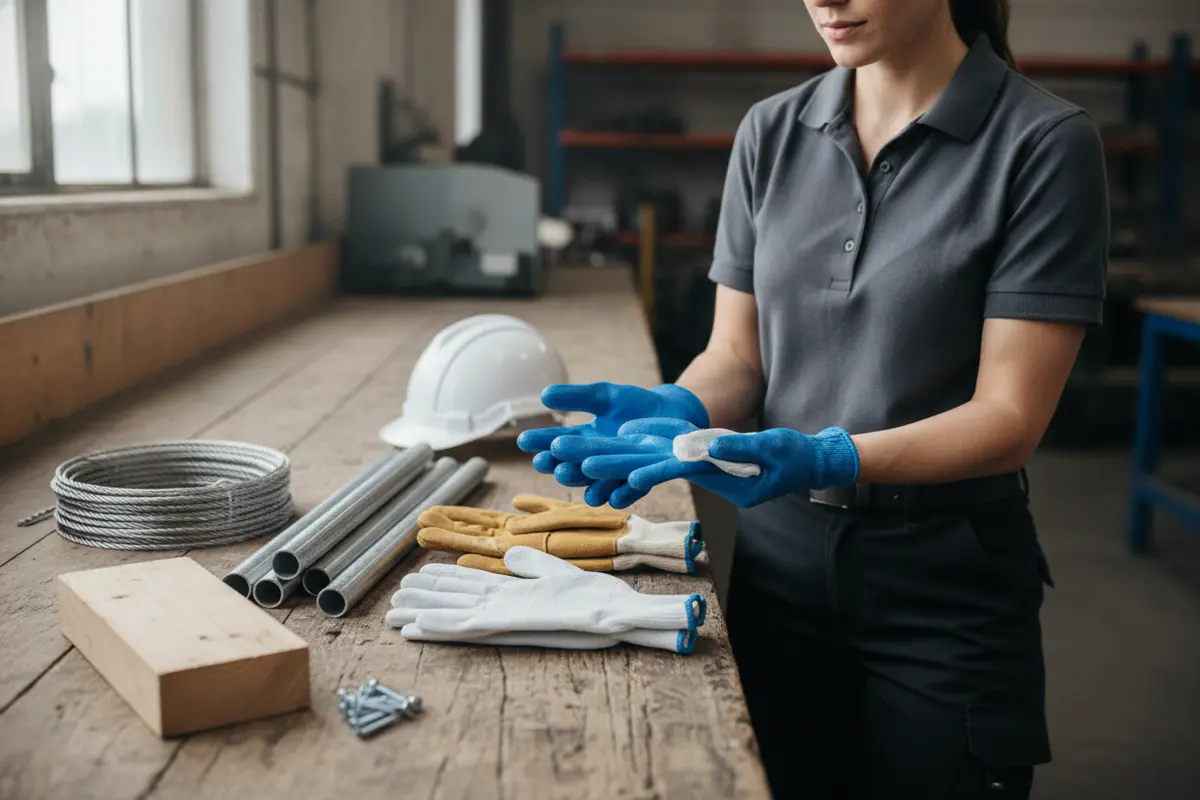
When comparing catalog options, keep the task decision in view. A broad selection of coated work gloves or leather work gloves does not establish suitability by itself. These are examples to evaluate against the application, not universal recommendations.
What should buyers plan for issue and replacement?
A selection decision is only useful if workers can obtain the right glove and know how to use it. Put the product identification and size information where supervisors and purchasing staff can find it. Define who can approve substitutions and what must be checked before a replacement model is issued.
- Tell workers which tasks the glove is intended for and where it is not appropriate.
- Explain how to inspect it before use and how to recognize damage or loss of function.
- Set clear replacement criteria based on the product instructions and workplace conditions.
- Keep the correct sizes accessible, including for new employees and different shifts.
- Provide a way to report fit, grip, or durability concerns.
- Review the selection after a task, material, equipment, or process changes.
Do not set a universal wear interval without support from the product instructions and job conditions. Replace damaged or unsuitable protection according to the employerâs procedures and manufacturer directions. If workers report frequent glove removal or a change in hand exposure, investigate the task rather than treating it solely as a compliance reminder.
How can procurement avoid common selection mistakes?
Several shortcuts can undermine an otherwise sound selection process:
- Choosing by name alone: âGeneral purposeâ is not a hazard rating. Verify the task and documentation.
- Buying one glove for every role: Similar job titles may involve different contact, grip, and dexterity needs.
- Prioritizing price before suitability: First establish what the task requires; then compare procurement options that meet those requirements.
- Skipping worker trials: An option that looks appropriate on paper may interfere with actual work movements.
- Assuming a glove solves the hazard: Consider engineering and work-practice controls as well as PPE.
- Allowing undocumented substitutions: A different model or material may have different applications and limitations.
A practical purchasing record can include task name, hazards reviewed, selected glove and size range, documentation checked, trial feedback, restrictions, and the person responsible for approval. Keep it concise enough that it will be maintained.
How should a buyer manage a multi-role glove program?
Many facilities have several tasks that look similar until the details are compared. A receiving employee may unload cartons, open damaged packaging, and move pallets. A maintenance worker may handle fasteners, oily components, and cleaning materials during the same shift. Treating each personâs job title as a single glove use can hide these changes in exposure. Build the decision around task groups, then state clearly when a worker must change gloves or consult a supervisor before moving to a different activity.
A task matrix can make the process usable without turning it into a complicated catalog. Keep one row for each meaningful work condition, not every small variation. Include the approved glove identification, allowable task, key limitation, and the person or role responsible for resolving uncertainty. Where the same glove is approved for several tasks, record the evidence that supports each use rather than assuming that approval transfers automatically.
| Task group | Questions for the assessment | Program action |
|---|---|---|
| Routine clean handling | Are surfaces dry and intact? Is fine finger control needed? | Trial candidates for grip and dexterity; document the intended scope |
| Variable or wet handling | What creates the moisture? Does it affect grip or contact exposure? | Evaluate actual conditions and define when the glove is unsuitable |
| Maintenance and cleanup | Are chemicals, sharp components, or powered tools involved? | Pause for task-specific hazard review and verify relevant product documentation |
| Material change or exception | Has the substance, tool, or process changed from the approved task? | Stop and route the change to the designated safety reviewer |
Make the matrix easy to find at the point where workers choose equipment. A document filed only with procurement records may not help someone covering another station or shift. Use product identifiers consistently on the matrix, issue records, and purchasing requests. If a model is discontinued or unavailable, do not let a similar name or appearance count as approval; review the replacement against the original task requirements first.
How can buyers use worker feedback as evidence?
Worker feedback is most useful when it is specific and tied to an observed task. Instead of asking only whether a glove feels comfortable, ask what movement is difficult, whether a particular surface slips, where wear appears, and when the worker removes the glove. Record the task and conditions alongside the observation. This makes it possible to distinguish a sizing issue from a design limitation or a change in the hazard.
Use a short feedback log during trials and routine reviews. For each report, capture the date, task, glove model and size, material or surface condition, observed issue, and follow-up action. For instance, âgrip poorâ is hard to act on; âcarton handling after rainwater entered the staging area; grip felt less secure; trial stopped and wet-area condition referred for reviewâ identifies both context and a safe next step. Do not ask workers to continue a risky task merely to gather comparison data.
Look for patterns across workers and shifts. If one size consistently bunches for a particular group, improve the size mix or fit check. If multiple workers report snagging at the same workstation, examine the work surface or method as well as the glove. Feedback is not a substitute for hazard assessment, but it can reveal conditions the original observation missed.
What should a documented approval record contain?
A useful record explains the reasoning, not just the product selected. It should allow a supervisor months later to understand the task boundary and know when to reopen the decision. Keep the record proportionate to the work, but include the essentials:
- Task definition: station or activity, tools used, materials handled, and routine conditions.
- Hazard review: exposures considered, relevant controls, and any conditions excluded from the approval.
- Product check: exact manufacturer and model identifier, available sizes, instructions reviewed, and applicable documentation.
- Trial observations: testers or roles involved, movements assessed, conditions represented, and issues found.
- Decision and boundaries: approved use, limitations, glove-change points, and escalation contact or role.
- Maintenance: issue method, inspection expectations, replacement guidance, and review trigger.
Version control matters when the selection changes. Mark the date and approver for a revision, retire outdated station copies, and tell affected workers what changed. If the reason for a change was a new material, process, or tool, reflect that change in the hazard review rather than simply swapping the product code. For a small operation, a controlled checklist may be enough; a larger site may connect it to its PPE records. In either case, the record should be easy to maintain and usable by people who did not participate in the original trial.
How should a team review glove choices after rollout?
Approval is not a one-time event. Set a review trigger as part of the decision. Revisit the selection when materials or suppliers change, a process moves, a tool is introduced, workers report new problems, inspections reveal repeated damage, or a substitute is proposed. Also consider a scheduled check through the siteâs existing PPE review cycle so a stable task is not forgotten.
At review, compare the current task with the assumptions in the approval record. Ask whether contact, duration, surface condition, and hand movements remain the same. Check whether the product identifier and instructions still match the item being issued. Then decide whether to keep the selection, run a new controlled trial, or route the work for a specialized protection assessment. Record a brief reason for the outcome, including when no change is needed.
For example, if a packing line changes from dry cartons to containers that arrive with condensation, do not assume that a glove chosen for dry handling still provides the same grip. Reassess the surface condition, test only through safe work methods, and consider whether the process itself can reduce moisture. If workers begin handling a cleaning agent, treat that as a new exposure requiring its own review, not as an extension of ordinary handling approval.
Frequently Asked Questions
Are general purpose work gloves suitable for every workplace task?
No. The label does not establish protection for every hazard. Assess the task and consult the gloveâs manufacturer information before approving it.
Should buyers choose the most durable option?
Not automatically. Durability matters, but so do hazard coverage, fit, grip, and dexterity. A glove that lasts longer but prevents reliable task control may not be the right choice.
Can workers use the same glove for wet and dry handling?
Only if the assessment and product information support both conditions. Surface moisture can change grip, so evaluate the actual task conditions and avoid assuming performance transfers from dry handling.
How often should a team review its glove selection?
Review it when the task, materials, tools, equipment, or work conditions change, and when worker feedback or inspection identifies a problem. Follow the organizationâs PPE review process.
Discuss your work glove requirements
When buyers begin with the task and verify the product against its hazards, they can make a clearer, more consistent glove decision for the team.
Recent Posts
-

General Purpose Work Gloves: Buyer’s Guide
Choosing general purpose work gloves is not simply a matter of picking a familiar material or orderi …Nov 10th 2026 -

Fall Restraint Systems: How Employers Choose Work-at-Height Protection
A fall restraint system is intended to keep a worker from reaching a fall hazard, not to catch a wor …Nov 9th 2026 -

Nitrile Exam Gloves: Choosing Barrier Protection for Workplace Tasks
Nitrile exam gloves are often selected for tasks that need a disposable hand barrier, but the right …Nov 9th 2026