
Tyvek Suits: Choosing Protective Coveralls for Workplace Hazards
Choosing Tyvek suits starts with the hazard, not the garment name. Industrial, laboratory, remediation, and food-processing teams need to know what exposure they are controlling, how long it may last, and whether the coverall is suitable for the specific substance and task. A disposable coverall can help reduce contamination of clothing and skin, but no single garment protects against every chemical, liquid, or work condition.
Call to discuss protective clothing and PPE selection
What do Tyvek suits protect against?
Tyvek is a DuPont material used in protective garments. In common disposable-coverall applications, the fabric can act as a barrier to many dry particles and help limit contamination from certain light liquid splashes. That broad description is not a substitute for checking the exact garment model, its labeling, and the exposure conditions. Different styles, closures, seams, and accessories can change the coverage of the complete ensemble.
Start by identifying the material or contaminant, its physical form, the route and duration of exposure, and the likely amount of contact. A dry dust task differs from spray, pooling liquid, pressure, or immersion. A coverall that is appropriate for keeping dust off a worker's clothing should not automatically be treated as chemical-protective clothing. When a hazardous chemical is involved, consult its safety data sheet (SDS), the garment manufacturer's data, and your site's hazard assessment. If those sources do not establish suitability, do not assume the garment is protective.
For OSHA and ANSI compliance, select PPE through the applicable hazard assessment and requirements for the work, not by relying on a familiar brand or material name. The required ensemble may also include gloves, eye or face protection, respiratory protection, and footwear. Each component needs to be compatible with the others and suitable for the identified hazard.
It helps to distinguish the purpose of a garment from the controls around it. For example, a maintenance worker cleaning settled dry residue may need clothing that limits transfer of particles to street clothes. A worker handling a liquid chemical may face skin contact through splashing, spray, or contaminated surfaces. Those situations are not interchangeable. Record what the garment is expected to do, where its protection stops, and what other controls reduce the exposure.
How should you assess the task before selecting coveralls?
Write down the task and exposure before comparing garment features. Include routine work as well as foreseeable interruptions, cleanup, spills, and emergency exit. A short inspection in a clean area may call for different protection than repeated work near a process that creates dust or splashes.
- Name the hazard. Identify the substance, dust, biological contamination, or other exposure. Use the SDS and process information where applicable; do not infer chemical resistance from a generic coverall description.
- Describe the contact. Is exposure airborne, through incidental contact, from a splash, or from a sustained spray? Note pressure, temperature, quantity, and whether liquid can collect in folds or seams.
- Estimate time and frequency. Repeated entry, extended wear, and high activity can increase heat and stress on closures or seams. Establish when a garment must be changed.
- Identify the body areas at risk. Decide whether a hood, elastic or open cuffs, boot covers, or other interface protection is needed. Consider how workers will bend, reach, kneel, and climb.
- Check the applicable program. Confirm required PPE, training, inspection, and disposal procedures with the site's safety lead. Escalate uncertain or high-consequence exposures for qualified review.
Document the decision in plain terms: the task, relevant hazard, garment model and size, accompanying PPE, limitations, and replacement criteria. This makes it easier for supervisors to train workers and to notice when a changed process no longer matches the selection.
Then test the assessment against realistic scenarios. Ask what changes if the task takes twice as long, a worker kneels on a contaminated surface, a hose sprays unexpectedly, or the work moves from a dry area to a washdown zone. These are not predictions that every task will go wrong; they are practical checks for gaps in the plan. If a foreseeable change would make the selected suit unsuitable, state when work must stop and who can authorize a different approach.
Where multiple substances are involved, make the selection for the actual combination of hazards rather than choosing by the most familiar one. Check whether residues from an earlier process remain on equipment or surfaces. A routine task description can conceal an intermittent exposure during setup, clearing a blockage, sampling, or cleanup. Include those steps when discussing PPE with the safety lead.
Which garment details affect coverage?
The coverall is only one part of the barrier. Openings and connection points can become weak points if they are not suited to the task. Review the actual garment design and manufacturer instructions instead of assuming that all disposable coveralls have the same construction.
Seams and closures
Look at how the garment is assembled and whether seams are stitched, bound, or otherwise constructed. Consider whether the closure is covered by a storm flap and whether it stays closed during the motions workers perform. A zipper or seam description alone does not establish protection against a particular chemical or exposure. Confirm the garment's stated limitations for the hazard.
During a fit check, ask a worker to raise both arms, bend at the waist, crouch, and reach across the body. Watch whether the zipper pulls, the flap opens, or a seam is put under tension. Check that the fastening remains usable with any gloves that must be worn. If a worker must repeatedly adjust the closure to keep it shut, reconsider the size, design, or work procedure before entry.
Hood and face opening
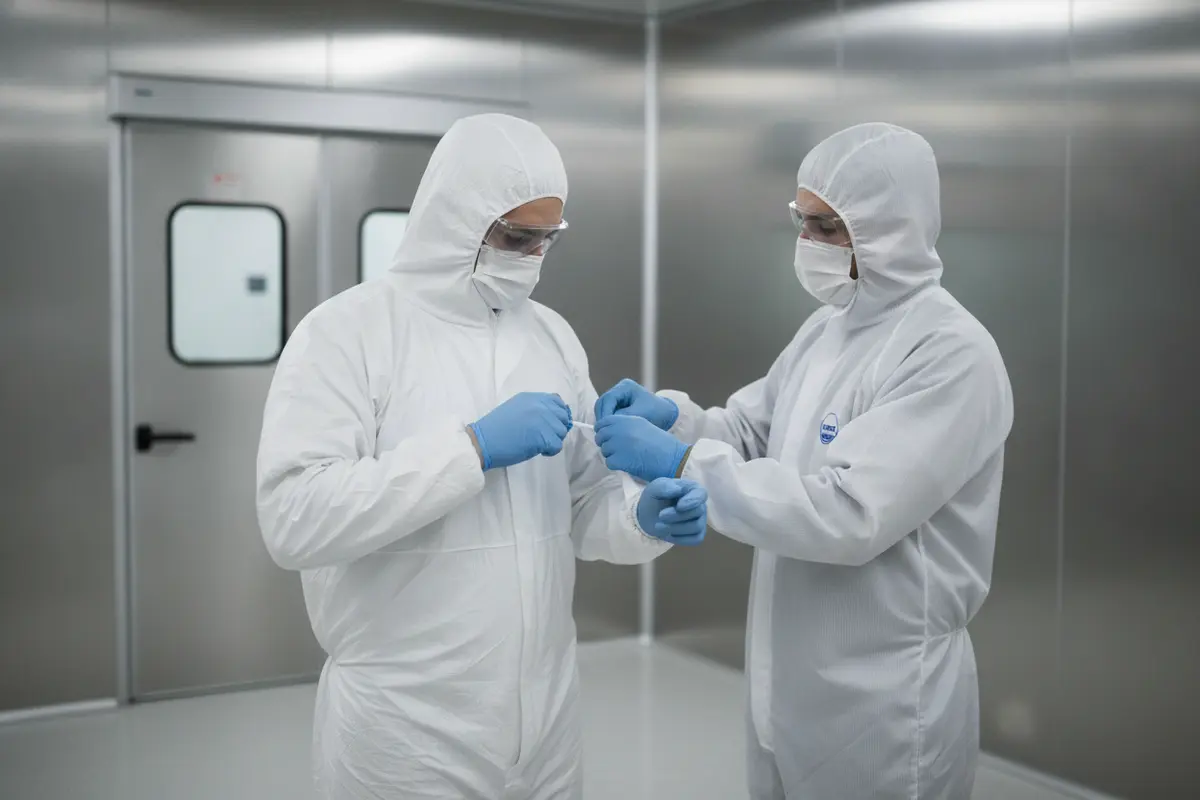
A hood can cover the head and neck, but it does not itself provide respiratory, eye, or face protection. Check whether it can be worn correctly with the selected respirator, goggles, or other head protection. Avoid arrangements that interfere with a respirator seal, obscure vision, or leave gaps where the task calls for coverage. Product-specific fit and compatibility must be confirmed.
Have workers practice the actual sequence for putting on the hood and any required head or face equipment. A hood that shifts when the wearer turns can create distraction or expose skin. If workers need a hard hat, face shield, or hearing protection as well, check whether those items can sit securely without pushing the hood out of position. A simple compatibility check in a clean area can reveal problems before the equipment is needed in the work zone.
Wrists, ankles, and footwear
Elastic openings may help keep sleeves or legs in place, while open cuffs can be easier to layer over or under other items depending on the procedure. Neither design solves every interface problem. Decide whether the sleeve should overlap a glove cuff, and whether the leg should be arranged over or under footwear, based on the hazard and the garment instructions. Taping or other improvised modifications may undermine a design or create a snag risk; use only methods approved by the relevant program and manufacturer.
For tasks involving movement, inspect the interfaces after a brief walk, squat, and reach, not only while the worker stands still. A cuff can ride up as the arm flexes, and a trouser leg can pull away from footwear when a worker kneels. Consider how the worker will enter and leave the area and whether contact with a dirty surface could push contamination toward an opening. Document the approved arrangement so different shifts do not develop conflicting habits.
Fit and range of movement
A suit that is too tight can restrict reaching, squatting, or safe movement. Excess fabric can snag, drag, or interfere with equipment. Workers should try the selected size with the PPE they will actually wear and perform task-like movements in a safe area. Check that closures remain secure and that cuffs, hood, and legs stay positioned. Sizing should allow the intended underlayers without creating loose folds that compromise work.
Include more than one body size in a selection trial when a team shares a garment model. Check the size chart and available sizes against the people who will do the work rather than relying on a single sample wearer. Ask workers whether they can operate tools, use controls, climb steps, and communicate normally. If a worker cannot move safely or cannot perform the assigned task, the suit is not a workable selection even if it covers the body while standing.
How do you compare coverall options?
Use the table as a screening aid, not as a substitute for product documentation. The exposure descriptions are broad examples. The right selection depends on the exact garment's data and the workplace hazard assessment.
| Selection point | Questions to ask | What to verify before use |
|---|---|---|
| Exposure form | Is the task dusty, splash-prone, or likely to involve sustained liquid contact? | Manufacturer data for the exact garment and the substance or exposure; do not assume a general-purpose coverall handles chemical contact. |
| Construction | Do seams, zipper, flap, hood, cuffs, and ankles match the task? | Product instructions, stated barrier claims, closure design, and any limitations. |
| Ensemble fit | Will the worker wear gloves, eye protection, respiratory PPE, or footwear with it? | Compatibility, overlap at interfaces, fit, visibility, mobility, and any respirator seal requirements. |
| Wear duration | How long and how actively will the coverall be worn? | Work-rest and change procedures, heat burden, inspection frequency, and replacement triggers. |
| Removal and waste | Can the garment be removed without spreading contamination? | Trained doffing sequence, designated disposal route, and applicable site or waste rules. |
Use the questions in order rather than scoring a garment by one attractive feature. A covered zipper cannot compensate for a material that is not appropriate for the exposure. A hood does not correct poor fit at the wrists. Likewise, a garment that meets the barrier need may still be unsuitable if workers cannot move safely or if the site's removal procedure cannot control contamination. The assessment should consider the complete use cycle: storage, donning, work, inspection, doffing, and disposal.
For procurement, keep the model number and supporting product documentation with the written selection. That avoids a common substitution problem: a reorder is described only as a "white disposable suit," and a different cut or closure arrives. If a garment is replaced by an alternate model because of availability, compare its labeling and instructions against the same hazard assessment before distributing it to workers.
How do Tyvek suits fit into different workplaces?
Industrial maintenance: Identify whether the task involves dry debris, surface contamination, splashes, or a chemical process. A coverall may help keep particles off work clothes, but it does not replace controls that prevent exposure or a chemical-specific selection when needed. Pair the clothing decision with the site's glove and eye-protection assessment. For example, nitrile-coated gloves are one product listing to evaluate for appropriate tasks; a product listing alone does not establish suitability for a specific hazard.
For a maintenance job, break the work into phases: approach, isolation, repair, cleanup, and exit. The exposure may be different in each phase. A technician might encounter dust while opening a panel and a residue while cleaning a component. Confirm the coverall and other PPE for both conditions, and set a clear rule for changing garments if the task moves beyond its planned scope. Do not allow a convenient coverall to substitute for isolation or other required controls.
Laboratories: Base clothing on the substances, procedures, splash potential, and facility protocol. A disposable coverall does not make an uncontrolled chemical procedure safe. Check whether the selected hood or neckline works with required goggles, face protection, and respiratory equipment. Any respirator selection, medical evaluation, fit testing, and use must follow the applicable respiratory-protection program. A respirator component listing is not a substitute for selecting and fitting a complete approved respirator system.
Lab teams should also think about the movement between spaces. Define where a garment is put on, whether it may cross a room boundary, and where it is removed. A garment used in one controlled procedure should not be carried into an unrelated clean area without following facility rules. Confirm that the protocol covers samples, waste, shared equipment, and any required hand hygiene as well as clothing.
Remediation and cleanup: Before entry, identify the contaminant and establish clean and contaminated zones, changing steps, and waste handling. Determine whether the work creates dust or liquid contact and whether the garment can withstand the intended work without tearing or becoming saturated. Plan the removal sequence before the worker enters the area.
Remediation work can change quickly as material is uncovered or conditions become visible. Set a stop-work trigger for an unknown substance, unexpected liquid, damaged garment, or exposure outside the original assessment. Keep replacement garments and the supplies specified in the site procedure available at the proper location; otherwise, a worker may be tempted to continue with a compromised suit. Use qualified guidance to revise the plan when the observed conditions differ from the assumptions.
Food processing: Choose protective clothing in line with the site's hygiene and contamination-control procedures. Do not assume that a disposable coverall is approved for food contact or appropriate for every processing area. Verify the garment's intended use and the site's requirements, including how it is stored, changed, and discarded.
In a processing facility, clarify whether the clothing is intended to protect the worker, the product area, or both. Those purposes can involve different hygiene controls. Consider how garments are kept clean before use, where workers change between zones, and how a torn or contaminated suit is handled. Ask the site's food-safety and safety personnel to reconcile the clothing selection with the facility's gowning procedure rather than treating an industrial coverall as automatically suitable.
What other PPE should be checked with a coverall?
Build an ensemble around the hazard assessment. Depending on the task, workers may need gloves, safety eyewear, a face shield, respiratory protection, hearing protection, or footwear. A coverall does not replace those protections. Nor does adding more PPE automatically improve safety: incompatible equipment can create gaps, fogging, restricted movement, or interference with a respirator seal.
Review how components overlap at the wrist, neck, and ankle. Confirm that eye protection remains secure and vision is adequate. When face protection is required, check its compatibility with eyewear and headwear. A face-shield option should be assessed for the specific task and used with any separately required eye protection; a shield should not be treated as a universal substitute for safety glasses or goggles.
For eye hazards, compare the task with the applicable eyewear selection and marking requirements. One safety-glasses listing is an example of additional equipment to assess, not a recommendation for every exposure. Similarly, protective sleeves may be useful for some tasks but do not turn an unsuitable coverall into a chemical barrier. See disposable sleeve options only as part of a complete task-specific review.
When reviewing the ensemble, have the worker put on all required items at the same time. A glove may fit well by itself but become difficult to secure over a sleeve cuff; goggles may fog or shift under a hood; a face shield may contact the respirator or make it hard to see nearby equipment. Record the approved combinations and the order for putting them on. A change in one component can affect the whole arrangement, so reassess substitutions instead of assuming they are equivalent.
Heat burden deserves attention. Added layers can make work less comfortable, especially during physical activity or warm conditions. A journal study on pesticide protective clothing reported that subjects felt more humid during recovery after wearing Tyvek coveralls or nylon workwear than after polyester/cotton workwear; that finding is specific to the study and does not establish a universal comparison for every garment or task (journal study on heat strain and protective clothing). Use work-rest, hydration, monitoring, and acclimatization procedures appropriate to the site's heat-safety program rather than relying on fabric alone.
Planning for heat and comfort should happen before workers enter the area. Consider task intensity, expected duration, ambient conditions, and the effect of other PPE. Train employees to recognize when discomfort, fatigue, or reduced movement means they need to stop and follow the site's response procedure. Do not loosen, remove, or alter protective clothing inside a hazardous area simply to feel cooler; the proper response is the one established by the site's safety plan.
The EPA's protective-clothing guidance discusses selection considerations and laundering guidance for protective clothing materials, including Tyvek (EPA guidance manual for selecting protective clothing). For disposable garments, follow the manufacturer's use and disposal instructions; do not assume a disposable suit can be laundered, reused, or decontaminated safely.
Ask about protective clothing and compatible PPE
How should workers don and doff a coverall?
Use a written procedure tailored to the hazard and the garment. Train workers before exposure, and make sure a clean area, needed supplies, and a trained observer are available when the risk or site protocol calls for them. The sequence below is a planning checklist, not a universal decontamination procedure.
Before donning
- Confirm the task, garment model, size, and accompanying PPE against the site procedure.
- Inspect packaging and the garment for damage, contamination, or missing components. Do not use a torn or otherwise compromised suit.
- Remove jewelry or other items that could snag or interfere, as directed by the site's procedure.
- Put on the garment in the designated clean area, then arrange cuffs, hood, and closures as instructed. Add other PPE in the order established by the program.
- Have a partner check coverage and compatibility where the procedure requires it. Confirm that visibility, movement, and communication are adequate before entry.
Make the inspection specific rather than treating it as a quick glance. Check the fabric for punctures, thin or abraded areas, and damage around the knees, seat, elbows, and closures. Verify that the zipper runs smoothly and that any flap or fastening is present. Confirm the selected size and model against the task plan, particularly when a package has been taken from mixed stock. If an item fails inspection, remove it from use and follow the site's replacement process.
During work
Follow the designated work area and avoid touching clean surfaces with contaminated gloves or clothing. Stop and leave according to the site's procedure if the garment tears, becomes wet through, is contaminated beyond its intended use, or no longer fits securely. Do not patch or continue wearing a compromised garment unless a written procedure and manufacturer guidance specifically permit the action.
Workers should know the check-in points and communication method before entry. Where the task allows, make visual checks during planned pauses, focusing on areas likely to snag or contact equipment. A tear may be hard to notice beneath other PPE, so a partner or supervisor may need to help inspect. Establish a practical exit signal for a damaged garment, heat concern, or unexpected exposure, and rehearse how the worker can leave without crossing clean areas unnecessarily.
During doffing
Removing contaminated clothing can transfer material to skin, ordinary clothing, or nearby surfaces. Follow a task-specific sequence that minimizes contact with the garment's outer surface. Use the designated removal area, avoid snapping or shaking the coverall, and remove gloves and other PPE in the order established by the procedure. Wash hands and any exposed skin as directed. For hazardous materials, use the site's decontamination plan and qualified safety guidance; a generic online checklist cannot replace it.
Prepare the doffing area before work begins. Make sure waste containers, clean supplies, and any required handwashing or decontamination resources are in their assigned locations. A worker should not have to reach across a contaminated item to retrieve clean equipment. If the procedure calls for an observer, define that person's role and ensure the observer has suitable PPE and training. After removal, follow the site's process for checking whether clothing or skin may have been exposed and for reporting incidents.
When should a suit be changed or discarded?
Follow the garment label, manufacturer instructions, and site-specific exposure plan. Disposable coveralls are generally selected for a defined use, not assumed to be reusable. Set replacement triggers before work begins. These may include a tear, failed closure, visible contamination, wetting, change in task, or the end of a specified work period. If a worker is unsure whether the suit remains protective, stop work and consult the supervisor or safety lead.
Dispose of used coveralls according to the contaminant and applicable workplace, transportation, and waste requirements. "Disposable" does not mean ordinary trash is always appropriate. Segregate waste as required, contain it to prevent spread, and do not take contaminated garments home for laundering. Keep clean and used items separate during storage and handling.
Write replacement criteria in terms workers can recognize. For instance, state who makes the decision when a garment becomes visibly wet, when a closure fails, or when the worker leaves the approved task. Avoid vague directions such as "change as needed" if staff have no way to interpret them consistently. The criteria should address planned changes during a shift as well as unplanned events, and should match the manufacturer's instructions and the site's hazard controls.
For a team purchasing stock, plan how different garment sizes and clean replacements will be identified and stored. Keep package labels and model information available so supervisors can confirm that the issue matches the approved selection. Establish how damaged unused items are separated from usable stock. These modest inventory steps help prevent an urgent replacement from becoming an unreviewed product substitution.
What are the limitations of Tyvek suits?
- They are not universal chemical suits. Do not infer protection against a chemical from the brand, fabric name, or a broad phrase such as "protective coverall." Check substance-specific data and the exact product's limitations.
- They do not protect every route of exposure. Gaps at the hood, cuffs, ankles, closures, or interfaces can matter. Some tasks require other garment types or a different protective ensemble.
- They do not replace engineering or work-practice controls. Use the hierarchy of controls and applicable safety procedures. Clothing is one layer of risk management.
- They do not replace other PPE. A coverall alone does not provide respiratory, eye, face, hand, hearing, or foot protection.
- They can be damaged or overwhelmed. Abrasion, snags, heat, moisture, or prolonged exposure may affect the garment. Inspect and replace it according to instructions and the task plan.
- They can add heat and restrict movement. Assess workload, temperature, duration, fit, and worker condition. Adjust work practices and follow the site's heat-illness prevention program.
When the documentation does not clearly match the exposure, pause and seek review from a qualified safety professional or the garment manufacturer. Do not extend a garment's claims based on appearance or another product's performance.
A useful decision boundary is this: if the team cannot name the exposure, locate product information that addresses it, and explain how the openings and interfaces will be controlled, the selection is not ready. Resolve those questions before purchase or use. For particularly hazardous or unfamiliar work, use qualified safety guidance rather than trying to fill a documentation gap with extra layers or improvised tape.
Get help locating protective clothing for your work task
Frequently asked questions about Tyvek suits
Are Tyvek suits chemical-resistant?
There is no safe blanket answer for every chemical or coverall. Protection depends on the exact garment, chemical, concentration, contact conditions, and exposure time. Check the SDS and product-specific manufacturer data, and have the selection reviewed through the workplace hazard assessment.
Can Tyvek coveralls be reused or washed?
Do not assume that a disposable garment can be washed, reused, or decontaminated. Follow the exact garment's instructions and the site's contamination-control and disposal procedures. If reuse is not explicitly supported for the garment and exposure, treat it as single-use according to the applicable procedure.
Should the coverall go over or under gloves and boots?
The correct arrangement depends on the task, garment design, manufacturer instructions, and hazard. The goal is to manage gaps and prevent liquid or contaminants from entering at interfaces without interfering with movement or other PPE. Use the site's approved procedure rather than improvising a universal overlap rule.
Are Tyvek suits appropriate for food processing?
They may be considered for some workplace clothing needs, but do not assume every coverall is approved for food contact or every processing area. Check the garment's intended use and confirm it meets the facility's hygiene, contamination-control, and regulatory requirements.
What should a buyer check before ordering?
Confirm the hazard and exposure, exact garment model, size range, seams and closures, hood and cuff design, compatibility with other PPE, change frequency, and disposal plan. Verify all performance claims against manufacturer information and the site's written hazard assessment.
Talk with Safety Company about PPE options
A careful selection process helps teams match protective clothing to the actual task, train workers on its limits, and avoid treating one coverall as a solution for every workplace hazard.
Recent Posts
-
Tyvek Suits: Choosing Protective Coveralls for Workplace Hazards
Choosing Tyvek suits starts with the hazard, not the garment name. Industrial, laboratory, remediati …Nov 11th 2026 -

Oil Absorbents for Industrial Work: Use and Compliance
Choosing oil absorbents is not just a matter of finding a material that soaks up liquid. Workplace b …Nov 11th 2026 -

General Purpose Work Gloves: Buyer’s Guide
Choosing general purpose work gloves is not simply a matter of picking a familiar material or orderi …Nov 10th 2026