
Fall Restraint Systems: How Employers Choose Work-at-Height Protection
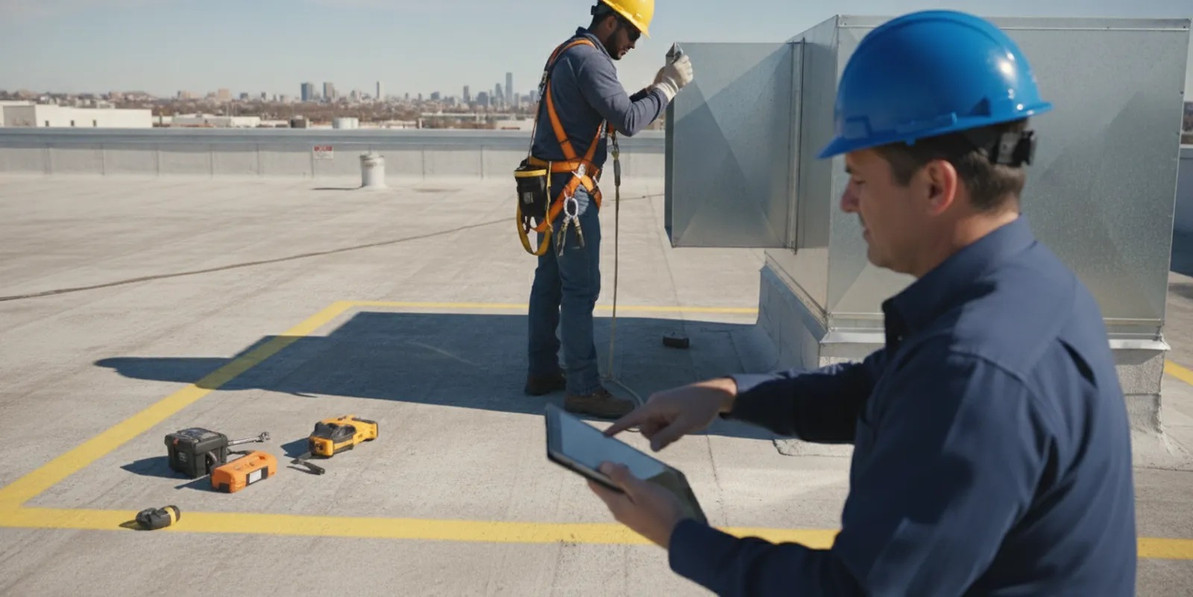
A fall restraint system is intended to keep a worker from reaching a fall hazard, not to catch a worker after a fall begins. Employers comparing restraint, fall arrest, and work-positioning methods should begin with the actual task: where the hazard is, how far the worker must move, and whether a planned arrangement can reliably keep the worker away from exposure. This guide offers a practical framework for that decision. Site-specific design and approvals belong with qualified personnel.
Talk with a safety equipment specialist
What decision should a fall restraint system answer?
Start with a simple question: can the worker do the job while physically prevented from reaching the edge or opening? A restraint arrangement limits travel so the worker cannot get to a point where a fall could occur. If the task requires access beyond that limit, restraint alone does not fit the work as planned. The employer must reassess the method and consider other controls or a system designed for the exposure.
Do not treat restraint, arrest, and positioning as interchangeable product labels. They have different purposes and planning demands:
| Approach | Intended function | Planning question |
|---|---|---|
| Travel restraint | Limits movement so the worker cannot reach the fall hazard. | Can the worker reach it with the connection length, anchor location, and expected movement? |
| Personal fall arrest | Stops a fall after it begins and limits the resulting forces when correctly selected and used. | Is the whole system compatible, is there adequate clearance, and can rescue be prompt? |
| Work positioning | Supports a worker at a work location, sometimes allowing hands-free work. | Is the arrangement used within its intended limits, with required backup protection? |
This comparison is a planning aid, not a substitute for OSHA requirements, applicable ANSI standards, equipment instructions, or a competent site assessment. A positioning belt or restraint belt is not automatically fall-arrest equipment. Determine the applicable protection for the specific work and jurisdiction rather than relying on a product name.
How should employers assess the task and hazard?
Describe the work before selecting products. The assessment should identify the surface, edges and openings, worker travel, duration, access and egress, tools and materials, adjacent trades, and environmental conditions. Note how the work area may change during the shift. A roof can gain a new opening, a temporary route, or a different anchor point as work progresses.
A useful field process is to walk the task from start to finish and record:
- Every location where a worker might fall to a lower level or through an opening.
- The work zone and the farthest point each worker must reach to complete the job.
- Possible routes around equipment, corners, obstructions, or other workers.
- Potential slack, connector adjustment, attachment transfer, and anchor placement changes.
- Whether guardrails, covers, or another control can eliminate or reduce exposure before personal equipment is considered.
- Who selects, inspects, and uses the system, and how changed conditions will be reviewed.
Then compare the planned work zone with the hazard boundary. If a worker must cross the boundary to reach a tool, inspect a component, or finish a fastening point, the plan has not solved the whole task. Revise the work sequence, move the work position, use another control, or obtain a qualified evaluation of an alternative system. Do not rely on a verbal reminder to “stay back” when the physical arrangement permits access.
OSHA requirements depend on industry and task. Construction provisions for fall protection on walking/working surfaces are among the rules that may apply. Review the current OSHA construction fall-protection standard, 29 CFR 1926.501, alongside the other standards relevant to the operation. A general guide cannot decide which rule governs a specific site. Employers should check the text and consult appropriate safety personnel.
How can travel restriction prevent edge access?
The decisive test is whether the worker can reach the hazard through foreseeable movement. A connection that seems short while the worker stands still may allow access when the worker leans, turns, stretches, walks around an obstruction, or shifts to another work point. Assess the usable length of the whole arrangement, including connectors and adjustment, rather than relying only on a product’s nominal length.
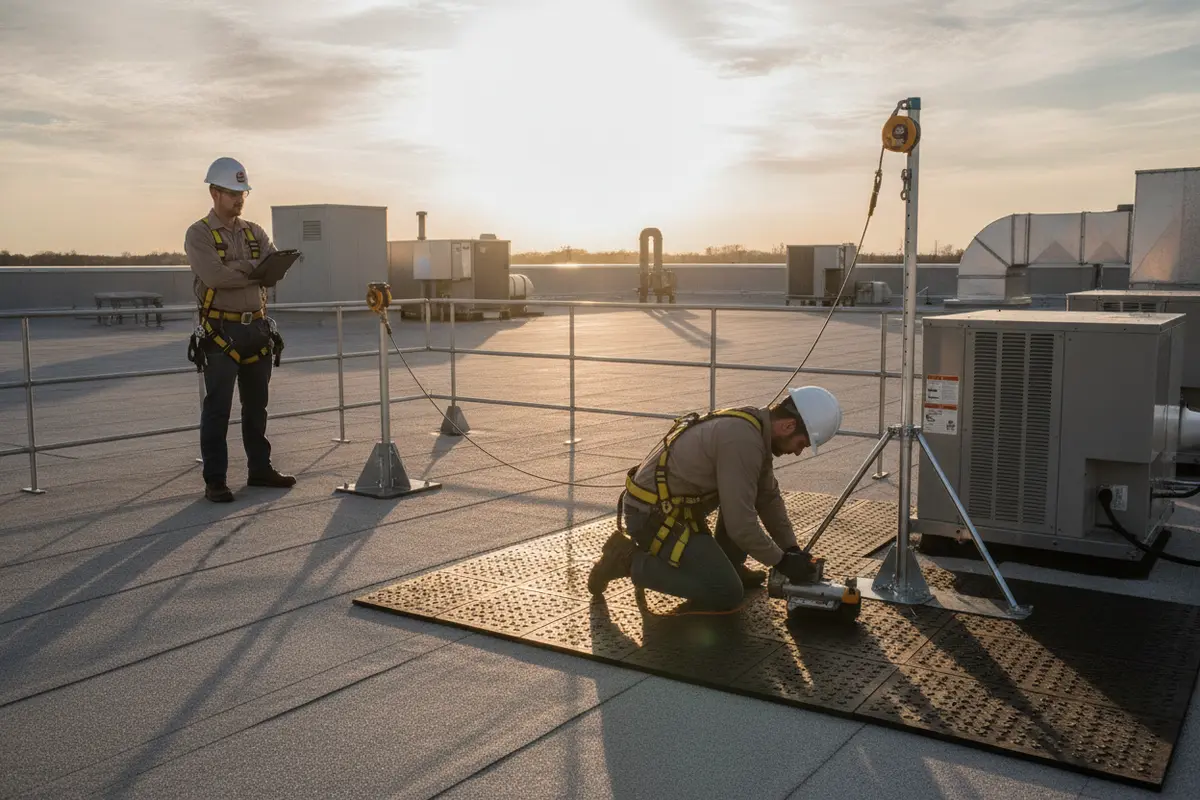
Map both the boundary and the required task zone. The worker should be able to complete the task without crossing the boundary. For example, a worker servicing rooftop equipment near an edge may need to reach several sides of the unit. Test the farthest reach and the route around the equipment, not just the position where the worker starts. An anchor farther from the edge may help define a safe limit, but its suitability and the entire layout must be assessed for that site.
Also consider the user and the sequence. Different worker reach, body position, tool use, and movement can affect whether the arrangement keeps someone short of the hazard. A connection that works for one stationary task may not cover a worker carrying materials or turning around a rooftop obstruction. If the task changes, repeat the access test instead of assuming the earlier setup remains adequate.
If the job requires reaching the edge, do not simply lengthen a restraint connector and continue calling the arrangement restraint. Reassess the exposure and choose a method suited to the actual work. For product context, see an adjustable web restraint lanyard or a restraint lanyard example. Product listings provide product information; they do not determine whether a component suits a particular work plan.
What should buyers verify about harnesses and connectors?
Compatibility is a property of the assembled system. A harness or belt, connector, anchorage, and other components must be selected for their intended function and used according to the manufacturers’ instructions. Confirm permitted connection points, connector types, gates, adjusters, capacities, and limitations. Components that appear to fit together are not automatically compatible.
For personal fall arrest, full-body harnesses are commonly used. A restraint or positioning belt does not become a fall-arrest harness merely because a connector is attached. Read labels and instructions for intended use, capacity, fit, inspection criteria, and compatibility. Fit matters: choose the correct size and adjust straps and buckles as the manufacturer directs. A poor fit can interfere with proper use and can distract the worker from the task.
- Match each component to the planned function: restraint, positioning, or arrest.
- Confirm that connector length and adjustment support the intended travel limit.
- Check that the attachment point and connector orientation are permitted by the manufacturer.
- Verify that components are identifiable, serviceable, and used within their stated limits.
- Train users on fit, connection, movement limits, inspection, and removal from service.
Buyers can inspect a full-body harness example to see the type of product information a listing may provide. Do not infer compatibility with a different component without confirming instructions. A removable concrete anchor example likewise requires application-specific confirmation; a catalog listing does not establish that a structure or installation is suitable.
How should anchorage and clearance be evaluated?
For restraint, the anchor location and system length must work together to keep the worker away from the hazard throughout the task. An anchor is not suitable just because it is nearby or looks substantial. Supporting structure, installation, direction of loading, and equipment instructions all matter. Qualified personnel should determine suitability for actual site conditions. This article is not engineering advice and does not provide a design calculation.
For fall arrest, the worker may travel before the system stops the fall. Employers need to consider total fall distance and possible contact with a lower level, an obstruction, or an edge. Account for the system components and conditions identified by the manufacturer. Do not rely on a generic clearance figure: the required clearance depends on equipment, configuration, worker, and site. If it is inadequate or uncertain, stop and obtain qualified review before work begins.
Plan for swing-fall exposure as well. If a worker falls while attached to an anchor offset from the work position, the worker may swing and strike a structure. Review the planned work path, anchor position, and nearby surfaces in the real work area. A drawing can help organize the review, but it cannot replace checking field conditions and changes during the task.
Think through a hypothetical maintenance job on a roof. If the worker can service a unit from inside a boundary, a restraint plan may be possible after qualified review of reach, anchorage, and connection length. If a required service point lies beyond that boundary, the employer should not stretch the arrangement to cover it. Rework access or assess another method, including clearance and rescue where arrest is contemplated. The distinction is about what the task demands, not which product is easiest to purchase.
What training, inspection, and rescue plans are needed?
Training should reflect the hazards, equipment, and procedures workers will actually encounter. Cover the system’s purpose and limits, correct fit and connection, movement restrictions, how to identify damage or alteration, and what to do when conditions change. Supervisors should confirm understanding before work starts. Refresh instruction when equipment, tasks, or procedures change, and make sure temporary workers and contractors receive the relevant site direction.
Inspect equipment before use as directed by the manufacturer and applicable rules. Look for cuts, fraying, burns, chemical damage, deformation, corrosion, missing labels, damaged stitching, and malfunctioning buckles or gates. Follow the manufacturer’s criteria for evaluation, repair, and disposal. Remove questionable equipment from service so it cannot be selected accidentally. Maintain records as required by the employer’s program and applicable regulations.
A field inspection should also include the arrangement, not just the fabric and hardware. Confirm that the connection is made to the planned point, that adjustment has not changed the boundary, and that the worker’s route remains inside the permitted area. If equipment has been altered, a gate does not close normally, a label is unreadable, or the task has moved, pause and resolve the issue before resuming.
Rescue planning is essential when a fall-arrest system is used. Decide before work how a suspended worker will be reached and recovered, who is responsible, what equipment is available, and how communication will work. Emergency services may be part of the plan, but do not assume that a call alone provides an adequate timely response. Practice procedures suitable for the site and ensure rescuers are trained and equipped. Restraint reduces fall likelihood only when it truly prevents access; it does not remove the need for a broader emergency plan.
How can a buyer compare options without choosing by label alone?
Build a written comparison tied to the task. For each candidate arrangement, record the task boundary, required movement, anchor location, connection length, intended function, compatibility evidence, inspection process, training needs, and any clearance or rescue considerations. Ask for manufacturer documentation, then have the employer’s qualified personnel decide whether the arrangement fits the work. A familiar brand or the word “restraint” on a listing does not establish compliance.
Use a short review sequence before purchasing or issuing equipment:
- Describe the job, work area, and specific fall exposures.
- Identify controls that could remove or reduce exposure before personal equipment.
- Test whether the worker can complete the task without reaching the hazard under realistic movement.
- Confirm the components’ intended functions and compatibility from their documentation.
- Verify anchorage and, if arrest is involved, clearance and rescue arrangements with qualified personnel.
- Document training, inspection, supervision, and how changes trigger reassessment.
SafetyCompany.com is a specialized online distributor of workplace safety equipment from multiple brands, not a manufacturer. Its catalog includes fall-protection equipment as well as other PPE and safety categories. Buyers can review product information and seek help locating equipment, while the employer remains responsible for determining what system meets the task’s requirements.
For a concrete comparison exercise, consider a roofer’s kit as a collection of items to examine, not a pre-approved solution for every roof or task. Review the kit’s documentation alongside site needs and qualified guidance. The product context is available in this roofer’s kit example.
Review a fall-protection kit example
Frequently Asked Questions
Can a restraint belt be used as a fall-arrest harness?
No. Equipment must be used only for its intended function and according to its instructions. A restraint or positioning belt is not automatically a full-body fall-arrest harness. Confirm applicable requirements and choose equipment designed for the system being used.
Does a restraint system need fall clearance?
A correctly planned restraint system is intended to prevent the worker from reaching a fall hazard, but employers must verify that the worker cannot reach it during the task. If the arrangement permits a fall, reassess the method and evaluate fall-arrest clearance and rescue needs as applicable.
Can one restraint setup serve every worker and task?
Not necessarily. Worker reach, task area, anchor placement, connector length, and movement affect whether a setup prevents access. Evaluate the actual task and user, and review the arrangement when conditions change.
Who should approve the anchorage and system design?
Qualified personnel should evaluate the system and anchorage for actual conditions, using applicable requirements and manufacturer documentation. A product listing or general guide cannot validate a structure or installation.
How can an employer make the decision?
Choose a system only after connecting the hazard assessment to the worker’s required movement. Restraint may fit when the task can be completed while the worker remains unable to reach the hazard and the complete arrangement supports that limit. Where work requires exposure, assess an appropriate alternative, including compatibility, anchorage, clearance, training, inspection, and rescue. Document the decision, brief workers, and reassess whenever work or site conditions change.
Recent Posts
-

Nitrile Exam Gloves: Choosing Barrier Protection for Workplace Tasks
Nitrile exam gloves are often selected for tasks that need a disposable hand barrier, but the right …Nov 9th 2026 -

Fall Restraint Systems: How Employers Choose Work-at-Height Protection
A fall restraint system is intended to keep a worker from reaching a fall hazard, not to catch a wor …Nov 9th 2026 -

Impact Resistant Gloves: How to Choose
Impact resistant gloves protect the knuckles, fingers, and back of the hand when a tool, pipe, or pa …Nov 9th 2026