
Tree Pruning Safety 101: How to Prevent Injury When Pruning Trees
Overgrown trees are a major nuisance for homeowners and their family members. When left unchecked, a tree's canopy by expanding to the point where it encroaches upon a home's usable space. An overgrown tree, for example, may have long branches extending into the patio or that press against the home's siding. You can prune overgrown trees in your landscape, but you need to follow some basic safety tips to prevent injury.
Wait Until It's Sunny Outside
It's recommended that you wait until a bright and sunny day to prune trees in your landscape. If it's raining, it may create unsafe conditions that leave you vulnerable to injury. Tree branches are more likely to break under the weight of the rain. Alternatively, you may slip and fall on the wet ground or other wet surfaces.
Inspect Your Chainsaw
For medium- and large-sized trees, you'll typically need to use a chainsaw to prune them. Prior to using your chainsaw, though, you should take a few minutes to inspect it. When inspecting your chainsaw, make sure the chain is secure to the bar. If the chain is loose or otherwise not secure, it may fling off during operation.
Don't Cut Over Your Head
You shouldn't attempt to prune trees by cutting them over your head. In other words, don't hold your chainsaw -- or any other cutting tool -- higher than your chest. The chainsaw should be well below your head at all times. You'll be able to control the chainsaw more easily by keeping it below your head.
Wear Impact-Resistant Safety Goggles
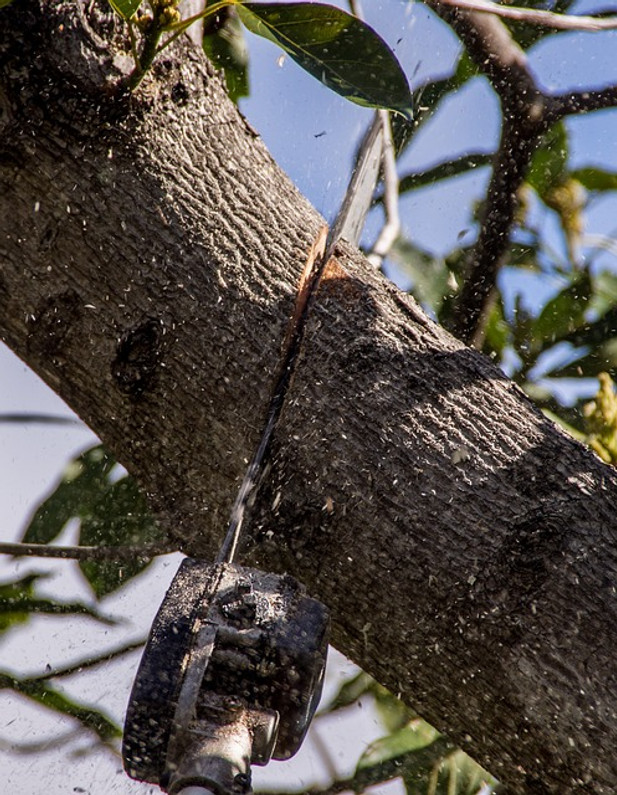
Another important safety tip to follow when pruning trees is to wear impact-resistant safety goggles. If you've ever cut into a tree with a chainsaw before, you probably know just how much debris they can project. Small splinters and debris will quickly shoot out of the tree as your chainsaw digs into it. Without impact-resistant safety goggles, you could sustain an eye injury.
Maintain Footing
You can use a ladder to access overgrown trees for pruning, but you'll need to maintain your footing at all times. Chainsaws, of course, are heavy. And when you're carrying a chainsaw on a ladder, it's easy to lose your footing. To lower the risk of injury, consider wearing non-slip shoes or boots when pruning trees on a ladder. With their non-slip outer sole, they'll increase your stability and, therefore, lower your risk of fall-related injuries.
Recent Posts
-
Face Shield for Grinding: Selection and Safety Guide
Grinding can send fragments, sparks, dust, and other debris toward a worker's face in an instant. Th …Sep 30th 2026 -
Prescription Safety Glasses: Workplace Guide
Prescription safety glasses help employees maintain clear vision without giving up protection from w …Sep 10th 2026 -

Safety Vest Guide: ANSI Classes and Fit Tips.
On a busy jobsite, a high-visibility garment is part of a worker-protection plan, not simply a brigh …Sep 8th 2026