
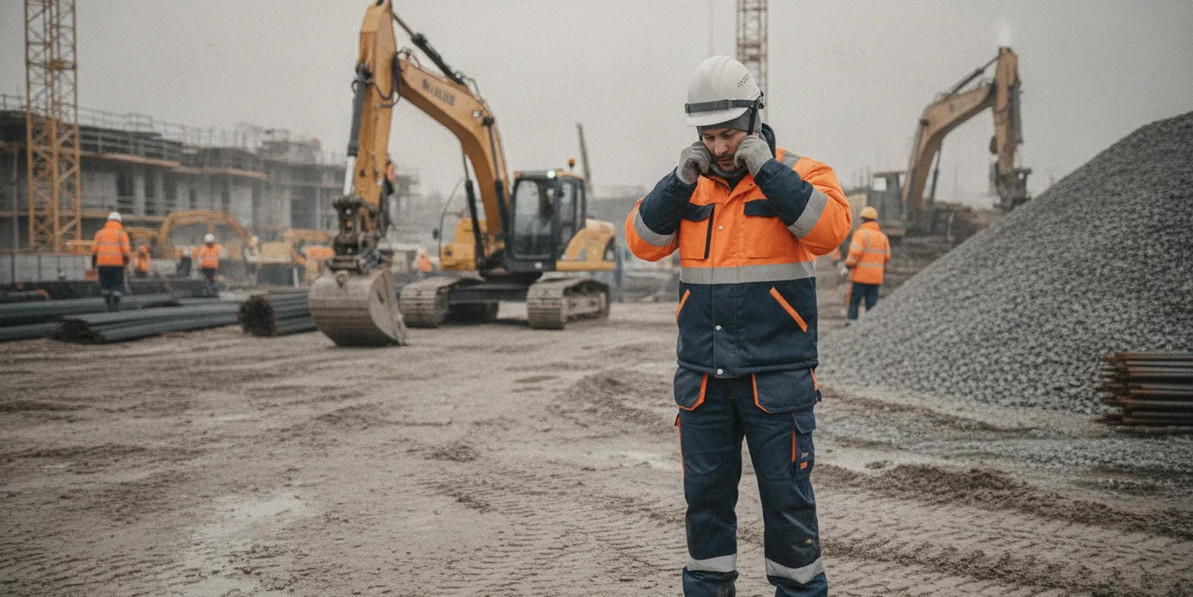
Hard Hat Liners: Fit, Seasonal Comfort, and Workplace Compatibility
A hard hat liner can help address cold-weather discomfort or perspiration, but it must not interfere with the fit or function of the head protection selected for the task. For construction, utility, and industrial buyers, choose a hard hat liner by starting with the hazard assessment, the specific helmet and suspension, and the manufacturer's instructions—not simply the season or fabric label. This guide offers a practical way to compare options and document a workplace decision.
Ask about workplace PPE options
What problem should a hard hat liner solve?
A liner is an accessory worn with a hard hat to address a defined comfort or clothing need. Depending on its design, it may provide warmth, cover the ears or neck, or manage perspiration. These are different functions. A bulky winter hood may offer more coverage but take up more room beneath the helmet; a thin moisture-managing liner may have a lower profile but offer little insulation. The product name alone does not tell you whether it suits a particular task or hard hat.
First identify the problem workers are experiencing. Is discomfort concentrated at the beginning of a cold outdoor shift? Does a worker need a clean layer to manage sweat during strenuous tasks? Do people move between a cold exterior and a heated shop? Is the requested liner intended for ordinary cold weather, or is a specific flame-resistant garment system part of the workplace's hazard controls? A short, specific problem statement helps keep the purchase from becoming a general-purpose accessory decision.
A liner does not replace a hard hat, repair a poor fit, or make a helmet suitable for a hazard for which it was not selected. It also does not change the hard hat's rating or certification. Keep the equipment instructions and the site's hazard assessment central. OSHA's occupational safety resources are a starting point for locating applicable workplace requirements; employers should apply the requirements relevant to their work and consult qualified safety professionals when needed.
How should buyers define the task and conditions?
Before reviewing products, write down the work conditions the liner is meant to address. Consider temperature, wind, precipitation, exertion, exposure duration, and the frequency of transitions between outdoor and indoor environments. Record the task and the head-protection equipment already required. A liner should fit within that established selection, not drive a change to the protective equipment without review.
- Cold exposure: Note whether the need is warmth around the crown, ear coverage, neck coverage, or a combination. More coverage and thickness may also mean more material near the suspension.
- Heat and perspiration: Identify when and where the discomfort occurs. A low-profile, washable liner may address perspiration without the coverage of a cold-weather hood, but check its care instructions and fit.
- Variable conditions: Consider whether workers will remove or change the liner during the shift. A helmet that fits correctly with a liner may not fit the same way without it, so assess both intended configurations.
- Other hazards: Keep electrical, impact, falling-object, visibility, and other task hazards in the assessment. Do not infer that a liner has a specialized protective property from its appearance or broad marketing language.
- Shared or issued equipment: Decide whether liners are assigned to individuals, how clean replacements will be supplied, and how the items will be stored and identified.
Ask the people performing the task to describe the problem in concrete terms. “The hard hat is uncomfortable” is a starting point, not a product specification. Ask when discomfort starts, whether it occurs only outdoors, whether the helmet shifts, and what workers currently wear beneath it. Feedback can help identify a need for warmth, sweat management, or a different fit. It cannot substitute for compatibility checks or employer decisions about the required head protection.
What types of liners should you compare?
Compare a product's construction and intended use with the recorded need. Labels such as winter, thermal, fleece, or moisture-wicking do not establish that an item is appropriate for every helmet, exposure, or hazard. The following table is a screening aid, not a substitute for product instructions and a trial of the exact combination.
| Need to address | Features to review | Checks before approval |
|---|---|---|
| Cold conditions | Coverage, insulation, thickness, seams, and bulk | Confirm the helmet remains properly positioned and the suspension is not displaced |
| Perspiration or frequent laundering | Profile, absorbency, drying and washing instructions, availability of clean replacements | Check the item remains flat, dry, and in place under the helmet |
| Changing indoor and outdoor work | Ease of removal, warmth, coverage, and intended use in each condition | Evaluate both worn and removed configurations if both are planned |
| Specified flame-resistant clothing program | Exact product documentation, garment labeling, and program requirements | Do not treat a liner's material claim as proof that the full PPE system is appropriate |
| Multi-item PPE use | Shape around ears, forehead, and neck; compatibility information | Test alongside the actual eyewear, hearing protection, and face equipment |
For a flame-resistant liner, buyers should be especially careful to distinguish a garment attribute from a complete protective ensemble decision. Review the exact product documentation and the employer's applicable hazard controls. Do not assume that a “FR” description by itself establishes suitability for a particular electrical or thermal hazard, or that the addition of a liner changes the hard hat's properties. If a product's use or compatibility is unclear, obtain manufacturer guidance before issuing it.
How can you check fit and compatibility?
Test the actual combination: the specific hard hat, installed suspension, proposed liner, and other required PPE. Fit may differ with helmet model, suspension design, head size, liner thickness, and the way the item is worn. A liner that fits one worker or one helmet does not automatically fit another. Check the hard hat and liner instructions for restrictions on accessories and use. If they do not clearly address the combination, ask the manufacturer rather than assuming it is permitted.
- Identify the equipment. Record the hard hat make and model, suspension, liner model and size, and any accessories. Confirm the hat and suspension are in serviceable condition under their own inspection instructions.
- Put on the liner as designed. Do not fold, bunch, knot, or reposition it in a way the instructions do not allow. Keep it out of the space between the shell and suspension unless the manufacturer specifically provides for that configuration.
- Fit and adjust the hard hat normally. Follow the hard hat's instructions. Check that the suspension sits as intended and the shell is stable and properly positioned. The liner must not force the helmet upward, create a gap, or prevent adjustment.
- Move through representative tasks. Have the worker look up and down, turn, bend, and perform ordinary movements for the job. Observe whether the helmet shifts, the liner migrates, or a pressure point develops.
- Check the whole PPE arrangement. Confirm that the liner does not interfere with required eyewear, hearing protection, face protection, or other equipment. Assess equipment together as it will actually be worn.
- Review the alternate configuration. If workers may take the liner off during a shift, check fit without it too. Do not assume an adjustment made with the liner will remain correct after removal.
- Record the result. Note whether the combination met the manufacturer's directions, remained stable during movement, and was workable for the task. Reject a combination with unresolved fit, instruction, or interference concerns.
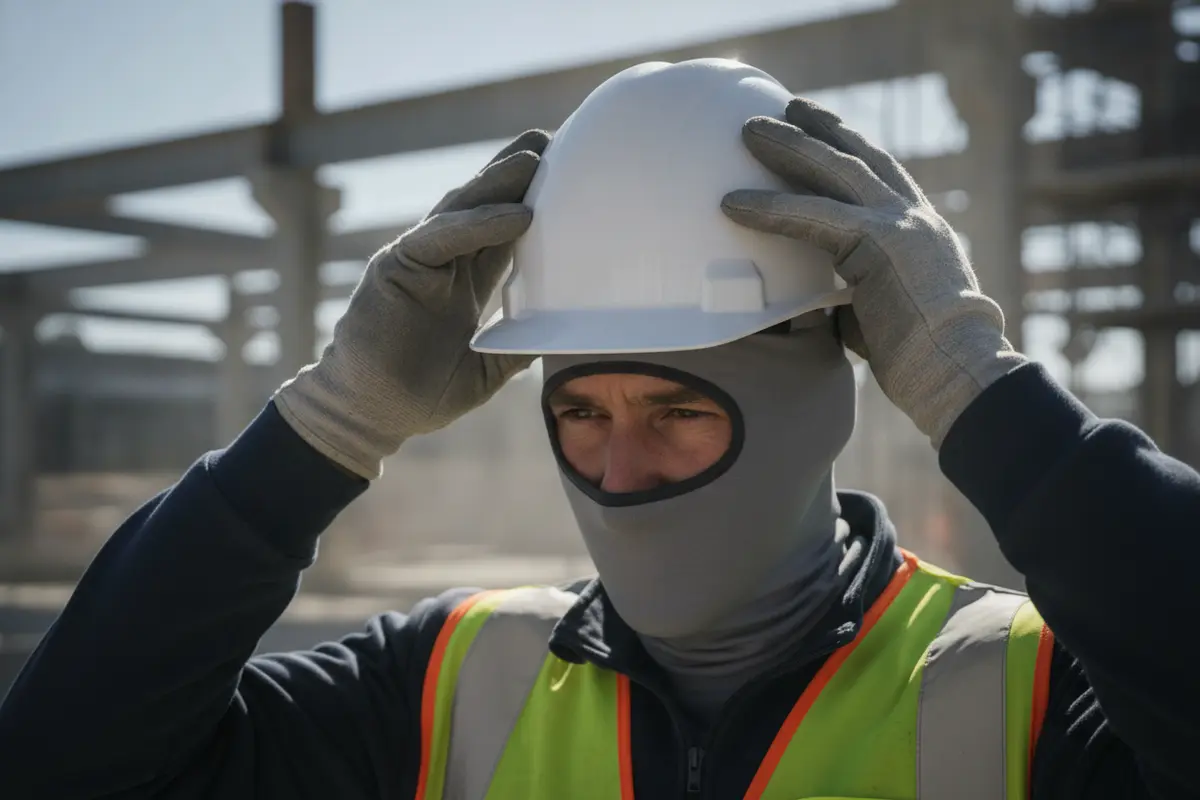
A liner must not be wedged between the suspension and shell, attached in a way that modifies the helmet, or used to make an oversized hard hat seem secure. Do not drill, cut, glue, or otherwise modify a hard hat to accommodate an accessory. Stop the trial if the helmet no longer sits securely or the suspension cannot be adjusted as intended. The next step is to review manufacturer guidance or choose another documented option, not to improvise a workaround.
How do other accessories affect the decision?
Workers rarely wear a liner in isolation. Earmuffs, eyewear, face shields, respirators, and cold-weather clothing can all share space around the head. One accessory can change how another sits or is adjusted. List the equipment used for each task and assess combinations that are actually allowed by the respective instructions. An accessory suitable with one helmet setup should not be assumed suitable with another.
For example, a buyer reviewing a head-and-face protection accessory or a faceshield headgear product should consider its intended equipment arrangement separately from a liner. Likewise, a listing for hearing protection is not evidence that a particular muff and liner combination will fit beneath a particular hard hat. These examples reinforce the need to check the exact combination and manufacturer instructions; they do not establish compatibility.
A sun shield or other attachment can raise similar questions about the approved accessory arrangement. When evaluating one, review the exact product information, such as the listing for a hard hat sun shield, alongside the hard hat manufacturer's guidance. Keep decisions specific to the equipment models and tasks in use. Do not treat a catalog category, similar appearance, or successful use on a different helmet as approval.
What should a workplace trial measure?
A short, structured trial can turn worker feedback into useful procurement evidence. Choose a small representative group and a defined task period. Include the conditions that prompted the request, but do not place workers in a hazardous setup merely to test comfort. Keep existing PPE requirements in force, and have the responsible safety person review the plan and manufacturer guidance before the trial begins.
Use a consistent record for each trial. Capture:
- The task, work location, and relevant conditions, including indoor/outdoor transitions and exertion.
- The hard hat model, suspension, liner model and size, and other PPE worn at the same time.
- Whether the product instructions were reviewed and whether the precise combination is allowed or clarified by the manufacturer.
- Observed position and stability at the start and after ordinary movement, including any slipping, bunching, pressure, or adjustment difficulty.
- Worker comments tied to a moment or task, such as discomfort during overhead work or excessive warmth indoors.
- The care and replacement arrangements required for routine use.
- The decision: approved for a defined equipment combination, rejected, or held for further information.
For instance, a crew may report that a thin liner is helpful in the cold staging area but uncomfortable in a heated shop. The team can compare the two conditions, check fit with the liner on and off, and record whether the helmet remains correctly adjusted in each intended configuration. If workers report that a thicker option moves the shell when they look upward, that is a concrete reason not to approve that combination. If the liner feels comfortable but manufacturer compatibility remains unresolved, the result is still pending. Comfort feedback is important, but it is not a substitute for equipment suitability.
Contact the safety supply team with product questions
How should liners be cleaned, stored, and replaced?
Follow the liner's own care instructions. Set a cleaning frequency that reflects actual use, perspiration, soil, and the manufacturer's directions. Allow a washed liner to dry fully before use or storage. Avoid cleaners, disinfectants, or high heat unless the instructions permit them; unsuitable treatment may affect the material, shape, or fit. A workplace should not create a care method by assuming that every textile can be treated the same way.
Decide whether liners will be individually issued or shared. Individual issue makes it easier to track size, condition, care, and the hard hat combination approved for that worker. If items are shared, define how clean liners are supplied and how used items are kept separate. Do not return a damp, contaminated, or soiled liner to clean stock. Label or store approved options so workers do not confuse them with different sizes or products.
Inspect the liner when it is issued and during routine checks. Replace it if it is torn, stretched, badly soiled, contaminated, or no longer stays in its intended position. A misshapen liner can bunch under the suspension or cause discomfort. Follow the hard hat and suspension's separate inspection, cleaning, and replacement instructions as well; replacing a textile accessory does not replace inspection of the helmet system.
Plan for realistic inventory. If liners need frequent washing, a clean spare can prevent pressure to wear a wet or soiled item. Establish who is responsible for issuing replacements and how a worker reports a damaged liner. When a product is substituted, repeat the compatibility review. Similar fabric, shape, or name does not prove that the substitute behaves the same way under the hard hat.
How can procurement make the decision repeatable?
Keep an approval record that ties the decision to a specific task and equipment configuration. A purchasing line that says only “hard hat liner” leaves open questions about model, intended use, and compatibility. Record the liner manufacturer and product identifier, size range if relevant, approved hard hat and suspension, and any conditions or limitations. Keep the applicable product instructions with the record or note where the team can find them.
- Define the request. Note the workers, task, environmental condition, and discomfort or clothing need that prompted the request.
- Preserve the hazard-based selection. Confirm that required head protection remains the same unless a separate review authorizes a change.
- Screen product information. Review intended use, fit, care, and any claims that matter to the task. Request clarification for claims or compatibility statements that are incomplete.
- Evaluate the complete setup. Trial the actual hard hat and suspension with the liner and the other PPE used during the task.
- Set handling rules. Specify issue, cleaning, drying, storage, inspection, and replacement steps before broad distribution.
- Control changes. Reassess after a change in helmet, suspension, liner, other PPE, task, or product supplier. Treat an unreviewed substitute as a new candidate.
This process is especially useful at sites with multiple helmet models. A trial on one setup should not become a blanket approval for every department. A simple matrix can show the approved liner and helmet combinations, any rejected options, and unresolved questions. Supervisors can then check that the equipment issued to a worker matches the documented configuration instead of relying on memory or informal labels.
What selection mistakes should buyers avoid?
- Choosing by weather label alone: “Winter” does not specify thickness, coverage, intended use, or fit beneath a particular suspension. Confirm the details.
- Assuming one size or model fits all: Workers, helmets, suspensions, and other PPE differ. Verify actual combinations rather than generalizing from one trial.
- Using a liner to correct a loose helmet: Select and adjust the proper hard hat according to its instructions. Do not add bulk to stabilize a poor fit.
- Ignoring removal during the shift: If a worker removes a liner, the helmet may sit differently. Assess each planned configuration and teach workers to readjust as instructed.
- Relying on a broad performance claim: Fabric language does not establish suitability for an electrical, thermal, or other specialized hazard. Check product-specific documentation and the workplace program.
- Skipping care planning: Without a cleaning and replacement plan, a useful liner may be worn wet, soiled, stretched, or out of shape.
- Approving by visual similarity: An unreviewed alternative is not automatically equivalent. Check its instructions and repeat the fit review.
A successful program makes the safe choice straightforward for the wearer: the approved liner is identifiable, clean, compatible with the designated setup, and easy to replace when needed. Procurement, supervisors, and workers each have a practical role in maintaining that process. If the equipment or instructions change, pause and review rather than relying on the old approval.
Ask a product question before placing an order
Frequently Asked Questions
Can a hard hat liner change the helmet's certification?
Do not assume it does. A liner does not change a hard hat's rating or certification. Use a combination permitted by the equipment instructions, and contact the manufacturer if the allowed accessory arrangement is unclear.
Can any winter hat be worn under a hard hat?
No. A bulky hat, hood, or folded fabric may interfere with the suspension or keep the hard hat from sitting securely. Check the product instructions and evaluate the exact combination in the intended work configuration.
Should a liner go between the hard hat shell and suspension?
Do not place material where it disrupts the suspension or changes the intended fit. Wear a compatible liner as directed by its instructions and the hard hat manufacturer. Never modify the helmet to accommodate it.
How often should a hard hat liner be washed?
Follow the care instructions and set a routine based on use, perspiration, and soiling. Let the liner dry fully and confirm it retains its shape before wearing it again.
Does a flame-resistant liner make any hard hat setup suitable for electrical work?
No. A material description alone does not establish suitability for a particular hazard or the complete PPE arrangement. Follow the workplace hazard assessment, applicable equipment instructions, and qualified safety guidance for the specific task.
How can a buyer make a defensible choice?
Choose a hard hat liner only after identifying the need, confirming the exact equipment combination, and checking fit through representative movement. Document care and replacement steps, and reassess when any part of the setup changes. A comfort accessory belongs in the workplace only when it works with the required protective system and its instructions.
Recent Posts
-

Hard Hat Liners: Fit, Seasonal Comfort, and Workplace Compatibility
A hard hat liner can help address cold-weather discomfort or perspiration, but it must not interfere …Nov 13th 2026 -

A Workplace Buyer Guide to Hard Hat Accessories
Hard hat accessories can support a task-specific protective setup, but a new attachment may affect f …Nov 12th 2026 -

Hard Hats Procurement Checklist for EHS Managers
Buying hard hats for a workplace is not only a matter of choosing a color or ordering the lowest-cos …Nov 12th 2026