

Hard Hat Accessories: Workplace Buyer Guide
Hard hat accessories can support a task-specific protective setup, but a new attachment may affect fit, balance, retention, or the performance of other PPE. For workplace buyers, evaluating hard hat accessories means starting with the task and applicable requirements, then confirming the exact helmet-and-accessory combination is suitable. A product label or familiar appearance is not enough evidence.
Discuss workplace safety equipment sourcing
What decision should an accessory review answer?
A review should answer four practical questions: What hazard or work condition is the accessory intended to address? Is it approved for the specific helmet model? Does the combined setup work with the other PPE used at the same time? Who will inspect, maintain, and replace it? If the team cannot answer these questions, pause selection and gather the missing information.
Accessories may include face shields, visors, helmet-mounted earmuffs, chin straps, cold-weather liners, sun shields, or other attachments. Their names describe broad uses, not proof of protection or compatibility. Define the job and the need first, and involve workers and supervisors who understand the actual task. The point is not to assemble the greatest number of attachments. It is to identify the minimum suitable setup that addresses the assessed exposure without introducing a new interference problem.
- Record the work activity, location, duration, and expected exposure.
- Identify the current helmet manufacturer, model, type, and suspension configuration.
- Specify the accessory and attachment model under consideration.
- Check how the full setup interacts with visibility, hearing, fit, retention, and other PPE.
- Set approval, inspection, cleaning, storage, and replacement expectations before issue.
An accessory does not replace head protection required by an employerâs hazard assessment or an applicable regulation. Nor does adding an accessory make an otherwise unsuitable helmet appropriate. The review concerns the complete protective setup, not just the additional item. For US workplace decisions, check the requirements that apply to the operation and consult the current OSHA materials and applicable regulations, rather than treating a general product description as a compliance determination.
How should buyers identify the task and hazards?
Map each proposed accessory to a defined exposure rather than buying a general assortment and hoping it will fit future needs. Consider overhead impact, falling or flying objects, electrical exposure where relevant, sun and weather, airborne particles, noise, and face or eye hazards. The assessment should reflect actual work, not only the department name or equipment already on hand. A maintenance worker may move between several tasks in one shift, while a construction crew may use different equipment in separate zones. Those distinctions matter when deciding whether a single configuration can serve all users and tasks.
For each task, note where and when the exposure occurs, who may be affected, and what controls are already in place. PPE is one element of a safety program; it does not substitute for feasible engineering or work-practice controls. A face shield may address a face hazard but does not necessarily replace separate eye protection. A visor should not be assumed to provide a particular impact rating unless its documentation and intended use establish that. Likewise, a helmet-mounted hearing protector should be considered alongside the workplaceâs hearing-protection assessment, not chosen solely because it attaches to a hard hat.
Write a short use case before comparing products. For example: âMaintenance staff need head protection and face coverage during a defined grinding task; the setup must remain compatible with eye protection selected for that hazard and the helmet model issued at this site.â This description makes the exposure, boundary, and compatibility questions visible. Another use case might be: âOutdoor workers need a way to reduce sun exposure around the helmet without obstructing peripheral vision or interfering with required eyewear.â The use case does not choose a product. It establishes what the buyer must verify.
| Accessory or setup | Assessment question | Buyer verification |
|---|---|---|
| Face shield or visor | What face hazard exists, and what eye protection is separately required? | Check coverage, mounting hardware, instructions, and interaction with eyewear. |
| Helmet-mounted hearing protection | Has noise exposure been assessed, and can the protector be fitted correctly? | Confirm approved attachment and assess the complete hearing-protection arrangement. |
| Cold-weather liner | Could added material alter suspension adjustment, seating, or retention? | Use only a configuration permitted by the helmet instructions; check fit in use. |
| Chin strap | Does the work setting call for additional helmet retention? | Verify model-specific attachment and adjustment; do not improvise hardware. |
| Sun shield or cooling attachment | Could it obstruct sightlines, snag, loosen, or interfere with other PPE? | Check documented compatibility, attachment security, and inspection needs. |
This table is a screening tool, not a finding that any named accessory meets a standard. It helps organize questions before a buyer reviews model-specific documentation. If the hazard assessment changes, revisit the setup rather than assuming an earlier selection still covers the new task. A change from routine outdoor work to grinding, for example, is not a reason to simply add a face shield to a configuration without checking the shield, helmet, eye protection, and task-specific requirements together.
How can buyers verify helmet and accessory compatibility?
Compatibility is specific to the models and configuration. Helmets that look similar may have different suspension systems, slots, or approved attachment points. Check current instructions and compatibility information for the exact helmet and accessory. A clip that physically fits is not, by itself, evidence that the manufacturer approves the combination. Make sure the model identifiers on the equipment match the identifiers in the documentation; small differences in product family names can hide important distinctions.
Review whether the addition affects how the helmet sits level, how the suspension adjusts, clearance, balance, or retention. Then consider the complete set of equipment used together. A face shield, safety eyewear, respirator, hearing protector, or other item may compete for attachment space or interfere with positioning. Ask workers to identify pressure points, restricted movement, blocked sightlines, or difficulty donning and removing the setup. Review the helmet in the position workers actually use it, and include the task movements that could shift an attachment or change a line of sight.
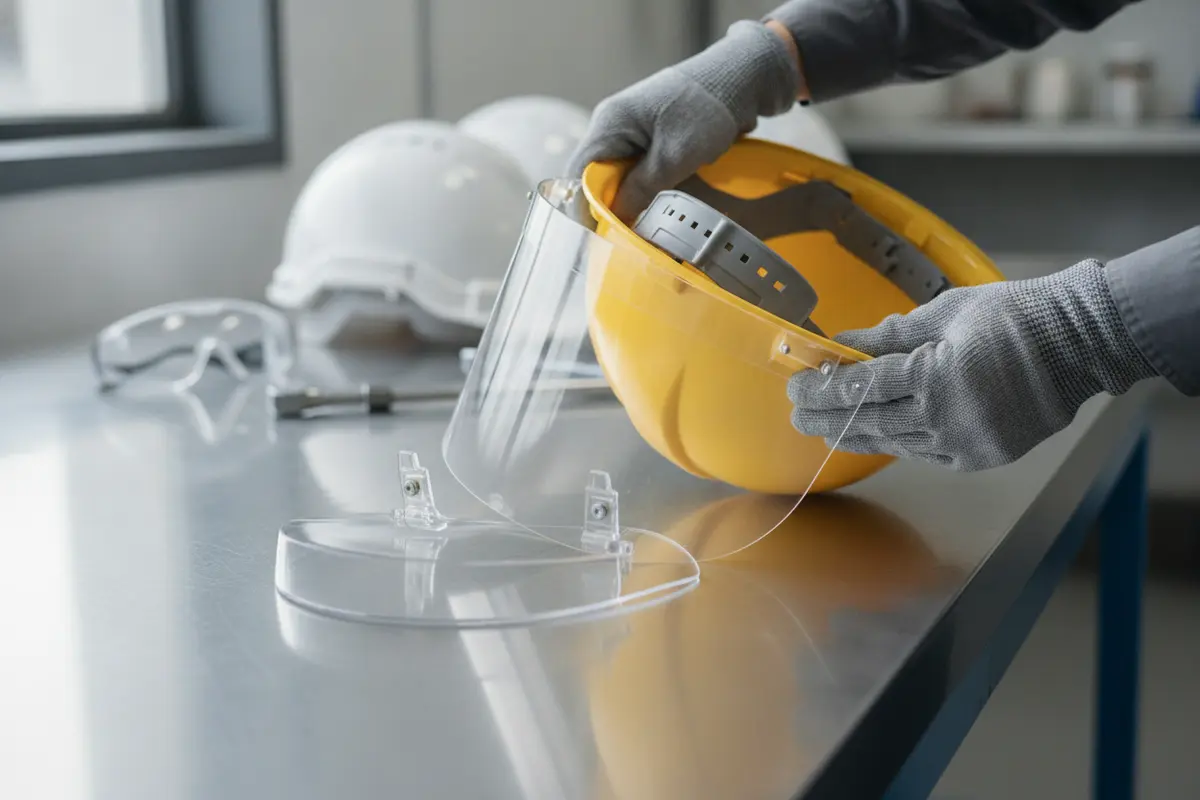
Make no unapproved changes to the shell, suspension, or attachment hardware. Do not drill, cut, glue, bend, or substitute components unless the manufacturerâs instructions expressly support that action. If a part is damaged, modified, loose, or assembled in a way the instructions do not describe, remove it from use pending review. If an accessory cannot be fitted without forcing a part or altering a component, treat that as an unresolved compatibility issue, not a reason to adapt the equipment in the field.
When comparing product examples, treat a listing as a starting point for model identification, not as proof of fitness for every helmet. Buyers can review faceshield headgear or a hard hat sun shield, then check the current manufacturer documentation for the exact application. A product name or image cannot establish compatibility with a different helmet model. Similarly, a product page for helmet-related hearing protection can help identify a candidate for review, but the buyer still needs to confirm the mounting and use arrangement from the exact model instructions.
Which standards and documentation should teams check?
Identify the rules and standards that apply to the workplace and task. OSHAâs construction and general industry requirements address head protection in their respective contexts. Employers should determine which provisions apply to their operation rather than assuming a single rule covers every work setting. OSHA provides regulatory and workplace safety information at its official website; use the current applicable regulations and qualified safety resources to review scope and requirements when applicability is uncertain.
Keep the applicable documentation together: helmet markings and instructions, accessory identification and instructions, compatibility lists, and purchasing or compliance specifications. Confirm that documents describe the exact combination, not just a component on its own. Where a required performance class, type, or electrical application matters, verify it from authoritative product documentation and the applicable rule or standard. If documents use unfamiliar terms, record the question and obtain clarification rather than interpreting a label by guesswork.
Maintain a record of which source was checked and when. Manufacturers can update instructions or discontinue accessories. If purchasing relies on an old catalog entry or saved product page, revalidate the current model and instructions before approving a new order. Treat unclear claims as unresolved, rather than inferring that a product meets a requirement because another item in the same family does. The evidence file can be brief, but it should make the decision reproducible: a second reviewer should be able to see which helmet, accessory, document, and task were evaluated.
Separate the questions âDoes this component have the required characteristics?â and âIs this combination allowed and suitable for this task?â A buyer may find information about a shield by itself, but still need the helmet makerâs approved attachment and guidance about other PPE. Keep those questions distinct in procurement notes so a specification for one component is not mistakenly taken as approval of the whole arrangement.
How should teams compare accessory candidates fairly?
Compare candidates against the same work case and non-negotiable requirements. Cost or familiarity alone is not a sufficient basis. A lower-cost option with unclear compatibility may create more administrative work and risk than a documented setup. Use a repeatable process so different supervisors do not make conflicting decisions for the same task. Separate pass-or-fail requirements from preferences: compatibility and required protective function belong in the first group; color, convenience, and ease of storage may be comparison factors only after mandatory criteria are met.
- Define the need. State the hazard, task, work area, users, and duration of use. Note when the equipment is worn and whether tasks change during the shift.
- Set mandatory criteria. List issued helmet models, required protection, allowable attachment methods, fit needs, and relevant rules or specifications. Identify any PPE that must be worn at the same time.
- Gather evidence. Obtain current instructions, compatibility information, model identifiers, and applicable compliance documentation. Confirm that documents apply to the precise candidate.
- Assess the whole configuration. Check interaction with eye, face, hearing, respiratory, and other equipment used concurrently. Do not approve components in isolation if they will be used together.
- Evaluate practical use. Where appropriate, assess fit, movement, visibility, donning, communication, and task access under controlled conditions. Include representative users and relevant work motions.
- Approve and control. Record the permitted combination, who approved it, task limits, and the process for substitutions. Make the approved models identifiable to purchasing and supervisors.
- Plan sustainment. Set issue, inspection, cleaning, storage, replacement, and training responsibilities before distribution.
Consider a team evaluating a winter liner. First, specify the cold-weather tasks and the helmet models workers use. Next, check whether the manufacturer permits that liner or material in the helmet and whether it changes suspension adjustment or seating. Then assess the actual PPE combination, including eyewear and hearing protection if used. Finally, document which configurations are approved and how supervisors will identify them. A generic liner that feels comfortable during a brief try-on is not sufficient evidence of a suitable setup. If workers use several helmet models, make the review model-by-model instead of assuming one approval covers all.
A second example is helmet-mounted earmuffs. The buyer should not choose based on the accessoryâs stated attenuation alone. Confirm that the attachment is approved for the helmet, then assess whether the ear cups fit and seal as intended with the wearerâs eyewear and other equipment. Check whether workers can raise or lower the cups as intended without dislodging other components, and establish how the setup is checked before use. Coordinate selection with the workplace hearing-protection program and its qualified owner. If the equipment is shared, the issue and cleaning process should also be practical for the actual work group.
A third example is a face shield used for intermittent maintenance. The review begins by clarifying the face hazard and identifying separate eye protection requirements. The buyer then confirms the shield and mounting components match the helmet model, and considers whether the shield can be moved or stored without leaving hardware loose or damaged. Workers can test donning and removal with gloves and any other required PPE in a controlled evaluation. The outcome should define when the shield is used, what additional eye protection is required, and what conditions call for stopping to inspect it. This is more actionable than issuing a shield simply because the task is described as âmessyâ or âhigh risk.â
Ask about sourcing workplace safety equipment
What selection mistakes should buyers avoid?
- Choosing by label alone: âUniversalâ wording does not establish that an accessory works with a particular helmet.
- Mixing parts without evidence: Do not combine components from different systems unless documentation supports the specific combination.
- Ignoring fit and retention: Added weight or material can affect seating, balance, or secure positioning.
- Overlooking other PPE: A shield, earmuff, respirator, or eyewear may interfere with another component.
- Confusing accessory function with complete protection: Confirm required head, face, eye, or hearing protection separately.
- Allowing uncontrolled substitutions: Purchasing and supervisors need a clear approved-model list and a trigger for review.
- Skipping inspection: Cracks, loose clips, damaged fasteners, contamination, or altered fit require attention.
- Assuming all users have the same fit: A configuration that works for one worker may not fit another equally well.
- Using a product listing as the only evidence: A listing can help identify a candidate, but may not provide all configuration and use instructions needed for approval.
Heat management is another area where categories can be confused. A cooling wrap worn around the neck, for example, is not automatically a helmet attachment and does not establish that a helmet setup is compatible. Consider such items within the broader heat-stress program and review their use separately. A product example such as an Allegro cooling wrap should not be read as a helmet compatibility claim. Treating every comfort item as part of a helmet system can obscure how it is actually worn and whether it interacts with the helmet.
How should a workplace control issue, inspection, and change?
Good selection can be undone by an unreviewed replacement or a damaged attachment left in service. Give workers a simple way to identify approved parts and find their instructions. Procurement should retain exact model identifiers and route substitutions through the same review process as the original selection. A practical control is a short approved-equipment list that names the helmet, accessory, attachment, task, and any use limits. If a supplier proposes a substitute, compare exact identifiers and supporting documents before treating it as equivalent.
Define an inspection process using manufacturer guidance and workplace conditions. Workers should know what damage, wear, looseness, contamination, or changed fit requires removal from service. Cleaning and storage should follow the instructions; harsh chemicals, excessive heat, or improvised repairs may harm components. Do not create a universal replacement interval unless the manufacturer or workplace program supports it. Instead, identify the inspection steps appropriate to the equipment and the events that require an additional check, such as a hard impact, a dropped component, or a change in attachment security.
Make inspection instructions concrete. For example, workers may need to check that an attachment is fully seated, fasteners are not missing, moving parts operate as intended, and the accessory does not shift the helmet out of its proper position. These are not replacements for manufacturer instructions; they are prompts to build a task-appropriate inspection routine from them. Supervisors should know where questionable equipment goes and who has authority to remove it from service and arrange review.
Reassess the combination when the helmet model changes, an accessory is discontinued or substituted, the task or hazard changes, workers report interference, or an incident indicates that the setup needs review. Include the people who use and maintain the equipment. A short, documented review is more reliable than relying on memory or informal word-of-mouth approvals. Tell affected workers what changed and how to recognize the revised configuration before it is issued.
What should an approval record contain?
A concise record helps safety, operations, and purchasing teams apply the decision consistently. Include enough detail to connect the decision to the particular work case:
- Task, work area, hazard, and reason the accessory is being considered.
- Helmet manufacturer, exact model, type, and suspension configuration.
- Accessory and attachment identifiers, plus the specific combination approved.
- Instructions, compatibility documents, and applicable requirements reviewed, with dates or versions where available.
- Fit and interaction checks for other PPE, including limits on use or any unresolved conditions.
- Approving role, date, worker communication, and inspection or care procedure.
- Conditions that require a new review, such as a model substitution or changed task.
For a multi-site operation, make the record usable by local supervisors. Identify which helmet models are issued at each site and which accessory configurations are permitted there. If one work group has a different task or different equipment, make that distinction explicit. This reduces the chance that an approval made for one location is copied to a different setup without checking. A simple matrix can help: rows for tasks or sites, columns for approved helmet and accessory combinations, plus a link or reference to the supporting documentation.
Keep the approved list current as inventory changes. When a product is replaced with a revised model, compare identifiers and documentation rather than assuming the successor is identical. If the organization cannot confirm equivalence, treat it as a new candidate and review it before issue. Retire old entries clearly so buyers do not order a superseded part from a saved list while workers are being told to use a newer configuration.
It is also useful to define who owns each step. The safety or EHS role can coordinate hazard and compliance review; supervisors can communicate task limits and observe field use; procurement can control model substitutions and retain records; workers can report fit or interference issues. The precise assignment depends on the organization, but the handoff should be clear. A decision that exists only in one personâs email is difficult to apply consistently when inventory or staffing changes.
Frequently Asked Questions
Can any accessory fit any hard hat?
No. Compatibility depends on the exact helmet and accessory models and the manufacturerâs instructions. Confirm the specific combination rather than relying on appearance or a broad product label.
Can an accessory replace required head protection?
No. An accessory does not replace head protection required by the hazard assessment or applicable rule. Select protective equipment for the task and review attachments as part of the complete setup.
Can a team mix accessory brands?
Only when documentation supports the specific combination and it meets workplace requirements. Do not infer compatibility because components have similar-looking attachment points.
How often should accessories be inspected?
Follow manufacturer instructions and the employerâs inspection process. Check for damage, looseness, contamination, or changes in fit at the times specified by the program, and remove questionable parts from service for evaluation.
What if the product instructions do not clearly identify a helmet model?
Do not assume the combination is approved. Ask the manufacturer or supplier for current model-specific documentation, record the answer, and hold selection until the compatibility question is resolved.
Contact the team about workplace equipment needs
How can a buyer make a documented decision?
Decide only after the task, hazard, exact models, documentation, complete PPE setup, approval, and upkeep plan have been reviewed and recorded. This process gives safety, operations, and purchasing teams a common basis for controlling accessory selection. SafetyCompany.com is a specialized B2B distributor of industrial safety equipment and PPE from multiple brands; workplace buyers can use the contact page to ask about equipment sourcing. Keep the approved combination tied to the task, and reopen the review whenever the equipment or work conditions change.
Recent Posts
-

Hard Hat Accessories: Workplace Buyer Guide
Hard hat accessories can support a task-specific protective setup, but a new attachment may affect f …Nov 12th 2026 -
Tyvek Suits: Choosing Protective Coveralls for Workplace Hazards
Choosing Tyvek suits starts with the hazard, not the garment name. Industrial, laboratory, remediati …Nov 11th 2026 -

Oil Absorbents for Industrial Work: Use and Compliance
Choosing oil absorbents is not just a matter of finding a material that soaks up liquid. Workplace b …Nov 11th 2026