
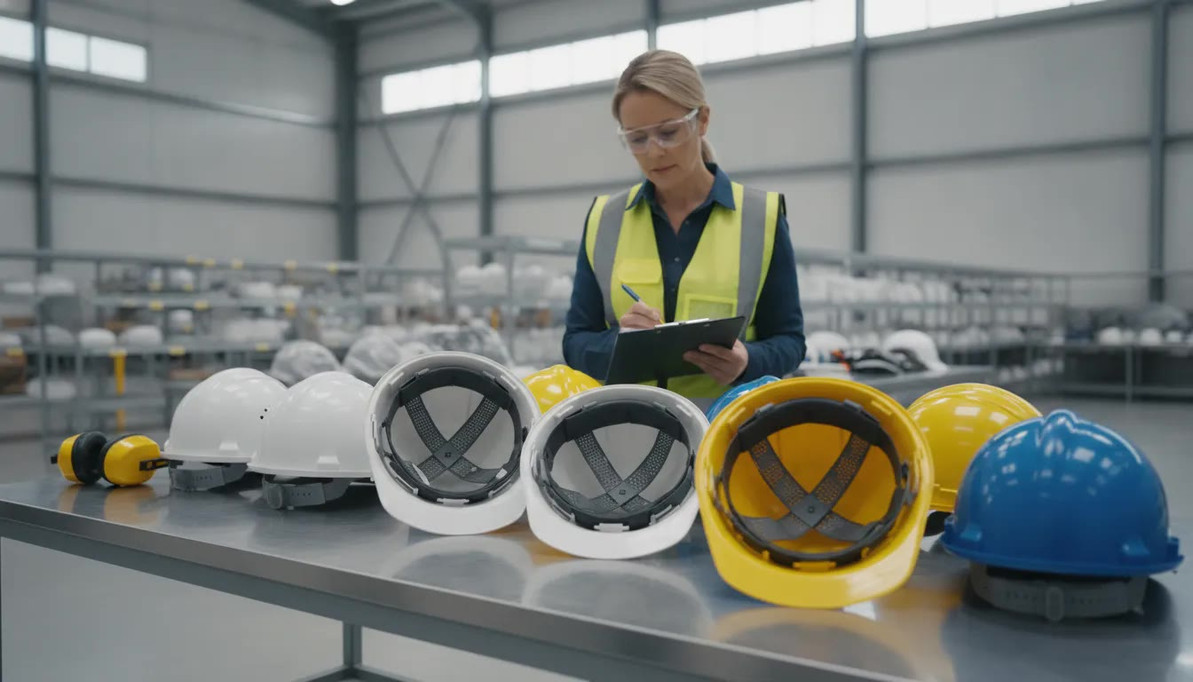
Hard Hats Procurement Checklist for EHS Managers
Buying hard hats for a workplace is not only a matter of choosing a color or ordering the lowest-cost helmet. An EHS manager needs a documented process that connects the worksite hazards to the required protection, confirms that each candidate is appropriate for the job, and gives supervisors a way to manage fit, inspection, replacement, and employee use.
This hard hats procurement checklist for EHS managers is designed for US workplaces that purchase PPE for construction, manufacturing, utilities, warehousing, maintenance, and other industrial operations. Use it before requesting quotes, when reviewing a new model, and whenever a process or hazard changes. It supports a hazard assessment and PPE program; it does not replace your organization's qualified safety review, applicable regulations, or current manufacturer instructions.
Call (800) 310-7233 to discuss hard-hat options for your workplace
What should a hard hats procurement checklist answer?
A useful checklist should leave an auditable answer to six questions:
- What head hazards are present, and where do they occur?
- What impact, penetration, electrical, retention, and compatibility requirements follow from those hazards?
- Which helmet type, class, size, suspension, accessories, and features address the documented use case?
- What product markings, technical data, instructions, and approvals support the selection?
- How will the team receive, fit, inspect, clean, store, and replace the head protection?
- How will EHS verify that the selected equipment still fits the work after a process, tool, exposure, or employee population changes?
Put the answers in the purchase record rather than relying on a product name or a buyer's memory. A good record helps purchasing compare equivalent products, helps supervisors issue the right equipment, and gives EHS a defensible reason for the final selection.
How should an EHS manager document hazards before comparing helmets?
Start with the work, not the catalog. Walk the affected areas with operations, maintenance, and employee representatives where appropriate. Record the task, location, exposure, people affected, and controls already in place. Falling objects, fixed objects, overhead work, vehicle traffic, confined spaces, weather, electrical conductors, and the need to work at height can create different head-protection decisions.
| Worksite question | What to document | Why it affects procurement |
|---|---|---|
| Could an object fall, fly, or strike the top of the head? | Task, height, tools or materials above, and frequency of exposure | Supports the required impact and penetration protection decision |
| Could the head strike a side, rear, or front surface? | Clearances, vehicle or equipment movement, and awkward access points | May support evaluating lateral-impact protection and retention features |
| Could the helmet contact exposed electrical conductors? | Voltage information from the responsible electrical authority, approach conditions, and task boundaries | Determines whether an electrical-protection class and additional controls are needed |
| Will the worker bend, climb, look up, or work in wind? | Body position, movement, weather, and whether the helmet may shift | Guides suspension adjustment, retention, and chin-strap evaluation |
| Will the helmet be used with other PPE? | Eye, face, hearing, respiratory, fall-protection, and communication equipment | Prevents incompatible combinations and loss of fit or coverage |
| Will several shifts share the equipment? | Issue method, cleaning resources, storage, and assigned users | Influences sizing, hygiene, inspection, and replacement controls |
Keep the assessment specific enough that another EHS professional can understand why the team chose a particular model. “General shop use” is usually too vague. “Maintenance employees work beneath overhead pipe racks while using hand tools and occasionally enter a live electrical work boundary under a separate qualified-person procedure” gives procurement and operations a much stronger decision record.
Which regulatory and standard references belong in the procurement file?
For general industry, 29 CFR 1910.135 requires employers to ensure protective helmets where employees face potential head injury from falling objects and to use a helmet designed to reduce electrical shock hazard when exposed conductors could contact the head. For construction, demolition, and related work, 29 CFR 1926.100 addresses head protection for impact, falling or flying objects, and electrical shock or burns.
The procurement file should identify the regulation or employer requirement that applies to the operation, then retain the product documentation used to evaluate compliance. Do not treat a generic phrase such as “ANSI approved” as a complete verification. Record the standard edition and the markings or technical documentation supplied by the manufacturer for the exact helmet and suspension combination.
The International Safety Equipment Association's head-protection guidance describes ANSI/ISEA Z89.1-2026 industrial-helmet classifications, including Type I and Type II protection and optional enhanced “+” designations. Standards and product markings can change, so confirm the current edition, certification information, and use instructions at the time of purchase. If a project, owner, or state plan has a more specific requirement, include that requirement in the review instead of assuming a federal baseline answers every question.
How should buyers choose Type I or Type II protection?
Type is a hazard decision, not a style preference. The current ISEA head-protection guidance describes Type I helmets as tested for top protection and Type II helmets as meeting the top-protection requirements while also addressing lateral-impact protection. The “+” designations indicate additional testing beyond the base Type I or Type II requirements, including enhanced retention-related performance in the situations covered by the standard.
Ask the hazard-assessment team:
- Is the credible exposure primarily an object striking or falling onto the top of the helmet?
- Could a side, front, or rear impact occur because of the task, clearance, movement, or equipment layout?
- Could the helmet be displaced during climbing, bending, vehicle movement, wind, or a fall-arrest event?
- Does the work require a chin strap or other retention feature, and does the manufacturer approve that configuration?
Do not select Type II simply because it sounds more protective without documenting why the added protection is relevant. Conversely, do not select a top-only model when the work includes a credible lateral-impact or displacement scenario. Use the exact product marking and manufacturer's instructions to confirm what the model has been tested for.
What electrical classification and ventilation questions matter?
Electrical classification should be reviewed with the person responsible for the electrical-safety program. A purchasing team should not infer electrical protection from color, vent placement, a product photograph, or the fact that a model is marketed as a hard hat. Check the helmet label, manufacturer data sheet, and instructions for the applicable electrical class and limitations.
Ventilation is another hazard-specific choice. Vented helmets can improve comfort, but the EHS review must confirm that the selected configuration is appropriate for the electrical exposure and work area. If the operation includes electrical conductors, document who evaluated the class, whether ventilation is permitted, and which work boundary or procedure controls the exposure. Keep that decision with the purchase record.
Also confirm whether the listed electrical rating applies to the complete configuration. A shell, suspension, accessory, lamp, face shield, or other attachment can change the approved use. Never assume that mixing components preserves the same rating or certification.
How should buyers evaluate suspension fit and compatibility?
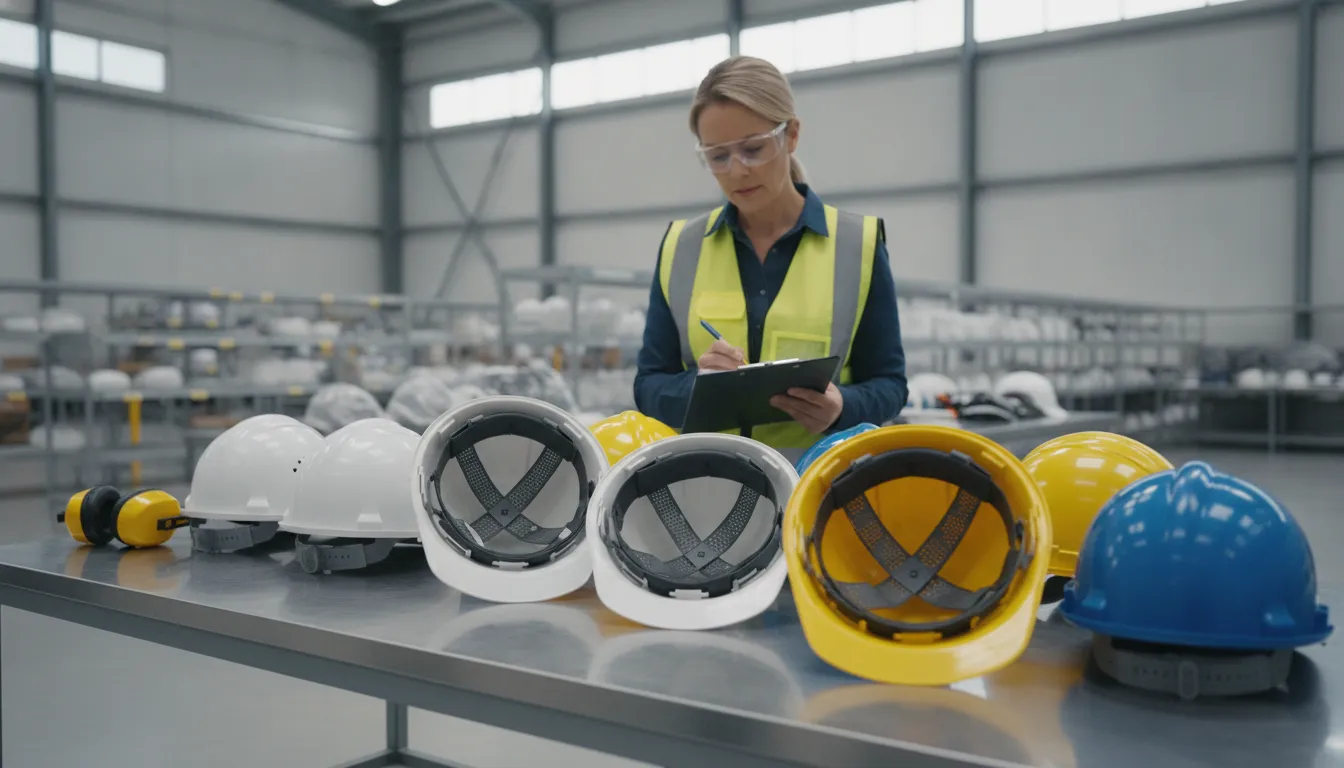
The shell is only one part of a protective helmet. The suspension, adjustment range, headband, brow pad, retention system, and approved accessories determine whether the equipment can be worn correctly. Procurement should require a fit evaluation with the people and other PPE that will use the helmet, especially when employees have different head sizes, hair arrangements, prescription eyewear, hearing protection, or communication equipment.
Use this fit review:
- Can the wearer adjust the suspension so the helmet sits level and does not obstruct vision?
- Does the helmet remain stable when the wearer looks up, bends, walks, and performs the actual task?
- Does the suspension contact the head as intended without pressure points that encourage employees to loosen or remove it?
- Are the sweatband, chin strap, face shield, earmuff, lamp, and other attachments approved for that helmet model?
- Can supervisors identify the correct replacement suspension and distinguish it from a visually similar part?
Compatibility is model-specific. Review the manufacturer's accessory list and instructions before adding a face shield, hearing protection, winter liner, welding shield, or communication device. For related maintenance planning, compare this checklist with the construction hard-hat selection guide and the site's bump-cap versus hard-hat explanation. A bump cap is not a substitute for a required protective helmet.
What should a fair product comparison record include?
Once the use case is documented, compare products against the same criteria. A low price is not a fair comparison if one quote excludes a compatible suspension, retention system, or required accessory. Request enough information that purchasing and EHS are comparing the same configuration.
| Comparison field | Buyer question | Evidence to retain |
|---|---|---|
| Protection type | Does the type address the documented top and lateral impact scenario? | Product marking, technical sheet, and hazard-assessment reference |
| Electrical class | Does the class match the electrical exposure and employer program? | Label image or specification, manufacturer instructions, reviewer name |
| Fit and retention | Can the intended users adjust and retain the helmet during the task? | Fit-test notes, size range, suspension details, and retention options |
| Compatibility | Are required eye, face, hearing, respiratory, and communication accessories approved? | Accessory list, model numbers, and complete configuration |
| Inspection and care | Can the team inspect, clean, store, and replace the equipment as instructed? | Instructions, inspection checklist, replacement parts, and training plan |
| Supply and lifecycle | Can the distributor support the expected quantity, timing, and replacement need? | Quote date, quantity, lead-time information, and reorder details |
Keep model numbers exact. “White hard hat” is not enough for receiving, reordering, or incident review. Record the shell, suspension, accessory, and quantity as a complete issued configuration. If color is used for role identification, include the color convention in the site procedure, but never use color as a substitute for the required performance marking.
Review the Safety Company hard hats category while building your shortlist
How should EHS teams plan receiving, inspection, and replacement?
Procurement is not complete when the order is placed. The receiving and issue process should preserve the same configuration that EHS evaluated. Assign an owner for each control and write the decision into the PPE procedure or local issue record.
- Receive and verify. Compare the shipment with the purchase order. Check model, type, class, suspension, accessories, quantity, packaging condition, and documentation before distributing helmets.
- Inspect before issue. Look for cracks, deformation, cuts, chemical damage, UV or heat damage, missing parts, damaged suspension, and labels that cannot be read. Follow the manufacturer's inspection instructions.
- Fit and train. Show each user how to adjust, wear, clean, store, and report damage. Confirm that accessories do not interfere with the intended fit or protection.
- Control changes. Require EHS review before substituting a model, suspension, accessory, or supplier. A visually similar replacement may not be an approved equivalent.
- Set replacement triggers. Define what happens after impact, damage, chemical exposure, a failed inspection, a change to the work, or a manufacturer's end-of-service instruction. Do not promise a universal replacement interval when the manufacturer or employer program sets the relevant control.
- Audit the field. Periodically compare issued equipment with the approved configuration and observe whether employees are wearing it as trained. Capture corrective actions and close them.
For teams that issue helmets to multiple shifts, use a simple inventory or issue log. It should identify the employee or work group, model and suspension, issue date, inspection or replacement event, and the person who approved a change. That record makes it easier to spot a recurring fit complaint or a component that is being substituted informally.
What procurement mistakes create avoidable risk?
- Buying by color alone. Color can support site identification, but it does not establish impact, penetration, electrical, or retention performance.
- Copying a previous order without a new hazard check. A helmet that fit one operation may not address a new task, equipment layout, or electrical boundary.
- Mixing shells and suspensions. Compatibility and approval are specific to the manufacturer's intended configuration.
- Adding accessories after approval. A face shield, winter liner, lamp, or communication device can affect fit and approved use.
- Confusing a bump cap with a hard hat. Bump caps address a different use case and are not substitutes where a protective helmet is required.
- Using a generic replacement interval. Inspection findings, damage, chemical exposure, service conditions, and manufacturer instructions should drive replacement decisions.
- Leaving the rationale in email only. Store the final hazard assessment, model comparison, approval, and lifecycle controls where purchasing, supervisors, and EHS can retrieve them.
How can teams document approval and rollout?
Before releasing a purchase order, ask the EHS reviewer and operational owner to sign off on a short decision record. The record can include:
- work areas, tasks, and affected employee groups;
- head hazards and related electrical or retention considerations;
- selected helmet model, type, class, suspension, size, and accessories;
- manufacturer documents and product markings reviewed;
- fit and compatibility results with other required PPE;
- receiving, inspection, cleaning, storage, and replacement controls;
- training owner, issue process, and date for the next review; and
- approver names, decision date, and any conditions or excluded uses.
If the team cannot answer one of those fields, pause the order and assign the missing question. A documented open item is safer than an undocumented assumption, particularly when the order covers multiple facilities or a large employee population.
Contact Safety Company about a documented hard-hat purchasing request
Frequently Asked Questions
Does every EHS department need the same hard-hat specification?
No. The appropriate specification depends on the hazards, tasks, electrical conditions, work positions, required accessories, and employer program. Use a common baseline only where the work and exposure are genuinely comparable, and document exceptions.
Is a Type II helmet always the right choice?
Not automatically. Type II protection may be relevant when lateral impacts are credible, but the EHS decision should be based on the documented hazard assessment and the manufacturer's markings and instructions. Do not use a type label as a substitute for evaluating the actual work.
Can an employee add a personal accessory to an approved hard hat?
Only when the employer's policy and the manufacturer permit the complete configuration. Personal additions can affect fit, retention, electrical performance, or accessory compatibility. Route the request through the same review used for a new purchase.
How often should hard hats be inspected?
Inspect before use and whenever the employer's PPE program or manufacturer instructions require additional checks. Also inspect after an impact, suspected damage, chemical exposure, unusual heat or sunlight, or any event that could affect the shell, suspension, or markings. Remove questionable equipment from service until a qualified person determines the next step.
What is the best way to compare hard-hat quotes?
Compare complete, equivalent configurations. Include the shell, suspension, retention system, accessories, documentation, quantity, lead time, and replacement-part support. A lower unit price is not a lower total cost if it requires unapproved substitutions or creates fit and inventory problems.
What is the next step after the checklist?
Turn the checklist into a repeatable approval record for each work area, then shortlist complete configurations that match the documented hazards. Ask EHS, operations, and purchasing to review the same evidence before ordering. After receiving the helmets, verify the shipment, fit the equipment, train users, and schedule the next program review.
Safety Company provides a specialized selection of workplace safety equipment and PPE for US business buyers. Use the hard hats category to review available options, or contact the team when your request requires a documented configuration and purchasing discussion.
Call (800) 310-7233 to review your hard-hat procurement checklist
Recent Posts
-

Hard Hats Procurement Checklist for EHS Managers
Buying hard hats for a workplace is not only a matter of choosing a color or ordering the lowest-cos …Nov 12th 2026 -

Hard Hat Accessories: Workplace Buyer Guide
Hard hat accessories can support a task-specific protective setup, but a new attachment may affect f …Nov 12th 2026 -
Tyvek Suits: Choosing Protective Coveralls for Workplace Hazards
Choosing Tyvek suits starts with the hazard, not the garment name. Industrial, laboratory, remediati …Nov 11th 2026