
Common Myths About Fall-Related Injuries in the Workplace
Thousands of workers sustain a fall-related injury while on the job each year. According to the U.S. Bureau of Labor Statistics (BLS), falls are the leading cause of workplace injuries. Falls are responsible for more injuries among workers than all other hazards. Below are several common myths about fall-related injuries in the workplace.
Always Nonfatal
While most fall-related injuries are nonfatal, some of them are fatal. Nearly 900 workers died from a fall-related injury while on the job in 2019. Therefore, business owners and managers must implement safeguards to protect their workers' from fall-related injuries. Some instances of fall-related injuries are minor, but others can be fatal.
The Level Doesn't Matter
The level from which a worker falls absolutely matters. Falls can be classified as either same level or elevated. Same-level falls occur on the same level where a worker is standing. Elevated-level falls, on the other hand, occur on a higher or elevated level.
Elevated-level falls are typically more dangerous than same-level falls. During an elevated fall, a worker will fall to a lower level. Construction workers and electricians may fall from an elevated level. Depending on the height of the fall -- as well as other circumstances -- it could lead to serious injury. Same-level falls are dangerous as well; some of them can even be fatal. Nonetheless, workers should take extra precaution when working on elevated levels to protect against falls.
Only Caused By Slipping
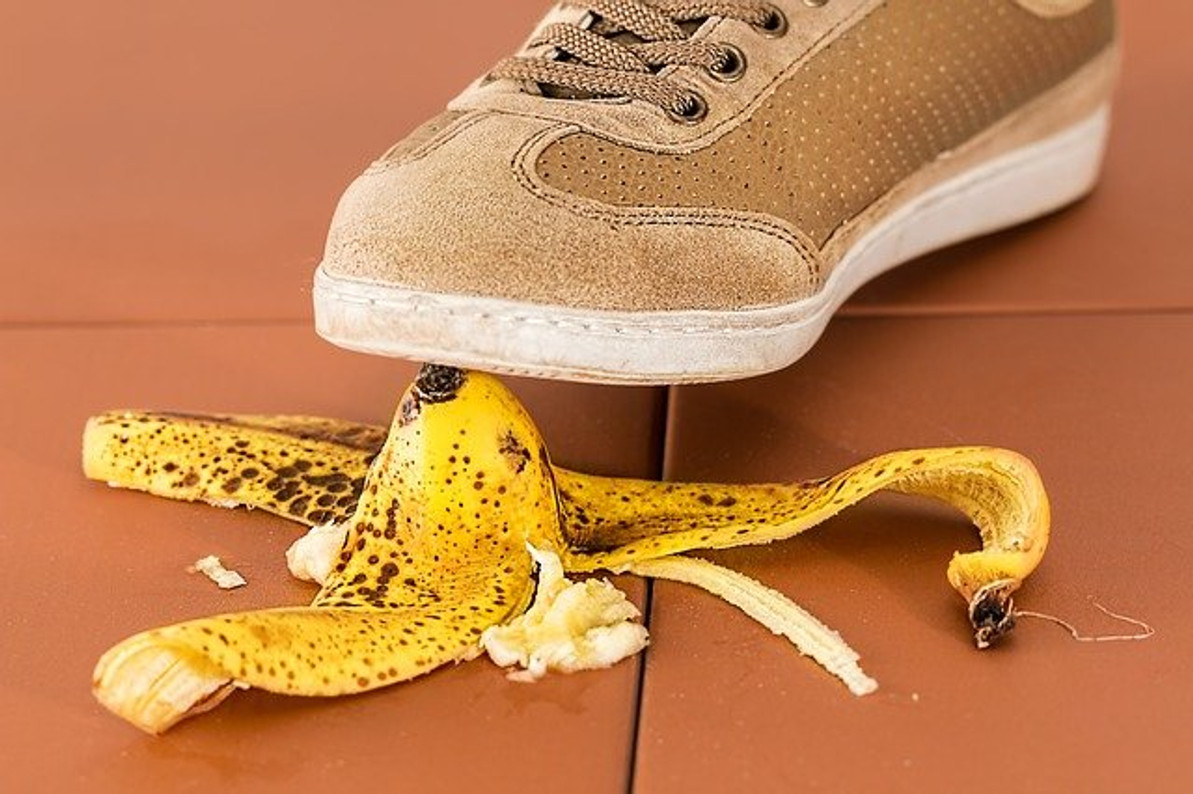
Another common myth is that fall-related injuries are only caused by slipping. Workers may slip when walking. And it only takes a single slip to cause a fall-related injury. With that said, fall-related injuries may have other underlying causes.
Some fall-related injuries are caused by tripping. Tripping isn't the same as slipping. Tripping involves unintentionally walking or stepping into an object. Workers may trip on loose cords or tools, which can send them to falling to the floor. Some work-related injuries are caused by slipping, but others are caused by tripping.
No PPE Available
There are multiple forms of personal protective equipment (PPE) available for fall-related injuries .Workers can wear non-slip boots, for instance. Non-slip boots are designed with rugged tread to prevent slipping. They offer greater traction that traditional boots and footwear.
Workers can also use fall arrest systems. Fall arrest systems are wearable harnesses that are designed to prevent workers from falling. Fall arrest systems are typically used to prevent elevated-level falls.
Recent Posts
-
Cut Gloves: How to Choose the Right ANSI Level
A hand-protection program works best when it starts with the task, not a product label. A packaging …Oct 5th 2026 -
Kevlar Gloves. Cut, Heat, and Task-Specific Selection
Choosing hand protection by material name alone can leave a serious gap in your safety program. Star …Oct 2nd 2026 -
Face Shield for Grinding: Selection and Safety Guide
Grinding can send fragments, sparks, dust, and other debris toward a worker's face in an instant. Th …Sep 30th 2026