
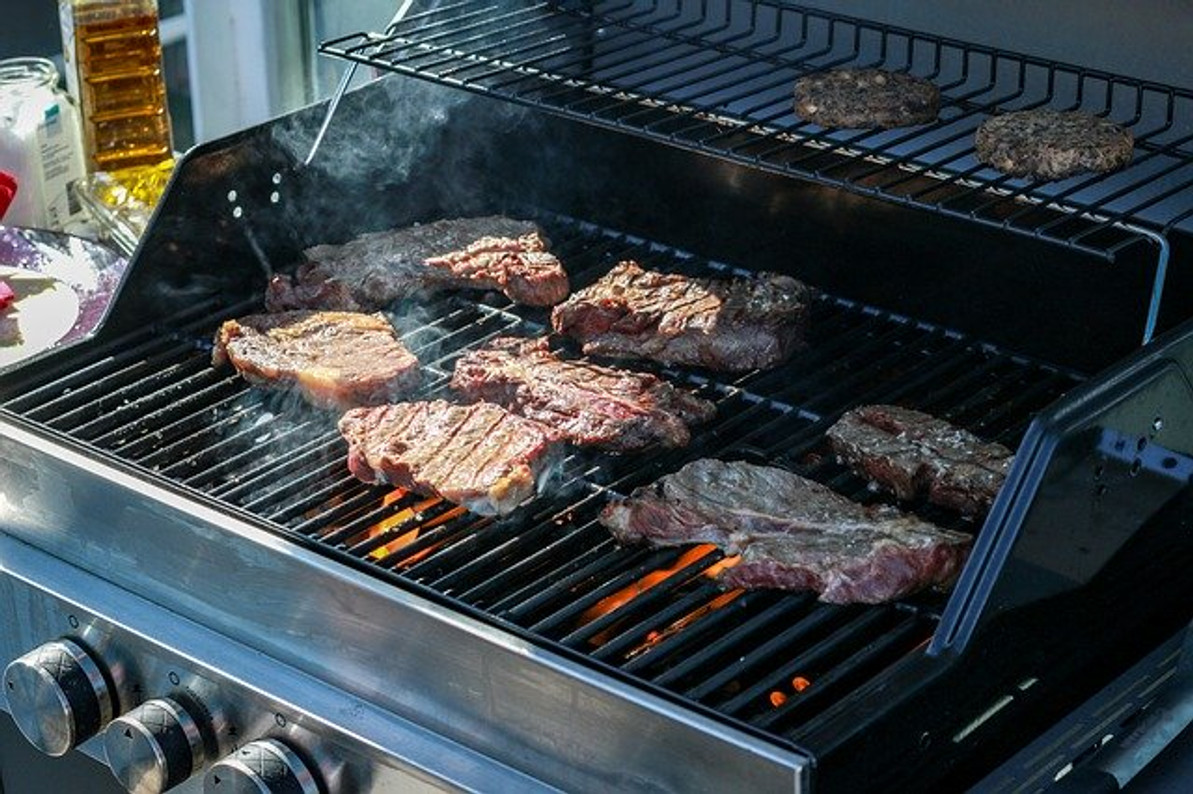
5 Safety Tips for Propane Grilling
Nothing compares to the delicious flavor of grilled food. When cover over the direct heat of an open-flame grill, meats and veggies develop a light char. If you're planning to use a propane grill, though, you should take precautions to protect yourself, as well as others, from injury. Propane grills are convenient, but because they use a tank of pressurized propane, they require some extra steps to ensure a safe cooking experience.
#1) Open the Lid
Before turning the valve on the propane tank and releasing the gas, go ahead and open the lid to your propane grill. Why is this necessary? If the lid is closed, propane gas will build up inside of it. Therefore, when you light your propane grill, it may create a sudden fireball. As long as the lid is open, though, propane gas will be able to escape.
#2) Inspect for Leaks
You should get into the habit of inspecting your propane tanks for leaks on a regular basis. If a tank has a leak, you shouldn't use it in your propane grill. An easy way to tell if and where a propane tank is leaking is to use soapy water. Spraying the exterior of a propane tank with soapy water will cause it to bubble up in the area where it's leaking.
#3) Tighten the Hose
Another safety tip to follow when using a propane grill is to tighten the hose. The propane tank should be connected to your grill with a rubber or polymer hose. If it's loose, propane gas will leak, thereby creating a fire hazard. By tightening the hose, however, propane gas shouldn't escape. Rather, it will remain either in the tank or your propane grill.
#4) Turn Off the Propane Tank When Finished
Don't forget to turn off the propane tank when you are finished grilling. Simply turning off the grill won't cut it. Even if you turn off the burners on your propane grill, the propane tank may still release its flammable gas. The only way to stop gas from leaking out the propane tank is to turn it off at the valve.
#5) Store Propane Tanks Outdoors
Never store propane tanks inside your home or any other enclosed structure. Propane tanks, of course, contain pressurized propane. The propane remains in a liquid state while stored in the tank. When released into a grill -- or the air for that matter -- it turns into a gas state. Regardless, because propane tanks are pressurized, they can explode if cracked or otherwise breached. This is why it's important to always store propane tanks outdoors.
Recent Posts
-
Ear Protection: Plugs, Muffs, and Communication
Choosing ear protection for a workplace is not just a matter of picking the product with the highest …Oct 21st 2026 -
LOTO Explained: Lockout/Tagout Steps for Safer Maintenance
LOTO, short for lockout/tagout, is an energy-control process that prevents a machine from starting o …Oct 12th 2026 -

N95 Respirator Guide for Workplace Safety
Dust, mist, fumes, and other airborne particles can create serious exposure risks before a worker no …Oct 12th 2026