
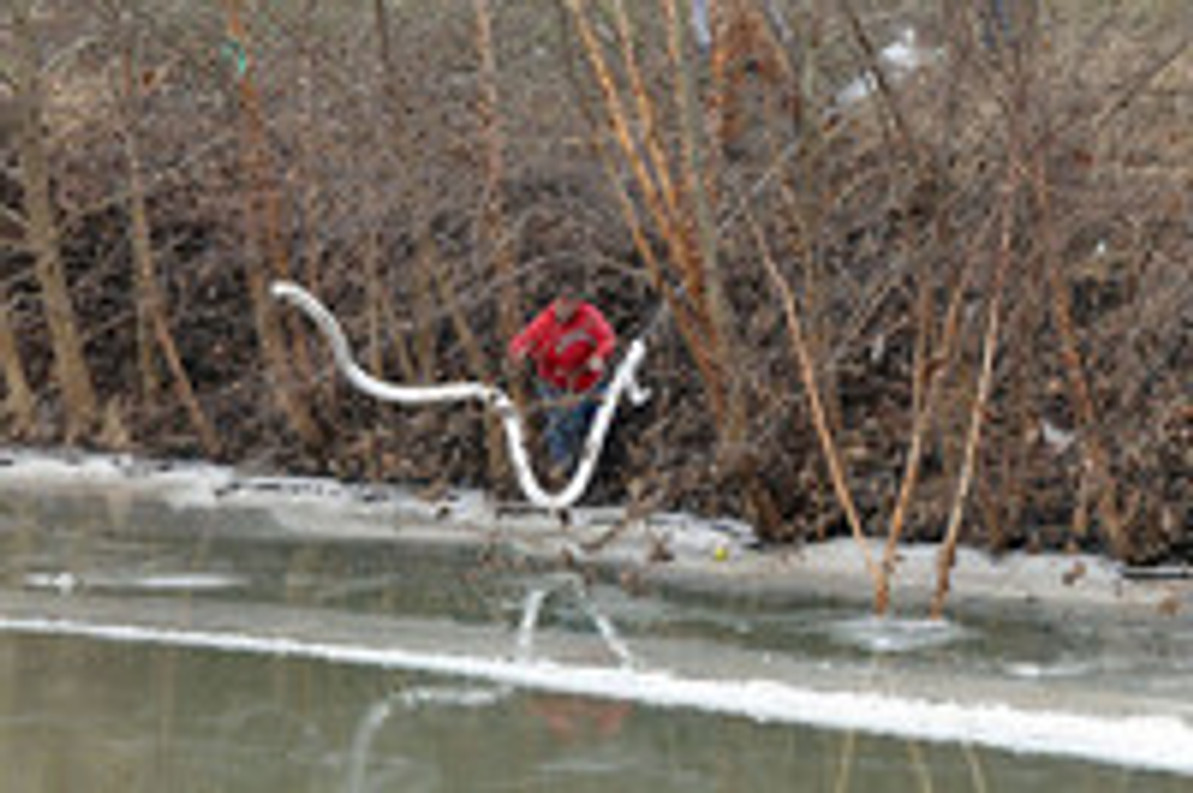
West Virginia Chemical Spill Leaves 300,000 Residents Without Water
A massive chemical spill involving the non-toxic, but still harmful if consumed, 4-methylcyclohexane methanol has left some 300,000 West Virginians without water for a second night. Once the chemical was identified in the Elk River, governor Earl Ray Tomblin issued a state of emergency for five counties, urging them to avoid the municipal tap water.
Originally, only five counties were included in the governor's state of emergency. However, President Obama stepped in to declare it a federal emergency, expanding the danger zone to nine counties. The nine West Virginia counties consist of Boone, Lincoln, Cabell, Kanawha, Jackson, Clay, Logan, Roane and Putnam.
Residents living in the counties mentioned above are advised to only use tap water for flushing toilets and putting out fires. This declaration triggered a massive rush to the supermarkets and grocery stores, as residents purchased as much bottled water as they could find. Police officers stood guard to keep order and civility during this time.
"If you are a customer of West Virginia American Water, please do not drink, bathe, or cook, or do laundry using the water at this time. Please only use the water for sanitary reasons like flushing and fire protection," was sent out to West Virginia residents through the state's voicemail system.
While the exact amount of 4-methylcyclohexane methanol leaked into the Elk River remains unknown, a recent press statement by the governor claimed it was somewhere around 5,000 gallons. This chemical is a foaming agent that's commonly used in the production of coal. And while it's technically non-toxic, 4-methylcyclohexane methanol is still quite dangerous to humans.
According to the Occupational Health and Safety Administration (OHSA), 4-methylcyclohexane methanol causes skin, eye and throat irritation, respiratory problems, dizziness and a general sense of lethargy. In severe cases, consuming 4-methylcyclohexane methanol may lead to pneumonia.
State officials have urged those exposed to the chemical to seek medial attention immediately. Even in small concentrations, 4-methylcyclohexane methanol can have some pretty serious effects on the body.
With this incident now being declared a federal emergency, National Guard troops are on the ground to offer assistance. The first military trucks rolled in yesterday to bring pallets of bottled water to the 300,000+ residents.
There's still no word on when the tap water will be safe to drink, but it could take some time. 5,000 gallons of this heavy industrial chemical is a serious amount to leak into the Elk River, and cleaning it up could take days or even weeks.
Recent Posts
-
Cut Gloves: How to Choose the Right ANSI Level
A hand-protection program works best when it starts with the task, not a product label. A packaging …Oct 5th 2026 -

Kevlar Gloves. Cut, Heat, and Task-Specific Selection
Choosing hand protection by material name alone can leave a serious gap in your safety program. Star …Oct 2nd 2026 -
Face Shield for Grinding: Selection and Safety Guide
Grinding can send fragments, sparks, dust, and other debris toward a worker's face in an instant. Th …Sep 30th 2026