
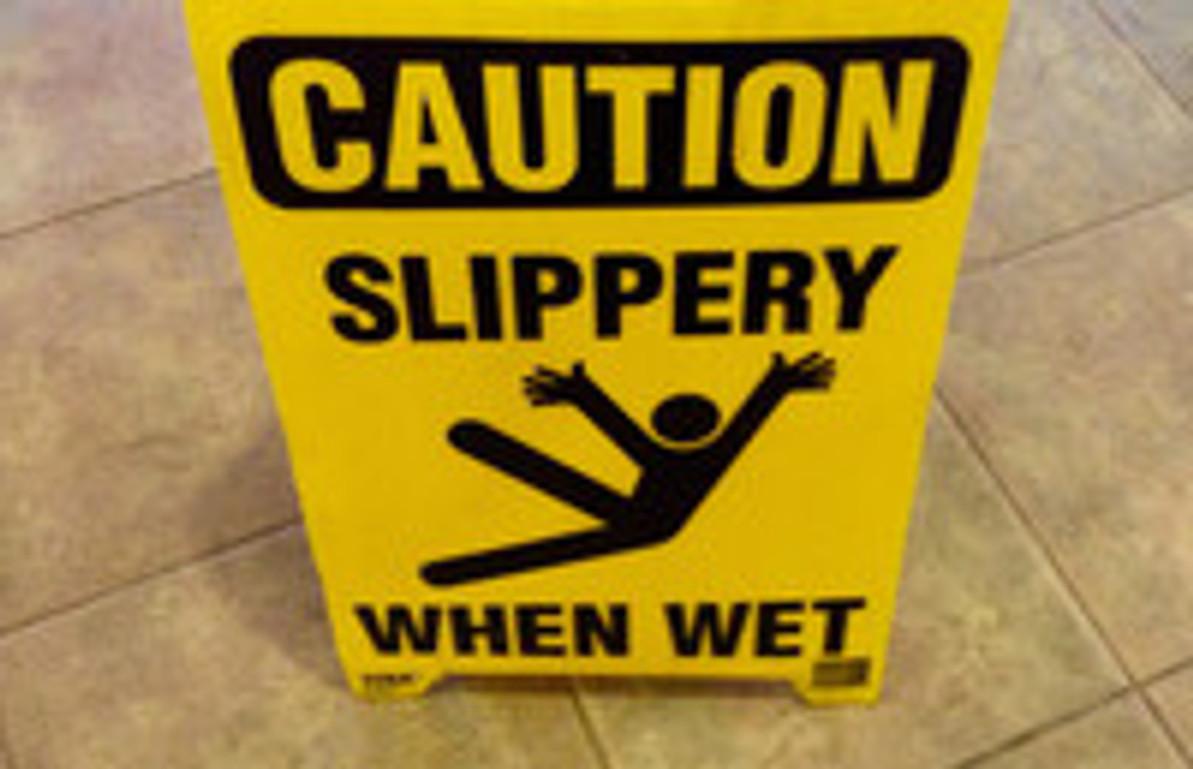
The Growing Problem of Slip-and-Fall Accidents
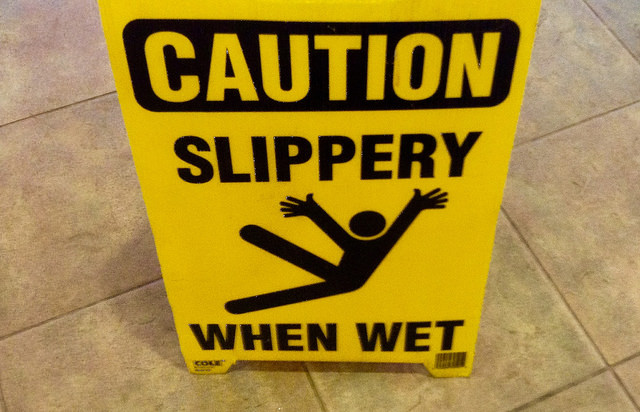
Slip-and-fall accidents are among the most common types of work-related injuries. In fact, the Occupational Safety and Health Administration (OSHA) reports that more than 1,900,000 work days were lost during 2013 and 2014 as a result of falls. While accidents are bound to happen, employers should take a proactive approach towards reducing them. So, what steps can you take to reduce the risk of slip-and-fall accidents in your workplace?
Clean Spilled Liquids
When a spill occurs -- be it water, oil, or any other liquid -- be sure to clean it in a timely manner. Allowing liquids to remain on the floor will only increase the risk of a slip-and-fall accident. Just a small puddle of water could be enough to send a worker tumbling to the ground, possibly sustaining serious injury.
Use Signs to Warn Workers of Slippery Area
If there's an area in your workplace that's particularly slippery, place a sign over it to warn workers. Signs such as this one shown above offer an inexpensive and effective way to prevent slip-and-fall accidents in the workplace.
Keep Floors Clean and Free of Obstruction
Of course, it's also important for employers to maintain clean, obstruction-free pathways. If the boxes, tools, machinery, or other items begin to accumulate on the floors, it can create a dangerous environment for workers. And furthermore, you could be cited by OSHA for failure to provide workers with a safe working environment. The bottom line is that employers must maintain clean floors at all times to reduce the risk of slip-and-fall injuries.
Place Mats by Doors and Loading Docks
Even if you clean spilled liquids immediately after the spill occurs, water may still make its way into your workplace when it rains. This is why it's a good idea to place mats by doors, loading docks, and other points of entry. Employees can wipe their feet, reducing the amount of water they trek inside.
Require Non-Slip Footwear
Last but not least, employers can protect against slip-and-fall accidents by requiring workers to wear non-slip footwear. As the name suggests, this footwear contains special high-traction bottoms that reduce the risk of slipping. It's not a fool-proof way to prevent falls, but it can make a world of difference in areas where slip-and-falls are commonplace.
Recent Posts
-

Chemical Storage Cabinets for industrial work: use and compliance
Chemical storage cabinets help workplaces control access to hazardous materials and keep storage con …Oct 23rd 2026 -
How to Properly Wear a Safety Harness
Knowing how to properly wear a safety harness is only one part of protecting workers at height. The …Oct 23rd 2026 -
Safety Harness for facility and field teams
A safety harness is one part of a fall-protection decision, not a stand-alone answer to every work-a …Oct 22nd 2026