
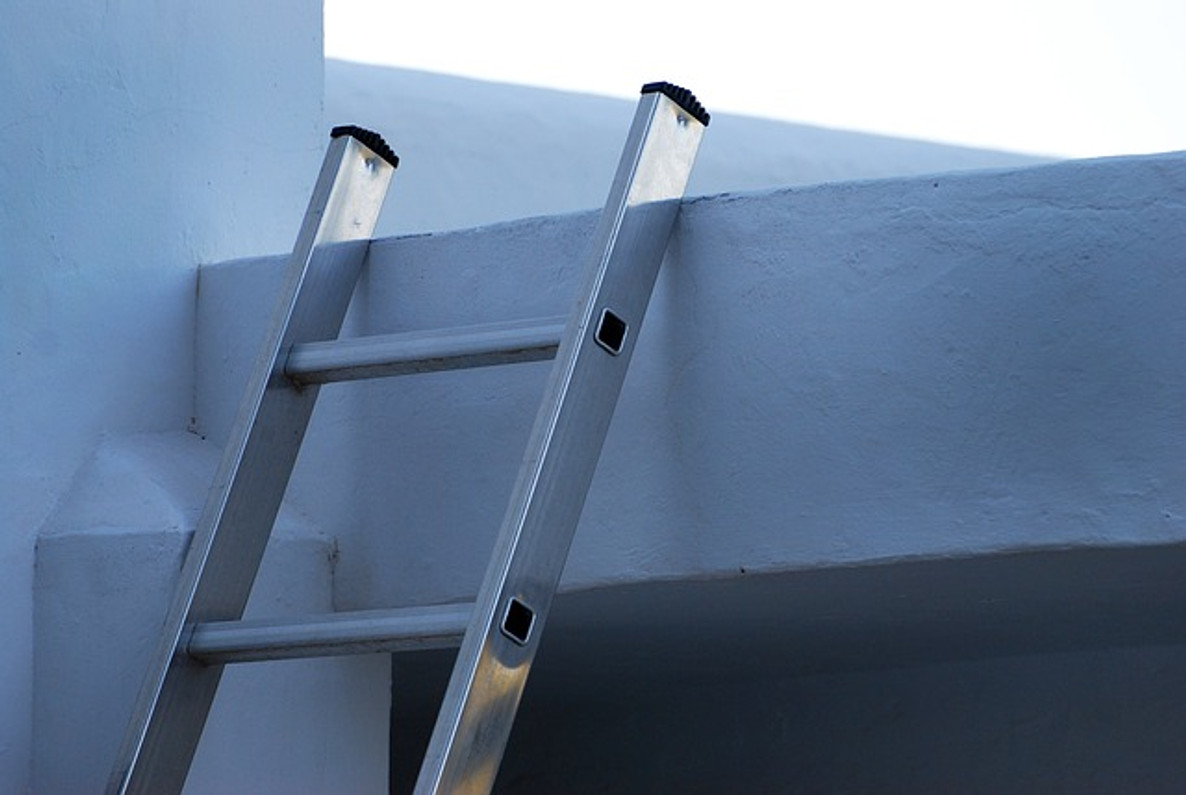
Heads Up: March Is National Ladder Safety Month
Unbeknownst to many workers, March is National Ladder Safety Month. Using a ladder, of course, comes with an inherent risk of injury. According to the U.S. Centers for Disease Control and Prevention (CDC), one in five of all fall-related injuries involve a ladder. With National Ladder Safety Month, however, you can familiarize yourself with ladder safety tips to promote a safer workplace while lowering the risk of injury.
Choose Non-Slip Footwear
Always wear non-slip shoes or boots when using a ladder. Non-slip footwear, of course, is characterized by its ability to create strong traction. It typically features deep treading on the bottom that's able to grip the ground or surface below. With non-slip footwear, you'll be less likely to slip while using a ladder. All it takes is a single slip to shift your center of gravity and contribute to a fall-related injury. Fortunately, choosing non-slip footwear will lower your risk of injury.
Maintain 3 Points of Contact
Whether you're ascending or descending, be sure to maintain three points of contact at all time. Three points of contact means that you should have two hands and one foot or two feet and one hand on the ladder. With only two points of contact, you may lose your balance. Assuming you are high up the ladder, this may cause you to fall and injure yourself. Maintaining three points of contact will ensure that you don't accidentally lose your balance, resulting in a higher level of safety.
Engage the Locking Mechanism
Another safety tip to follow when using a ladder is to engage the locking mechanism. Most ladders have a locking mechanism. When engaged, the ladder won't collapse or otherwise shift from its original upright position. Before using a ladder, find and engage the locking mechanism.
Beware of Load Rating
Regardless of the material from which they are made, ladders can only support so much weight. Load rating refers to the maximum amount of weight that a ladder can safely support. Some ladders have a load rating of 500 pounds, whereas others have a load rating of just 150 or 200 pounds. Before using a ladder, check the load rating to ensure that you don't inadvertently expose it to too much weight. Keep in mind that both your body and any tools or equipment that you carry will expose the ladder to additional weight.
Place on a Flat and Even Surface
Finally, be sure to place the ladder on a flat and even surface. Injury may occur if you place the ladder on a sloped or uneven surface. The ladder, for instance, may slip, which can send you falling to the ground or surface below. You can lower your risk of injury by placing the ladder on a flat and even surface.
Recent Posts
-
Cut Gloves: How to Choose the Right ANSI Level
A hand-protection program works best when it starts with the task, not a product label. A packaging …Oct 5th 2026 -

Kevlar Gloves. Cut, Heat, and Task-Specific Selection
Choosing hand protection by material name alone can leave a serious gap in your safety program. Star …Oct 2nd 2026 -
Face Shield for Grinding: Selection and Safety Guide
Grinding can send fragments, sparks, dust, and other debris toward a worker's face in an instant. Th …Sep 30th 2026