
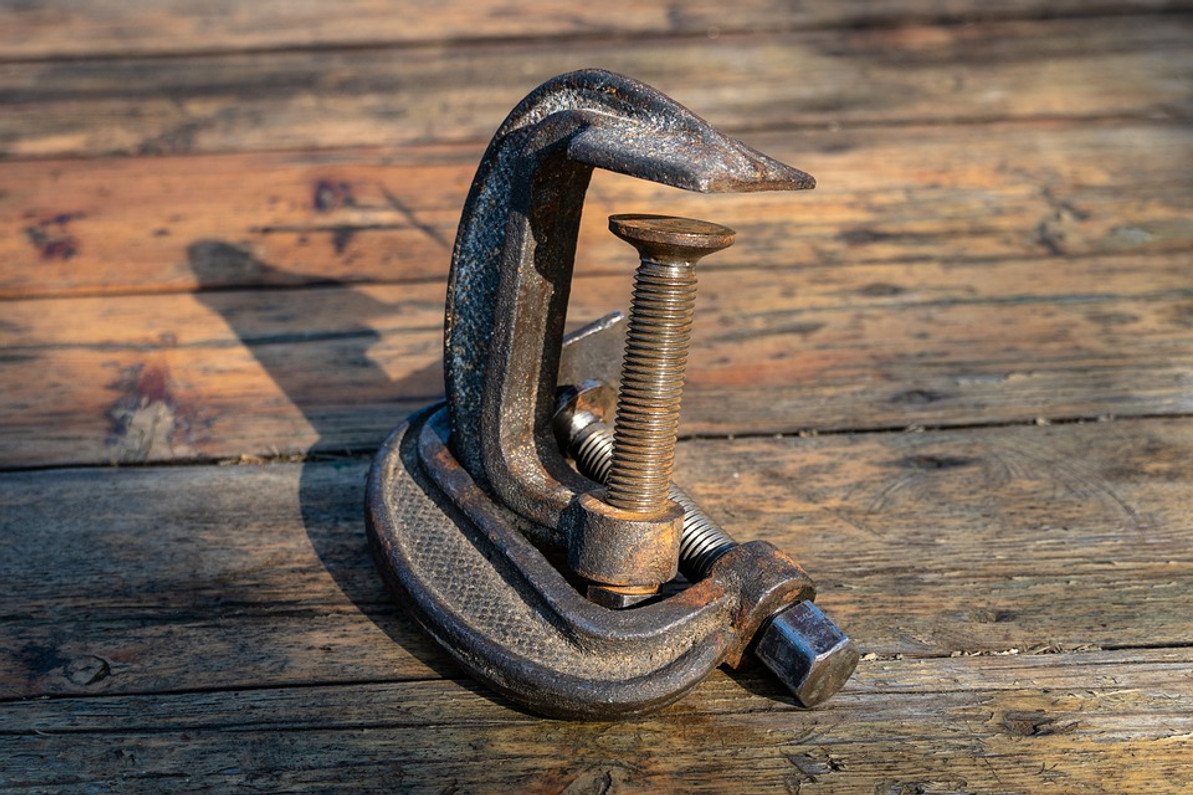
5 Safety Tips to Follow When Using a Clamp
Clamps offer a simple and effective workholding solution. While available in different styles -- bar, C-clamps, hand screw clamps, etc. -- they are all designed to hold a workpiece. You can secure a workpiece with a clamp, after which you can cut and drill the workpiece. The clamp will prevent the workpiece from moving while you are working on it. If you're going to use a clamp, though, you should follow these five safety tips to protect against injury.
#1) Make Full Contact With the Pressure Plate
You should make full contact with the pressure plate and the workpiece when using a clamp. The pressure plate is the flat, square-shaped plate on a clamp. When you tighten the clamp, the pressure plate will move closer to the workpiece. The pressure plate should completely touch the workpiece. If only part of it is touching the workpiece, the clamp may fail to secure the workpiece.
#2) Regularly Oil
Clamps require maintenance. Even if you have a manually operated clamp, you'll still need to oil it. Oil serves as a lubricant. By regularly oiling your clamp, you can rest assured knowing that it will move more smoothly while generating less friction. You don't have to oil it each time you use it. Nonetheless, you should oil your clamp once every few months.
#3) Wear Safety Goggles
Always wear safety goggles when using a clamp. According to the U.S. Centers for Disease Control and Prevention (CDC), about 2,000 workers sustain an eye injury each day in the United States. Some of these eye injuries are minor, but others are more severe and long-lasting. To protect against eye injury, you need to wear safety goggles. Safety goggles will allow you to use a clamp while minimizing your risk of sustaining an eye injury.
#4) Tighten By Hand
You should only tighten clamps by hand. Bar clamps, C-clamps and hand screw clamps all have an adjustable lever. Turning this lever clockwise will tighten the clamp by pushing the pressure plate closer to the workpiece. Only use your hand when turning the lever. Attempting to tighten a clamp with a tool like a wrench is a safety hazard. The tool may slip, which can lead to bodily injury.
#5) Avoid Over-Tightening
Don't make the mistake of over-tightening clamps. Clamps are powerful devices that can apply a substantial amount of pressure to workpieces. While you can certainly tighten a clamp so that the workpiece doesn't move, you should use caution to avoid over-tightening the clamp. Over-tightening may damage the workpiece. If it's a wooden workpiece, over-tightening may even create wooden projectiles and shards that can cause bodily injury.
Recent Posts
-

Safety Harness for facility and field teams
A safety harness is one part of a fall-protection decision, not a stand-alone answer to every work-a …Oct 22nd 2026 -
Ear Protection: Plugs, Muffs, and Communication
Choosing ear protection for a workplace is not just a matter of picking the product with the highest …Oct 21st 2026 -

Workplace Planning with Bump Cap vs Hard Hat
When weighing bump cap vs hard hat, start with the hazard, not the appearance, comfort, or price of …Oct 21st 2026