
Choosing the Best Cut Resistant Work Gloves for an Industrial Team
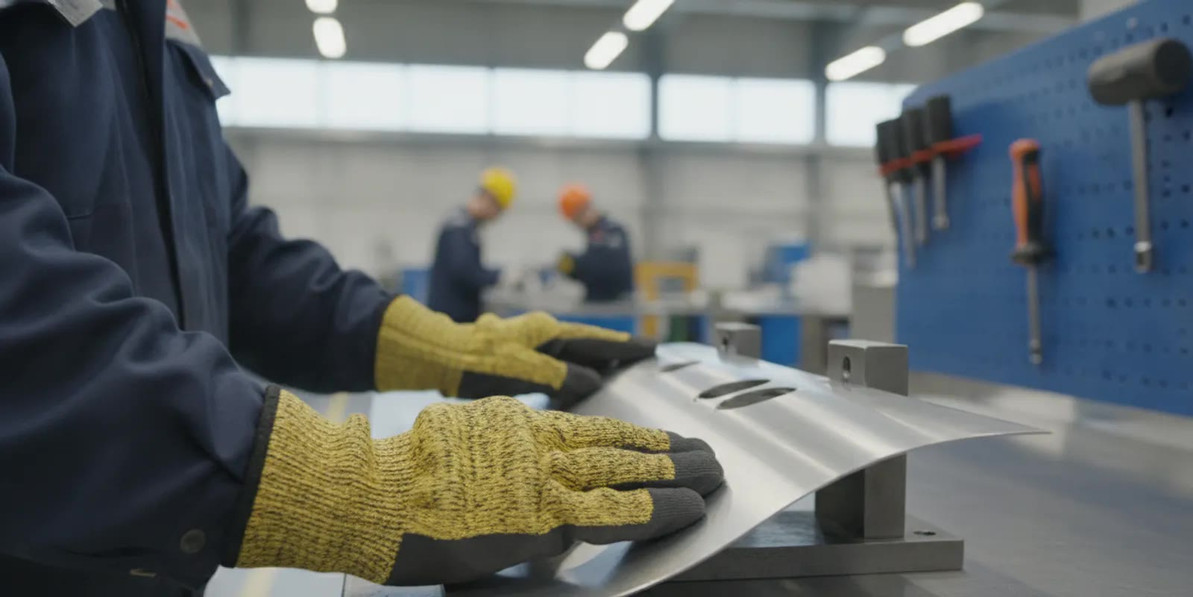
Choosing the best cut resistant work gloves for an industrial team starts with the task, not the product label. A glove must match the sharp edges workers encounter, the way they handle parts, the grip required and any other hazards present. Fit and dexterity matter because workers need to control tools and materials safely throughout a shift. Use this guide to create a consistent, documented selection process rather than choosing by appearance or a rating alone.
Review cut-resistant glove options
What should cut-resistant gloves protect against?
Begin with a description of the work. Common cut hazards include sheet metal, glass edges, sharp stock, blades, unfinished parts and tools used during assembly or maintenance. But naming the material is not enough. A worker who lifts a sharp-edged component by its sides faces different contact conditions from someone sliding a hand along an edge, reaching into a parts bin or using a blade for repeated trimming.
Observe the task from start to finish at its normal pace. Record the item being handled, edge condition, hand position, direction of movement, force, duration and points where workers change grip. Include set-up, transfer, storage, cleanup and jam-clearing activities. A cut may happen during a brief transition rather than the main operation, so assess the whole work cycle. Ask employees who perform the job where contact is most likely and when gloves interfere with control.
Review injury and near-miss reports as useful evidence, but do not treat the absence of reported cuts as proof that protection is unnecessary. Consider how often contact could occur and the possible consequence. Also identify whether the job includes puncture, abrasion, impact, chemical, heat or electrical exposures. Cut resistance by itself does not establish protection against these hazards. If several exposures occur together, check each one separately and follow applicable workplace requirements.
For example, a receiving team opening cartons with a safety knife may need a different combination of blade control, glove design and work practice than a fabrication team carrying sharp-edged metal. A maintenance worker may handle several materials and tools during one shift. In that case, document task changes and determine whether one approved glove can safely cover the whole assignment or whether workers need different equipment for distinct tasks.
How do cut-resistance ratings help compare gloves?
A recognized rating provides a standardized way to compare tested cut resistance. In the United States, ANSI/ISEA 105 includes a classification for hand protection, including cut resistance. Check the manufacturer’s documentation and label for the stated test system and cut level. Compare gloves evaluated under the same system; do not treat unlike standards or marketing descriptions as directly interchangeable.
A higher cut-resistance level indicates greater performance in the applicable test, not a guarantee that the glove cannot be cut. Testing does not reproduce every blade, edge shape, contact angle, force, speed or condition in a workplace. A rating is a selection input, not a prediction that a worker can safely touch or catch a sharp object. Follow safe handling methods and other controls even when a glove has a strong test result.
Do not infer protection from fiber names, color, thickness or a product’s general description. Products that look alike may have different constructions and test results. Verify the specific model’s documentation, intended uses, limitations and care instructions. Where an employer has a required cut level, confirm that the offered size and model meet that baseline; then assess grip, dexterity and suitability for the actual work.
OSHA provides federal workplace safety information and standards, including requirements employers must consider for personal protective equipment. Consult the Occupational Safety and Health Administration and the standards applicable to your operation when establishing a hand-protection program. The appropriate selection depends on the workplace assessment and applicable rules; a product rating alone does not establish compliance.
| Selection factor | What to check | How it affects the decision |
|---|---|---|
| Cut exposure | Material, edge, contact direction, frequency and task steps | Defines the hazard the glove needs to address |
| Test rating | Manufacturer documentation, named standard and tested model | Supports a meaningful comparison of cut-resistance performance |
| Grip | Dry, oily, wet or dusty surfaces; part size and shape | Affects control, handling and the possibility of a slip |
| Fit and dexterity | Finger and palm fit, thumb movement, cuff and task motions | Helps workers maintain control without excess material or restriction |
| Additional hazards | Puncture, abrasion, heat, chemicals, impact or electrical exposure | Identifies protection needs not established by cut resistance |
| Care and replacement | Inspection, cleaning guidance, damage criteria and availability | Helps sustain suitable protection throughout service life |
Which glove features matter beyond the cut level?
How should grip and coating match the work?
Describe the surfaces workers hold and the conditions around them. A dry, clean metal component, an oily part and a damp item can demand different grip characteristics. Note whether the part is small, smooth, bulky, irregular or difficult to balance. A coating may improve control in some conditions, but no coating should be assumed to work well across every material and environment. Confirm the manufacturer’s use information and trial suitable candidates using safe representative items.
Grip evaluation should include the real motions of the task: grasping, lifting, turning, passing, positioning and releasing. Watch for a worker needing to squeeze harder than usual, repeatedly readjust a part or use an awkward pinch. Those observations can reveal a poor match even if the glove feels acceptable during a brief hand check. Do not test gloves by deliberately exposing workers to sharp edges or recreating an unsafe condition.
How much dexterity does the task require?
Fine assembly, sorting, tool use and small fasteners call for precise finger movement. A bulky glove can make those actions difficult; a very flexible glove may not meet the identified protection need. The goal is not the thinnest or thickest option. It is a product that meets the protection baseline while allowing reliable control of the job. Check thumb movement, fingertip feel, seams, reinforcements and how easily the hand closes.
Test the shortlisted gloves against the actual task motions using safe objects. Ask workers to pick up representative components, operate controls and perform common hand movements without contacting a hazard. Note lost pieces, slowed handling, extra force, snagging or repeated removal. A trial should evaluate performance and comfort without asking a worker to take a risk that the glove is intended to control.
What should the cuff and coverage allow?
Choose coverage based on the exposure identified in the assessment and the other PPE worn with the glove. Consider whether the cuff stays in position during reaching and handling, whether it interferes with a sleeve or other equipment, and whether it creates a snagging concern. More coverage is not automatically better if it restricts movement or conflicts with the task. Review the manufacturer’s guidance and the workplace’s safe-work procedures.
How should durability and replacement be assessed?
Useful life depends on the work, handling and care. Establish how workers inspect gloves, what damage requires removal, where replacements are available and who should be told about recurring failures. Follow the maker’s cleaning and care instructions; do not assume laundering or reuse is appropriate unless those instructions permit it. A glove that is torn, contaminated, stretched out, or no longer fits or grips as intended should be assessed and replaced under the workplace procedure.
How can a team size and fit work gloves?
Use the manufacturer’s sizing instructions as the starting point because sizing can vary by product and brand. Provide a suitable range of sizes when evaluating options. A good fit is secure without restricting natural movement. Excess material at the fingertips or palm can catch or make handling less precise, while an overly tight glove can limit motion and become difficult to wear for the task.
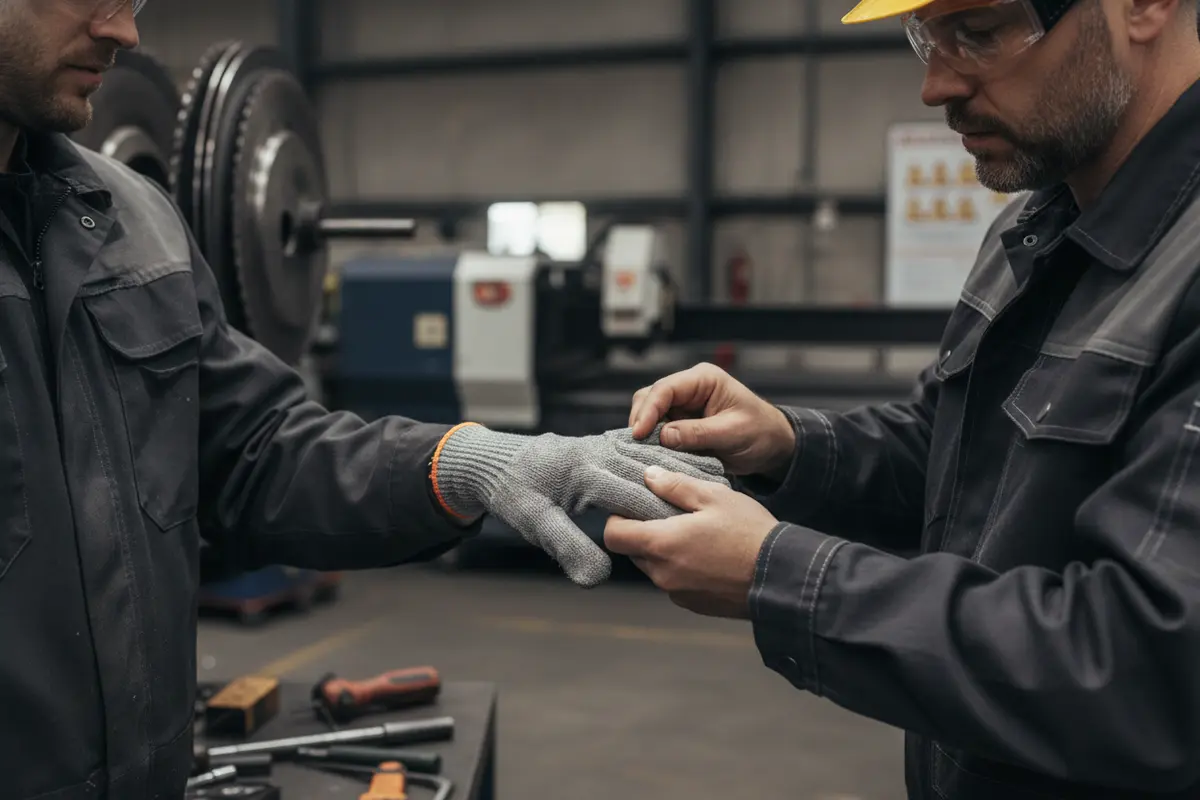
Have workers try the glove with the safe movements they use on the job. Check whether fingers reach the glove ends, the thumb can oppose the fingers, the palm stays positioned and the cuff remains comfortable. Ask the worker to open and close the hand, handle safe sample objects and operate relevant controls. If an underglove is part of the planned system, assess the combination rather than fitting the outer glove alone.
Gather feedback from more than one worker where possible. Hands differ in length, width and shape, and a single sample size can hide a poor fit for part of the team. Record the approved model and sizes by task, along with any limitations. Provide a route for a worker to report a fit problem and obtain an appropriate alternative without switching to an unapproved glove. Reassess fit when the product, process, other PPE or task changes.
Comfort is relevant because workers are more likely to use equipment that works with the job, but comfort does not replace the hazard assessment. If a worker removes a glove for a precision step, investigate the cause. The answer may be a different size, a better-suited model, a change in task sequence or additional training. Do not respond by lowering the protection requirement without reassessing the hazard and applicable rules.
How can buyers compare gloves in a controlled trial?
Start with a short list of products that meet the hazard assessment and documented rating baseline. Compare them consistently. Changing the task, sample materials or evaluation criteria between trials makes the outcome difficult to interpret. A simple written scorecard helps supervisors, workers and purchasing staff use the same basis for comparison.
- Define the work. Record each task step, material, edge, handling method, frequency and other exposure.
- Set the minimum protection requirement. Use the risk assessment and applicable rules to identify the required cut resistance and any additional protection needs.
- Verify the product information. Confirm the exact model, test classification, intended use, limitations and care instructions in the manufacturer’s documentation.
- Fit representative users. Try available sizes and check movement, fingertip length, palm fit and cuff position.
- Run a safe task trial. Use representative non-hazardous items and task motions; compare grip, control, dexterity and comfort.
- Record observations. Note the task, participants, candidate models, results and any limitation. Separate worker preference from required protection criteria.
- Choose and communicate. Approve the glove for defined tasks, explain how to obtain it and train workers on inspection and replacement.
- Schedule a review. Revisit the choice after changes in materials, process, equipment, incidents or worker feedback.
A useful scorecard can rate grip, finger movement, fit, comfort over the expected task period and ease of putting on or removing the glove. Keep the ratings descriptive rather than pretending a brief trial is a laboratory test. For example, write “slipped when turning the smooth sample” or “thumb movement restricted while operating the control,” rather than relying only on a numerical score. Document which criteria are mandatory and which help distinguish otherwise suitable options.
Consider a hypothetical metal-fabrication work cell where employees handle sharp-edged stock and then use small controls. The risk assessment sets a minimum cut-resistance requirement. Candidate A meets the rating but makes precise control difficult; Candidate B meets the same baseline, fits more workers and allows secure handling in the safe trial. The decision should favor the option that meets mandatory protection and performs the work reliably, not simply the highest number on a label. If neither passes the trial, continue evaluating rather than forcing a poor choice.
For product research, compare the information for a Chrome SLT Series glove, an Ansell HyFlex 11-541 option and an MCR Safety Cut Pro coated-palm option. These links are starting points for checking model details, not a recommendation that any one glove suits every job. Verify the current specifications, size and intended use against the task before selection.
Compare a cut-resistant glove model
How should teams roll out and maintain glove use?
Make the selection understandable at the point of use. Identify which glove is approved for each task, where workers can find it and who can answer questions. Training should explain the hazard the glove addresses, the limits of cut resistance, proper wearing and removal, inspection, reporting and replacement. Reinforce that gloves do not replace machine guards, safe handling, sharp-tool procedures or other required controls.
Set an inspection routine that fits the work. Workers should know what to check before use and when to pause and report a concern. Examples to assess include cuts, holes, damaged seams, contamination, loss of grip, stretched fabric and changes in fit. The inspection process should follow manufacturer instructions and workplace procedures; it should not imply that every defect is easy to see or that a visual check proves continued protection.
Plan where replacements will be stored and how workers get the correct size. If the approved glove is not available, define the safe response rather than leaving individuals to substitute an unreviewed product. Purchasing should verify that orders match the approved model and size, and supervisors should communicate substitutions before use. Keep the assessment, specifications, trial notes, approval and review date accessible to the people responsible for safety and procurement.
Watch for workarounds during routine checks: gloves left off for a difficult step, repeated adjustments, slipping parts or a worker using a glove with visible damage. Treat these as evidence to investigate. The cause may be poor fit, an impractical task design, incorrect sizing, insufficient instruction or an unsuitable product. Gather feedback and correct the issue while preserving the protection requirement.
Do not assume a single glove must serve every department. A fabrication area, receiving dock, maintenance shop and food-handling operation may have different contact conditions and additional requirements. Shared procurement criteria can make evaluation consistent, while task-specific approvals account for real differences. When a process or material changes, review whether the existing glove remains suitable before relying on the old selection.
What should buyers check before placing an order?
Before purchase, confirm that the selected model is the exact one evaluated. Check the product description and manufacturer documentation for size, rating, construction, intended use and limitations. If the listing or packaging does not provide enough information to resolve a safety question, seek clarification from the manufacturer or an appropriate safety professional. Do not fill gaps by inferring performance from a similar model or a familiar brand name.
Plan distribution as well as selection. Estimate which tasks require the glove, how many workers need it and which sizes are necessary, then set a replenishment approach based on actual use. Avoid ordering only one sample size for a workforce with varied fit needs. For distributed locations or multiple shifts, decide how the approved model and sizing guidance will reach each group. Ensure that supervisors can distinguish the approved option from alternatives that have not been evaluated.
When a team is comparing styles, it can also review a cut-resistant glove with a different shell and palm description or a glove listed for food-related use when that use is relevant. These are product research links, not a substitute for checking current manufacturer documentation, workplace requirements or suitability for a particular operation.
Close the purchase loop by recording the reason for the choice and the conditions under which it was evaluated. Include the task, hazard, required performance, alternatives considered, worker feedback and decision owner. This makes future reviews easier when a glove is discontinued, a supplier offers a substitute or a new process introduces a different exposure. The record should help the next buyer understand the logic, not merely repeat an item number.
How can different workplaces adapt the selection process?
The same selection questions apply across industries, but the answers depend on the task. In a warehouse, a worker may handle cardboard, banding, pallets and occasionally damaged packaging. The assessment should identify which activities involve sharp edges, whether a blade is used, and whether a glove affects the grip needed to move cartons or operate equipment. It may be appropriate to define separate procedures for routine material handling and for opening damaged or bound packages, rather than assuming one glove covers every action.
In a fabrication area, assess the full path of a workpiece: receiving, cutting, deburring, staging and transfer. Edges can change after processing, and handling steps may involve different grip and precision needs. A buyer should not assume a glove suitable for lifting stock is also suitable for operating machinery or handling a finished part. Review the work method and equipment instructions, identify where hands should be kept clear, and select protection for the actual hand-contact tasks that remain.
Maintenance work can be less predictable because a technician may move among tools, parts and environments. Map recurring jobs and establish which require cut-resistant gloves, which require a different combination of PPE, and which must follow a separate procedure. A broad label such as “maintenance glove” is not a substitute for defining the exposure. If workers encounter an unplanned sharp object, they need a clear stop-and-assess response instead of relying on whatever glove happens to be in a pocket.
Food-related operations, laboratories and other regulated environments may add hygiene, contamination or material compatibility considerations. Verify those requirements independently; a cut rating does not establish that a glove is suitable for food contact, chemical exposure or a controlled process. Where requirements overlap, check the exact model’s documentation and the site’s procedures. Keep task approvals clear enough that workers can distinguish a glove intended for one area from a superficially similar model approved for another.
These examples also show why selection records need a review trigger. Revisit the assessment after a new product, tool, material, line speed, cleaning method or packaging format is introduced. Ask whether the points of hand contact changed, whether a new hazard appeared, and whether the current glove still permits controlled handling. A brief review after a change can prevent an old approval from being applied to a materially different job.
Review an option for your glove comparison
Frequently Asked Questions
Does a higher cut level mean a glove cannot be cut?
No. A rating reflects performance in a defined test and does not make a glove impervious to every blade or edge. Select based on the assessed task, use safe handling methods and maintain other required controls.
Can one pair of gloves work for every industrial task?
Not necessarily. Tasks can differ in cut exposure, grip, dexterity and other hazards. Assess the work and approve gloves for the tasks they suit rather than assuming one style covers every operation.
How often should cut-resistant gloves be replaced?
Follow the manufacturer’s care instructions and workplace inspection process. Remove and assess gloves that are damaged, contaminated or no longer fit or perform as intended, and replace them according to the established procedure.
Should workers choose whichever glove feels most comfortable?
Worker input is valuable, but comfort alone does not determine suitability. The glove must meet the assessed protection need and permit reliable movement and control. Include workers in a safe, task-based fit and usability trial.
What if the required glove makes a task difficult?
Do not quietly remove the protection requirement. Stop and investigate fit, sizing, task sequence, available models and work methods with the responsible safety team. A revised selection must still address the hazard and applicable workplace requirements.
How can a team put the decision into practice?
Document the hazard, required performance, approved model and sizes, safe-use limits, inspection steps and replacement process for each task. Involve workers in evaluation, check product documentation before ordering and review the choice whenever the work changes. A practical glove program connects the product to the real job and makes the selection easier to apply consistently.
Recent Posts
-

Choosing the Best Cut Resistant Work Gloves for an Industrial Team
Choosing the best cut resistant work gloves for an industrial team starts with the task, not the pro …Nov 2nd 2026 -

Emergency Blankets: Workplace Emergency Planning and Selection
Emergency blankets can support a workplace response when a person is cold, wet, or waiting for help, …Nov 2nd 2026 -

Secondary Containment: Choosing Spill Control for Industrial Facilities
Secondary containment helps keep a leak or spill from spreading beyond a designated area while a tea …Nov 2nd 2026