
What buyers should know about Construction Signs
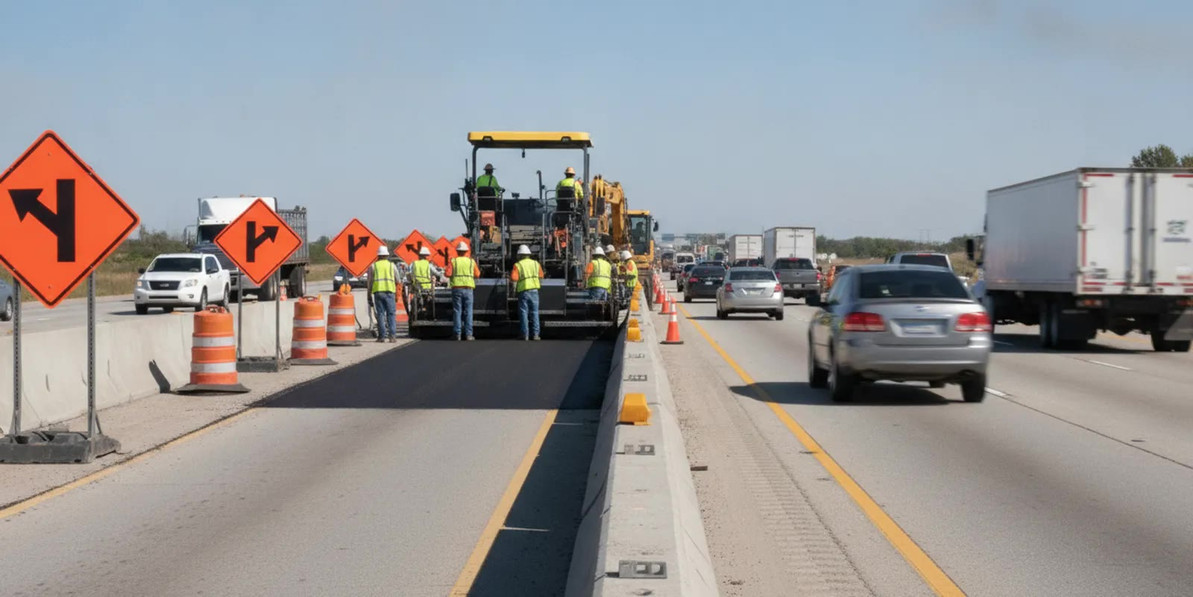
Construction signs help communicate hazards and changing conditions, but a familiar sign is not automatically the right sign for a particular work zone. Buyers should start with the applicable OSHA, ANSI, road-authority, and project requirements, then identify the hazard, audience, approach, sight line, and work phase. A careful selection process helps the signs fit the approved plan and the way people actually move through the site.
Call to discuss safety supply needs
What should construction signs accomplish?
A sign gives a person information or direction before that person reaches a hazard or decision point. At a road work zone, signs may warn of work ahead, a lane change, a closure, or a temporary traffic pattern. Inside a construction site, a sign may mark a restricted area, identify an equipment route, or direct visitors to an entrance. The specific message and device must fit the site and governing requirements; a generic sign list cannot replace a project-specific traffic-control plan.
Write down the desired result in concrete terms. “Improve safety” is too broad to select from. “Warn drivers that the right lane is closed ahead” identifies an audience, condition, and likely response. “Keep visitors out of the equipment route” identifies both an audience and a boundary. That clarity lets the project team decide whether a sign, a sequence of signs, or a combination of signs and physical controls is needed.
Also define what signs cannot do. A sign communicates; it does not physically stop a vehicle, secure an excavation, or separate workers from moving equipment. Depending on the site, the overall plan may also need barriers, channelizing devices, pavement markings, signals, access controls, or trained personnel. Select and install the controls under the responsible authority’s direction.
How should a buyer assess the site before choosing signs?
Review the work area from the point of view of each person who may approach it. For a roadway, consider every direction of travel and each route that could lead toward the work. For a private site, trace the path from the gate or parking area to the work zone, including delivery routes, pedestrian paths, and equipment crossings. A desk review can help prepare, but conditions should also be checked in the field when practical.
- Describe the hazard: Note lane closures, shifting traffic, excavation, overhead work, vehicle crossings, restricted areas, and temporary obstructions.
- Identify the audiences: Separate drivers, pedestrians, workers, delivery vehicles, and visitors if they need different information.
- Map movement: Mark entrances, exits, turning points, crossings, staging areas, and points where vehicle and pedestrian routes meet.
- Check the approach: Note curves, grades, intersections, parked vehicles, vegetation, fencing, equipment, and visual clutter that may obstruct a sign.
- Record exposure and timing: Consider traffic and equipment activity, public access, lighting, weather, work hours, and how long each phase will last.
- List changes: Identify which routes or hazards change by shift, day, or project phase so the sign plan can be reviewed in step with the work.
Use this assessment to confirm the controlling documents and decision-maker. Road ownership, local adoption of standards, and project conditions can affect which requirements apply. The Federal Highway Administration’s Manual on Uniform Traffic Control Devices (MUTCD) is a federal reference for traffic control devices on streets and highways, but buyers should confirm the applicable version and direction with the responsible road authority and project team rather than assuming a single generic layout applies everywhere.
On a site where workers, drivers, and pedestrians meet, the route map is especially useful. Mark each location where a person has to decide whether to stop, turn, cross, or enter. Place needed information early enough to support the intended decision, and avoid combining instructions for different audiences into one confusing message.
Which sign function fits a common work-zone condition?
Think in terms of the job each device must perform, not only its shape or color. Depending on the plan and applicable standards, sign functions may include advance warning, regulation, direction, route guidance, or notice of a site-specific hazard. The approved message, design, size, and placement take precedence over an informal preference. Use the table to frame the question for the project team, not as a substitute for its approved traffic-control plan.
| Condition | Sign function to assess | Questions to resolve |
|---|---|---|
| Road work ahead | Advance warning before the affected approach | What does the approved plan call for, and can approaching road users see it in time? |
| Lane shift or closure | Warning and direction through the transition | Does the full sign sequence match the current traffic-control plan? |
| Pedestrian route changes | Route direction and hazard notice at decision points | Can a pedestrian find the intended route without entering the work area? |
| Equipment crossing or site entrance | Warning or access instruction for the people who use the approach | Is the message visible before someone reaches the crossing or turning point? |
| Restricted work area | Access notice at practical entry points | What physical control supports the notice and limits unintended entry? |
| Work phase ends or moves | Removal, covering, or replacement of outdated information | Who verifies that signs no longer applicable are removed promptly? |
For public road settings, the City of Napa’s construction signs guidance reminds drivers and pedestrians to observe signs, signals, pavement markings, and flaggers near construction sites. That guidance reinforces a useful planning point: signs work as part of a coordinated system. Review the complete sequence as an approaching person experiences it, rather than approving individual pieces without checking how they relate.
How do placement and visibility affect whether a sign helps?
A person needs to notice a sign, understand it, and have a reasonable opportunity to respond. Check the full approach from each direction, not just the spot where a post will stand. A sign may be hidden by parked vehicles, stored materials, vegetation, a fence, another sign, or the curve of a road. Dust, glare, rain, low light, and nighttime work can change what is visible.
Use the governing plan and applicable requirements to determine placement, mounting, and spacing. Do not estimate roadway distances from a generic buyer’s guide. On a private site, consider the sequence of decisions: a visitor may need directions before a gate, while a worker may need a hazard notice before reaching a crossing. Review both the intended message and the place where a person can still act on it.
- Walk or review each approach at the height and direction of the intended audience where it is safe to do so.
- Confirm signs face approaching traffic or people, remain upright, and are not blocked by other work-zone elements.
- Keep the message concise and avoid placing multiple competing instructions in the same viewing area.
- Check visibility at the times and in the conditions when the sign will be used, including darkness or weather where relevant.
- Recheck sight lines after equipment, stored materials, or temporary fencing changes location.
- Use physical separation or other controls when a sign alone cannot adequately address the hazard.
Readability also depends on consistency. Use the message and symbols specified by the project plan, and explain site-specific directions to affected workers and subcontractors. If routes change, remove or cover signs that no longer apply so they do not conflict with current directions.
What sign materials and supporting equipment should buyers compare?
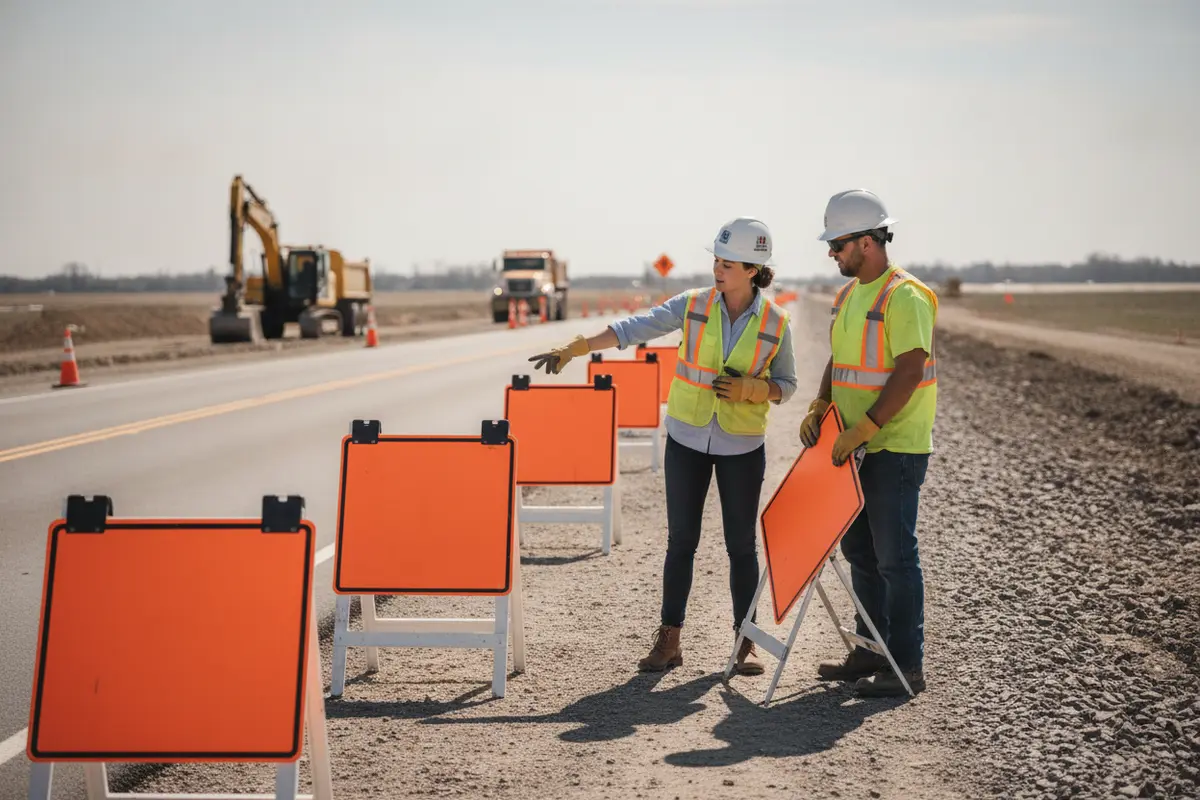
Choose products to match the required specification and expected use. A temporary sign and its support operate as a system, so consider the sign face, visibility characteristics, mounting, stability, handling, and storage together. Expected wind, rain, sun exposure, temperature, and how often the sign will be moved all matter to practical deployment. Confirm requirements with the approved plan and product documentation; do not assume that a product description alone proves it is suitable for a particular roadway or work site.
Compare options against the job rather than one feature in isolation. A support that is easy to transport may need a suitable approved base or other stabilization. A sign used repeatedly may need a maintenance and storage plan. Delivery timing matters too: purchasing equipment that arrives after a planned phase begins does not solve the field need. Ask the project team to confirm the required sign design, size, visibility properties, support method, quantity, and delivery window before an order is placed.
Some site products can support visibility or route organization, but they are not substitutes for specified signs or approved traffic controls. For example, the listed engineer-grade reflective tape and two-color hazard warning tape are separate products to assess only for an appropriate use and under site requirements. Do not use tape in place of a required traffic-control device or to invent a marking scheme.
Likewise, aisle-marking tape can be relevant to organizing a facility route when the use and surface are suitable. The available one-inch aisle marking tape and four-inch aisle marking tape are examples to evaluate for a facility-marking need, not roadway sign replacements. Verify product details and coordinate any markings with the site’s plan before deployment.
How can a team keep signs aligned as work changes?
Temporary work zones are dynamic. A pedestrian detour may move, a lane may reopen, or equipment may use a different entrance. Assign a specific role to check the deployed setup and report discrepancies. The person responsible should know which plan or direction to compare against, who can authorize a change, and how to escalate an unsafe or confusing condition.
- Before the shift: Compare the installed setup with the approved plan and current phase. Check orientation, visibility, condition, and stability.
- After a work change: Review signs and routes against the new conditions before affected traffic or people are directed through them. Communicate the change to the relevant crews.
- During work: Watch for signs that are knocked down, obscured, displaced, damaged, or inconsistent with the active work.
- After weather or impact: Inspect again if wind, rain, vehicle contact, or site movement could have changed position or visibility.
- At shift end: Confirm what remains in place and whether the arrangement is appropriate for periods when active crews are absent.
- At phase completion: Remove or cover obsolete signs, collect reusable items, and store them in a way that makes inspection and the next deployment manageable.
A simple log can support a reliable handoff. Record the date, location, issue, action taken, and any follow-up owner. The log should help the next shift know what changed; it should not become a substitute for promptly addressing a sign that is missing or misleading. If field conditions conflict with the approved plan, escalate to the responsible project personnel or authority rather than improvising a new roadway arrangement.
Worker visibility is one related consideration, separate from sign selection. The listed high-visibility traffic safety vest is a product example for a worker apparel assessment. A vest does not replace signs, traffic controls, or a job-specific determination of required apparel; evaluate clothing against task hazards and applicable requirements.
Call to discuss work-zone safety supplies
What should a construction-sign purchase checklist include?
Translate the site assessment into an order specification that purchasing, safety, and field teams can all review. This is especially useful when one project has several phases or when signs are shared across crews. Make the intended use explicit so the buyer can distinguish a required device from an optional site aid.
- Identify the road or site authority, controlling plan, and applicable requirements.
- List the hazard, audience, required message, location, and phase for each sign.
- Confirm approved design, size, visibility properties, mounting, and support specifications.
- Check quantities for each phase, including replacement needs and any approved contingency stock.
- Coordinate delivery and staging with the project schedule; confirm storage and transport arrangements.
- Assign owners for installation review, shift inspections, updates, removal, and escalation.
- Check interaction with other controls, including pavement markings, barriers, signals, and flaggers when specified.
- Review what will happen when routes or work hours change, including who updates signs and informs affected people.
Before purchase, compare the actual product information with the project specification. A general label such as “construction sign” is not enough to establish that the message, dimensions, performance, or support meets the job requirement. If a needed specification is unclear, ask the responsible project or road-authority contact to resolve it before ordering.
What common selection and deployment mistakes should buyers avoid?
- Buying by name alone: A product title does not confirm compliance or suitability. Check the current project specification and product details.
- Planning signs in isolation: A sign may conflict with a marking, barrier, flagger instruction, or another sign. Review the full sequence and control arrangement.
- Placing a warning after the decision point: Information that appears too late may not help a person choose the intended route. Review the approach from the user’s perspective.
- Forgetting pedestrians and visitors: A vehicle-focused layout can leave people on foot without a clear and appropriate route.
- Leaving yesterday’s instructions in place: Old signs can contradict the current phase. Define who removes or covers them when conditions change.
- Assuming a sign physically controls access: A sign communicates a restriction but may need a barrier or other physical control to address the hazard.
- Skipping checks after movement or weather: A sign that shifts, tips, or becomes obscured no longer performs as intended.
- Failing to name an owner: “Someone will check” is not a dependable inspection process. Assign a role and escalation contact.
These errors often begin with an incomplete handoff: the person who buys equipment may not know the work phase, while the field team may not know what specification purchasing used. Share the plan, product requirements, installation responsibility, and update process across those roles before deployment.
How can a team put the decision into practice?
Consider a project where a work crew closes one lane for a scheduled phase and a pedestrian route shifts around the work area. The buyer should not start by ordering a familiar set of signs. First, the project team confirms the governing plan and authority. It then identifies the approaches affected, the people who use each route, and the point where each person needs warning or direction. The plan determines the required devices and placement.
Next, purchasing checks product specifications, supports, quantities, and delivery dates against that plan. Field staff install the devices under the designated responsibility, then review each approach for visibility and consistency. A separate check confirms pedestrians have usable route information and are not directed into equipment movement. During the phase, the assigned person checks for displacement or obstruction and compares the layout with current conditions.
When the lane reopens or the pedestrian route changes again, the team updates the arrangement under the plan, communicates the change, and removes signs that no longer apply. It records notable issues and the person who corrected them. The example illustrates the core sequence: define the hazard, verify requirements, select to specification, check from the user’s approach, and maintain the setup as conditions change.
For more workplace-safety topics, readers can explore the SafetyBlog article collection. Keep each project’s decision anchored to its own requirements and responsible authority.
Call to review your safety supply needs
Frequently Asked Questions
Are construction signs enough to protect workers near traffic?
No. Signs communicate warnings and directions, but the work zone may also need barriers, channelizing devices, pavement markings, signals, trained personnel, or other controls. Follow the approved plan and requirements for the specific location.
How often should temporary construction signs be checked?
Assign checks before work starts and during the shift, and review again after a phase change, weather event, impact, or other condition that may affect placement or visibility. The plan and site conditions may call for additional checks.
Can the same signs be used for every phase of a project?
Not necessarily. A phase can change hazards, routes, messages, placement, or the people affected. Compare the current arrangement with the controlling plan and remove or cover signs that no longer apply.
What should a buyer verify before ordering?
Confirm the responsible authority and plan, required message and design, size, visibility properties, mounting or support, quantity, delivery schedule, and inspection owner. Product descriptions alone do not establish that an item is suitable for a particular work zone.
Who determines the roadway sign layout?
The responsible road authority and project team determine the layout under applicable requirements and the approved traffic-control plan. A general purchasing guide should not replace project-specific direction.
Call to discuss workplace safety supplies
Construction signs are most useful when they fit a defined hazard, communicate clearly before people reach a decision point, and remain consistent with the active work. Build the purchase around the applicable plan, coordinate signs with other controls, and make inspection ownership part of deployment.
Recent Posts
-
What buyers should know about Construction Signs
Construction signs help communicate hazards and changing conditions, but a familiar sign is not auto …Oct 29th 2026 -
Road Cones: How to Choose the Right Ones for Workplace Safety
Road cones help safety teams separate people, vehicles, equipment, and changing work areas. The righ …Oct 28th 2026 -

Buying and Using Safety Harness Inspection Checklist at Work
A safety harness inspection checklist helps workplace teams identify visible damage, confirm equipme …Oct 26th 2026